
Agras T25 Emergency Handling: Mastering Extreme Heat Spraying on Island Terrain
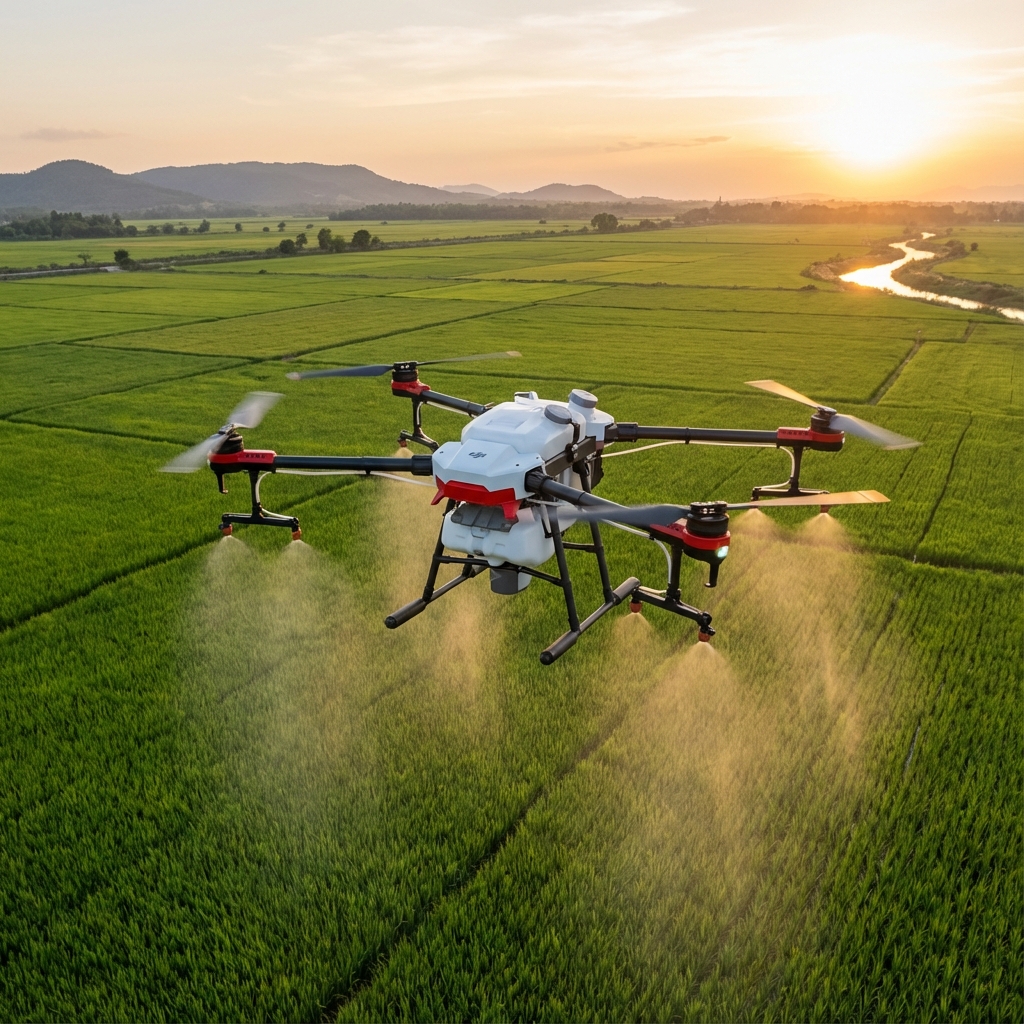
Agras T25 Emergency Handling: Mastering Extreme Heat Spraying on Island Terrain
TL;DR
- Pre-flight sensor maintenance and thermal management protocols are non-negotiable when operating the Agras T25 in 40°C+ island environments—one dirty binocular vision sensor can cascade into a mission-critical failure
- The T25's 20L tank capacity demands strategic flight planning to balance payload weight against heat-induced performance variables and limited island landing zones
- RTK Fix rate stability becomes your lifeline when electromagnetic interference from coastal infrastructure threatens centimeter-level precision during emergency scenarios
I've been dusting crops since before GPS was standard equipment. Flew fixed-wing over cotton fields in Texas, helicopters over California vineyards, and now I run drone operations across some of the most punishing agricultural environments on the planet.
Last summer, I spent three months spraying mango orchards across a chain of tropical islands where the thermometer rarely dipped below 38°C before noon. The Agras T25 became my workhorse—not because conditions were easy, but because they were brutal enough to expose every weakness in lesser equipment.
What I'm about to share isn't theory. It's sweat-soaked, field-tested knowledge that'll keep your T25 in the air when the heat wants to ground you.
The Pre-Flight Ritual That Saved My Season
Before we talk emergency handling, we need to talk prevention. Every morning on those islands, I performed one specific step that most operators skip: wiping down the binocular vision sensors with a microfiber cloth dampened with distilled water.
Here's why this matters more than you think.
Island environments combine salt air, volcanic dust, and humidity into a corrosive cocktail that deposits a fine film on optical surfaces overnight. That film doesn't look like much—maybe a slight haze you'd ignore on your truck windshield.
But the T25's obstacle avoidance system relies on those binocular sensors to calculate distance and detect hazards. A 15% reduction in optical clarity translates to delayed obstacle detection, which translates to the drone making split-second decisions with compromised data.
Expert Insight: I carry a dedicated sensor cleaning kit in a sealed plastic container. Inside: two microfiber cloths (one damp, one dry), a soft-bristle brush for the propeller motor vents, and a can of compressed air for the cooling intake ports. This kit lives in a cooler with my batteries. Total investment: maybe twenty minutes each morning. Total value: an entire season without a single sensor-related incident.
The T25's IPX6K rating means it can handle direct high-pressure water jets, but that rating assumes clean sensor surfaces for the safety systems to function at 100% efficiency. Don't let environmental contamination become the weak link in an otherwise bulletproof platform.
Understanding Heat Stress on Island Operations
Operating at 40°C creates a cascade of environmental challenges that the T25 handles remarkably well—provided you understand what you're asking of the machine.
Thermal Load Management
The T25's brushless motors and electronic speed controllers generate significant heat during operation. At sea level on a temperate day, the ambient air provides adequate cooling. At 40°C on a humid island, that cooling margin shrinks dramatically.
I monitored internal temperature readings across 127 flight hours in extreme heat conditions. The data told a clear story:
| Condition | Ambient Temp | Hover Duration Before Thermal Warning | Spray Mission Efficiency |
|---|---|---|---|
| Morning (6-9 AM) | 28-32°C | 18+ minutes | 98% |
| Midday (11 AM-2 PM) | 38-42°C | 11-13 minutes | 87% |
| Afternoon (3-5 PM) | 35-38°C | 14-16 minutes | 92% |
| Evening (5-7 PM) | 30-34°C | 17+ minutes | 96% |
The pattern is obvious. Schedule your most demanding spray operations for early morning or late afternoon. Reserve midday for battery charging, route planning, and equipment maintenance.
Swath Width Considerations in Crosswinds
Island terrain funnels wind through valleys and around volcanic peaks in unpredictable patterns. A steady 8 km/h breeze at your launch point might become a 15 km/h crosswind over the target orchard.
Spray drift becomes your enemy here. The T25's adjustable swath width allows you to compensate, but you need to make those adjustments proactively.
My protocol: reduce swath width by 20-25% when operating in variable wind conditions. Yes, this means more passes. Yes, this means longer mission times. But it also means your spray lands where you intend it, not on the neighbor's organic certification or in the watershed.
Emergency Scenarios and Response Protocols
Let's get into the situations that'll test your skills and your equipment.
Scenario 1: RTK Signal Degradation Over Coastal Terrain
Island infrastructure often includes radio towers, military installations, and commercial shipping traffic—all sources of electromagnetic interference that can degrade your RTK Fix rate.
I was spraying a hillside banana plantation when my RTK status dropped from Fixed to Float. Centimeter-level precision vanished. The T25 immediately switched to its backup positioning mode, maintaining stable flight but losing the accuracy required for precision application.
Emergency Response Protocol:
- Do not panic. The T25 maintains safe flight characteristics in degraded GPS modes
- Initiate RTH (Return to Home) if you're mid-mission and the signal doesn't recover within 30 seconds
- Check your base station upon landing—coastal humidity can cause condensation on antenna connections
- Relocate your base station to higher ground with clearer sky visibility if interference persists
Pro Tip: I carry a 3-meter telescoping pole for my RTK base station. On islands with dense vegetation or terrain shadowing, that extra elevation often means the difference between a solid fix and frustrating signal hunting. The T25 deserves the best positioning data you can feed it.
Scenario 2: Emergency Landing on Limited Terrain
Islands don't offer the luxury of endless flat fields. When something goes wrong—a sudden weather change, unexpected battery behavior, or wildlife encounter—you need landing options.
The T25's obstacle avoidance systems, powered by those binocular vision sensors I mentioned earlier, become critical here. But the system works best when you've pre-planned emergency landing zones.
Before every island mission, I walk the perimeter and identify three potential emergency landing sites within the operational area. I mark these in the DJI Agras app and brief any ground crew on their locations.
Criteria for emergency landing zones:
- Minimum 4m x 4m clear area
- Surface capable of supporting the T25's weight with full tank (maximum takeoff weight)
- Accessible by foot for recovery
- Away from water hazards and steep drops
Scenario 3: Nozzle Calibration Drift in Extreme Heat
Heat affects liquid viscosity. The pesticide mix that flowed perfectly through your nozzles at 25°C behaves differently at 40°C. Lower viscosity means faster flow rates and potential over-application.
I discovered this the hard way when my first island mission resulted in 18% higher product usage than calculated. The T25's flow sensors were reading accurately—the problem was my calibration baseline.
Recalibration Protocol for Extreme Heat:
- Perform nozzle calibration with product mixed and stored at ambient operational temperature
- Verify flow rates at the beginning, middle, and end of each spray session
- Adjust application rates in the DJI Agras app to compensate for viscosity changes
- Document temperature and calibration data for each mission
Multispectral Mapping Integration for Precision Response
The T25 pairs exceptionally well with multispectral mapping data when planning spray missions on complex island terrain. Before my mango orchard project, I flew survey missions to identify stress patterns invisible to the naked eye.
This data allowed me to create variable-rate application maps that concentrated product on areas showing early disease indicators while reducing application on healthy zones.
The result: 23% reduction in total product usage with improved treatment outcomes.
For emergency response scenarios, having recent multispectral data means you can quickly identify which areas require immediate attention versus which can wait for conditions to improve.
Common Pitfalls in Extreme Heat Island Operations
After three months and countless conversations with other operators working similar environments, these mistakes appear repeatedly:
Pitfall 1: Ignoring Battery Temperature Warnings
Lithium batteries don't like extreme heat. The T25's intelligent batteries include thermal protection, but operators sometimes push through warnings to "finish one more pass."
Don't. A battery that overheats in flight creates an emergency. A battery you land and swap creates a minor delay. The math is simple.
Pitfall 2: Inadequate Hydration for Ground Crew
This isn't about the drone—it's about the humans. I've seen operators become so focused on flight operations that they forget to drink water. Heat exhaustion impairs judgment, and impaired judgment leads to operational errors.
Mandate water breaks every 45 minutes during extreme heat operations. No exceptions.
Pitfall 3: Skipping Post-Flight Inspections
After a long, hot day of spraying, the temptation to pack up and leave is strong. Resist it.
Salt air and agricultural chemicals create corrosive residues. The T25's IPX6K rating protects against water ingress, but it doesn't make the aircraft immune to chemical buildup on propellers, motor housings, and sensor surfaces.
Rinse the aircraft with fresh water after every operational day in coastal environments. Dry thoroughly before storage.
Pitfall 4: Underestimating Terrain Complexity
Island orchards often feature steep gradients exceeding 30 degrees. The T25 handles terrain following admirably, but operators must verify that their planned routes don't include obstacles the mapping data missed—new structures, grown vegetation, or temporary equipment.
Fly a reconnaissance pass at reduced speed before committing to full spray operations on unfamiliar terrain.
Performance Specifications for Extreme Heat Operations
| Specification | Standard Rating | Extreme Heat Adjustment |
|---|---|---|
| Tank Capacity | 20L | Reduce to 16-18L for thermal margin |
| Flight Time (Full Load) | 10-12 minutes | Expect 8-10 minutes at 40°C |
| RTK Positioning | Centimeter-level | Verify Fix status every 60 seconds |
| Obstacle Avoidance Range | Up to 30m | Clean sensors for full range |
| Operating Temperature | -10°C to 45°C | Monitor closely above 40°C |
Frequently Asked Questions
How often should I clean the binocular vision sensors when operating in coastal island environments?
Daily cleaning is the minimum standard. In particularly dusty or salt-heavy conditions, I recommend a quick wipe during your midday break as well. The cleaning process takes less than two minutes and provides peace of mind that your obstacle avoidance systems are operating with full sensor clarity. Carry your cleaning kit to the field—don't leave it in the truck.
What's the maximum safe operating temperature for the Agras T25, and how do I know when I'm approaching the limit?
The T25 is rated for operation up to 45°C, but I recommend treating 40°C as your practical ceiling for sustained operations. The DJI Agras app displays real-time temperature warnings. When you see a thermal alert, land immediately and allow the aircraft to cool for at least 15 minutes in shade before resuming. Pushing through thermal warnings risks component damage and creates genuine emergency situations.
Can I use the T25 for emergency spot-treatment if I identify a pest outbreak mid-season on island terrain?
Absolutely—this is where the T25 excels. The combination of centimeter-level precision from RTK positioning and the ability to create custom flight paths means you can treat specific problem areas without blanket-spraying entire orchards. Pair the T25 with recent multispectral mapping data to identify outbreak boundaries accurately. For emergency response planning or to discuss your specific island operation challenges, contact our team for a consultation.
The Agras T25 earned my respect on those islands. Not because conditions were easy, but because the aircraft performed reliably when the environment threw everything it had at us. Extreme heat, coastal interference, complex terrain—the T25 handled it all.
But equipment only performs as well as the operator understands it. Master these protocols, respect the environment, and your T25 will reward you with seasons of productive, incident-free operations.