
Avata at Dusk: A Construction Site Case Study on Low
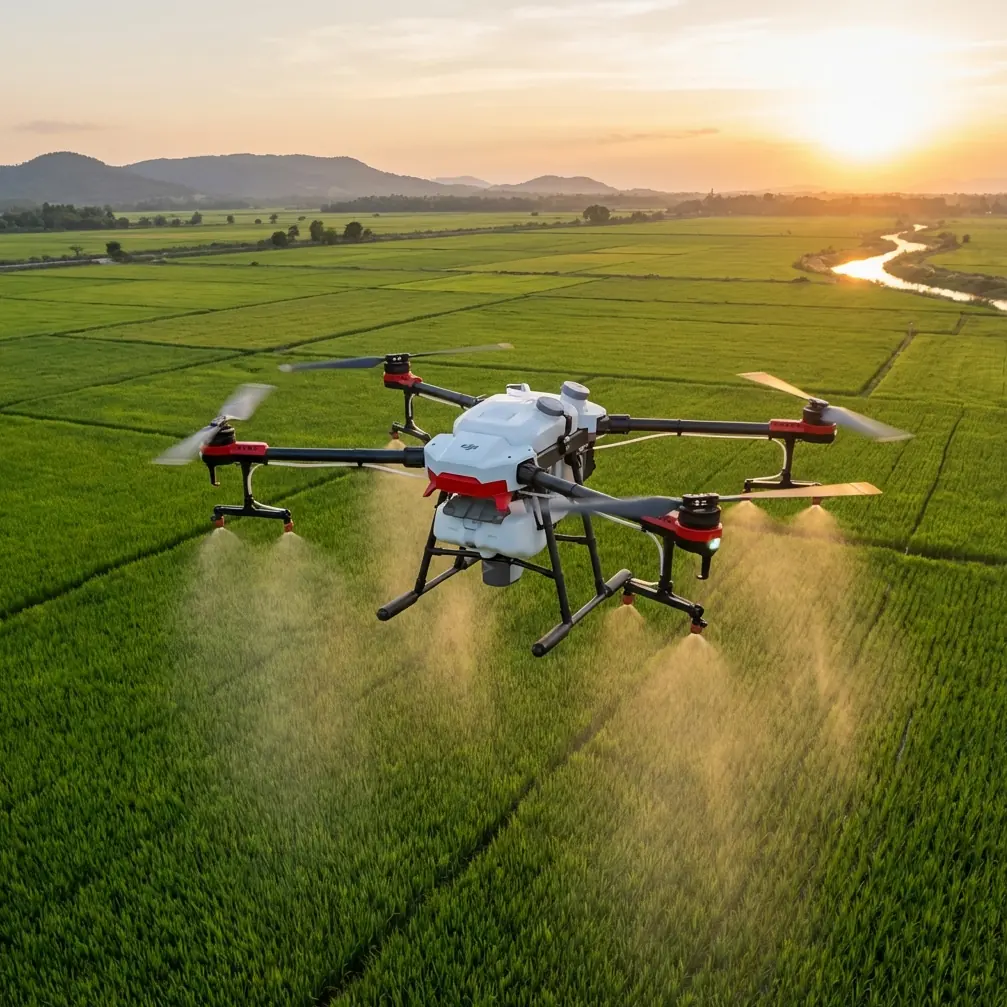
Avata at Dusk: A Construction Site Case Study on Low-Light Capture, Flight Stability, and Smarter Image Recovery
META: A practical Avata case study for low-light construction site capture, covering flight altitude, wind-related image issues, overlap control, D-Log workflow, and safer on-site reshoots.
I’ve always thought low-light construction flying exposes the truth about a drone setup faster than any bright midday demo ever could.
At noon, almost anything looks usable. At dusk, weak planning shows up immediately: muddy detail in shadowed concrete, unstable horizon lines between structures, uneven overlap on repeated passes, and footage that feels cinematic until you try to use it for real site communication. That matters because many construction teams don’t want flights in perfect golden-hour emptiness. They want documentation when crews are wrapping, tower lights are on, and progress is still visible against a changing sky.
That is exactly where an Avata-based workflow can be useful, but only if the operator respects a basic reality of low-altitude UAV imaging: the aircraft may be easy to move, easy to deploy, and quick to launch, yet the atmosphere can still ruin your image geometry.
A useful technical paper published in 测绘技术装备 (Vol. 17, 2015, Issue 3) makes that point clearly. It explains that low-altitude UAV imaging brings real operational advantages: minimal takeoff and landing requirements, light weight, small size, easy relocation between sites, high aerial survey efficiency, and the ability to collect large-scale high-precision imagery. But it also highlights the weakness that experienced pilots know too well—airflow and wind direction can disturb flight attitude, causing heading drift, photo rotation error, and overlap deviation, which then make downstream image processing more difficult.
For an Avata pilot working around a construction project in low light, that isn’t abstract theory. It is the difference between a clean progress record and an evening of beautiful but unreliable footage.
The scenario: a dim construction site with moving air and uneven lighting
Let’s frame this as a practical case.
A contractor wants a twilight capture of a mid-rise construction site. The objective is not just social media footage. They need three outputs from one short flight window:
- A visually clear site-overview sequence for stakeholder updates
- Repeatable passes that can be compared with previous site records
- Source material robust enough for simplified 3D context or progress review later
The site has classic low-light complications: reflective metal, dark trenches, floodlit work zones, and pockets of turbulent air created by partially completed structures. Anyone who has flown near steel framing after sunset knows what happens. The drone may feel fine in one corridor, then suddenly encounter disturbed airflow near an exposed edge or crane shadow.
This is where Avata becomes interesting. Its compact form factor and flexible deployment fit the reference paper’s core advantage of low-altitude UAVs: low site requirements and fast relocation. On a construction project, you rarely get an ideal launch zone. You get a rough staging area, a temporary access lane, or a cleared patch beside equipment. A drone that does not demand much takeoff space has real operational value.
That value increases in low light, because the shorter the setup cycle, the more of the usable ambient window you can preserve.
Why low-light construction capture is really a data discipline problem
Most people treat low-light flying as a camera problem. It’s not only that.
It is a geometry and consistency problem first.
The source paper points out that UAVs can collect large-scale, high-precision imagery efficiently, but also warns that wind and airflow can knock the aircraft off its planned heading. On a construction site, even minor heading deviation becomes expensive because built environments are full of straight lines. If your flight path shifts between adjacent structures, the visual error is obvious. If image overlap changes unexpectedly, later stitching or comparative analysis becomes less reliable.
With Avata, that means your low-light workflow should prioritize repeatability over dramatic movement.
I generally advise a more conservative flight altitude than many creators instinctively choose for this scenario: around 25 to 40 meters above the active work area, adjusted for crane presence, vertical obstructions, and local rules. Why this band?
- Below that, the sense of speed increases and small attitude changes become exaggerated in frame.
- Above that, low-light detail on materials, temporary barriers, and structural edges starts to flatten unless the site lighting is exceptionally good.
- In that 25–40 meter zone, you usually get a strong compromise between contextual coverage and enough subject separation to maintain orientation.
For Avata specifically, this altitude range also helps when you are trying to balance obstacle awareness with a clean perspective. Too low, and every protruding beam, cable route, and fencing line competes for your attention. Too high, and the flight may become visually safe but operationally less informative for construction stakeholders.
Obstacle avoidance is helpful, but it does not solve wind-driven image inconsistency
Construction pilots often overestimate what obstacle avoidance can do for them in a dusk environment.
Obstacle sensing can reduce collision risk around partially built forms, and that matters. On an active site, safe spacing from facades, scaffolding, and temporary structures is non-negotiable. But obstacle awareness is not the same thing as image consistency. The reference material’s warning about unstable flight attitude due to airflow still applies even when the aircraft avoids contact.
That distinction matters operationally.
You can complete a flight safely and still come back with footage that is hard to compare against prior records because the heading wandered during multiple passes. On a windy evening, I’d rather see a pilot simplify the route, widen the turning radius, and reduce aggressive yaw inputs than rely on the idea that the drone will “sort it out.”
For construction documentation, steady framing beats flashy route design almost every time.
The overlooked advantage: fast reshoots through live ground control
One of the most practical points in the source document is easy to miss if you only think about UAVs as flying cameras. The paper notes that flight data is transmitted to the ground control subsystem through a wireless link, allowing personnel on the ground to modify the mission in real time. It also mentions a very practical benefit: if some areas are captured poorly, they can be reshot, and in urgent situations or during landing, the flight state can be switched from automatic to manual control.
That is gold for a low-light construction workflow.
In plain terms, if the north elevation pass is weak because the floodlights created flare or the aircraft drifted in a gust near a concrete core, you don’t have to accept the miss. A ground observer can review the incoming feed, flag the gap, and have the pilot run a targeted reshoot before the site goes dark.
On an Avata job, this has two direct implications:
1. Keep one person focused on image adequacy, not just airspace safety
A spotter or project-side observer can watch for missed facades, obscured access roads, or dimly exposed corners. This is especially useful when site managers care about specific work packages rather than generic sweeping footage.
2. Be ready to abandon automation for precision manual correction
If the scene is turbulent near structures or the route around a tower is visually confusing, forcing a rigid preplanned pass can do more harm than good. Switching to manual control for a short corrective segment may produce cleaner, more usable material.
That principle from the paper—wireless data relay enabling flight adjustment and selective recapture—isn’t just a systems note. It is a field efficiency advantage.
If you’re building a repeatable Avata workflow for these jobs and want to compare notes on observer-pilot coordination, this short WhatsApp planning thread is a practical place to start.
How I would structure the Avata capture
For this kind of site, I’d break the flight into three blocks.
Pass 1: Site envelope
Start with a broad, stable perimeter orbit or segmented rectangular route at roughly 35–40 meters. The goal is not drama. It is spatial orientation. Keep the speed moderate so the camera has time to resolve edge detail in shadowed sections.
This pass becomes your visual insurance policy. Even if later shots become more dynamic, you still have a coherent site record.
Pass 2: Key progress corridors
Drop closer, usually into the 25–30 meter range, and work along the areas that matter most: slab edges, facade progression, material staging, roof penetrations, or access routes. In low light, this band often gives the best balance between detail and stability.
If you use tracking tools such as ActiveTrack or subject tracking analogues around moving site vehicles, use them selectively. Construction documentation is not sports filming. Automated tracking can help isolate a vehicle route or a moving lift for storytelling, but only when the airspace around structures is open enough to maintain predictable separation.
Pass 3: Short hero shots
Only after the record footage is secure would I use QuickShots or a Hyperlapse-style sequence. These can add value for client-facing updates, but they should never consume the best light window before documentation needs are covered.
That order matters. Low light shrinks your margin for error.
D-Log is useful here, but only if you expose for recovery rather than mood
Avata users often reach for D-Log because the dynamic range challenge on construction sites is obvious: bright lamps, dim excavation zones, reflective sheeting, dark concrete, and sky remnants all in one frame.
That’s a good instinct. But in practice, D-Log only helps if the flight itself preserves stable, processable imagery. If your heading drifts and overlap varies from pass to pass, a flatter profile doesn’t rescue the underlying inconsistency.
What D-Log does give you in this scenario is better latitude for reconciling harsh site lights with deep shadow zones. It is especially useful when the capture has to serve both internal review and edited public-facing communication. You can keep more texture in illuminated structural elements without crushing everything around them into black mass.
Still, the sequence has to be flown like a documentation mission, not just graded like a film project.
Why Avata’s compact deployment fits construction better than many pilots admit
The source paper emphasizes a classic strength of low-altitude UAV systems: they do not need much takeoff or landing space, and they are easy to reposition. On paper, that sounds simple. On a job site, it’s huge.
Construction environments are always temporary. Access changes. Material stacks move. Safe launch points disappear between visits. A platform that can be carried in, launched with minimal footprint, and repositioned quickly helps you adapt without turning the flight into a production event.
That has another downstream effect: faster redeployment means more willingness to recapture a weak segment. Large, cumbersome setups often create a psychological trap where the crew accepts imperfect results because relaunching is disruptive. Smaller systems reduce that friction.
This is one reason Avata can fit construction progress work well despite its reputation being shaped heavily by immersive flight content. In disciplined hands, compact FPV-style deployment can support highly practical site imaging.
The hidden lesson from photogrammetry applies even when your output is “just video”
The paper’s context is low-altitude UAV imagery acquisition and processing, including 3D reconstruction and photogrammetric concerns. Some Avata operators might assume that is only relevant to mapping specialists.
It isn’t.
Even if your final deliverable is mostly video, the same flight quality issues still matter:
- heading consistency
- overlap adequacy
- attitude stability
- clean reshoot capability
Those are not mapping-only concepts. They affect how useful the footage is for comparing milestones, spotting workflow bottlenecks, and building trust with project teams who need clarity rather than spectacle.
When construction clients ask for “a quick dusk fly-through,” they often mean something broader: show me progress, show me access, show me safety separation, show me where we are relative to last week. That requires a pilot who understands image acquisition as an information task.
My practical takeaway
If you’re flying Avata over a construction site in low light, the smartest move is not to chase the most dramatic line through the structure. It’s to fly a route that respects the same truths the 2015 low-altitude UAV imaging paper identified years ago: these aircraft are exceptionally flexible, efficient, and easy to deploy, yet they are also vulnerable to airflow-induced instability that can distort heading and overlap and complicate later use of the imagery.
So the best practice is simple, even if the execution isn’t:
- launch fast from a compact safe area
- work in the 25–40 meter band unless the site dictates otherwise
- prioritize stable repeatable passes before stylized shots
- use live ground review to identify weak coverage immediately
- be ready to switch to manual correction when automation stops being precise
That is how an Avata flight becomes more than attractive footage. It becomes a reliable record of a changing site.
Ready for your own Avata? Contact our team for expert consultation.