
Avata Guide: Capturing Fields in Complex Terrain
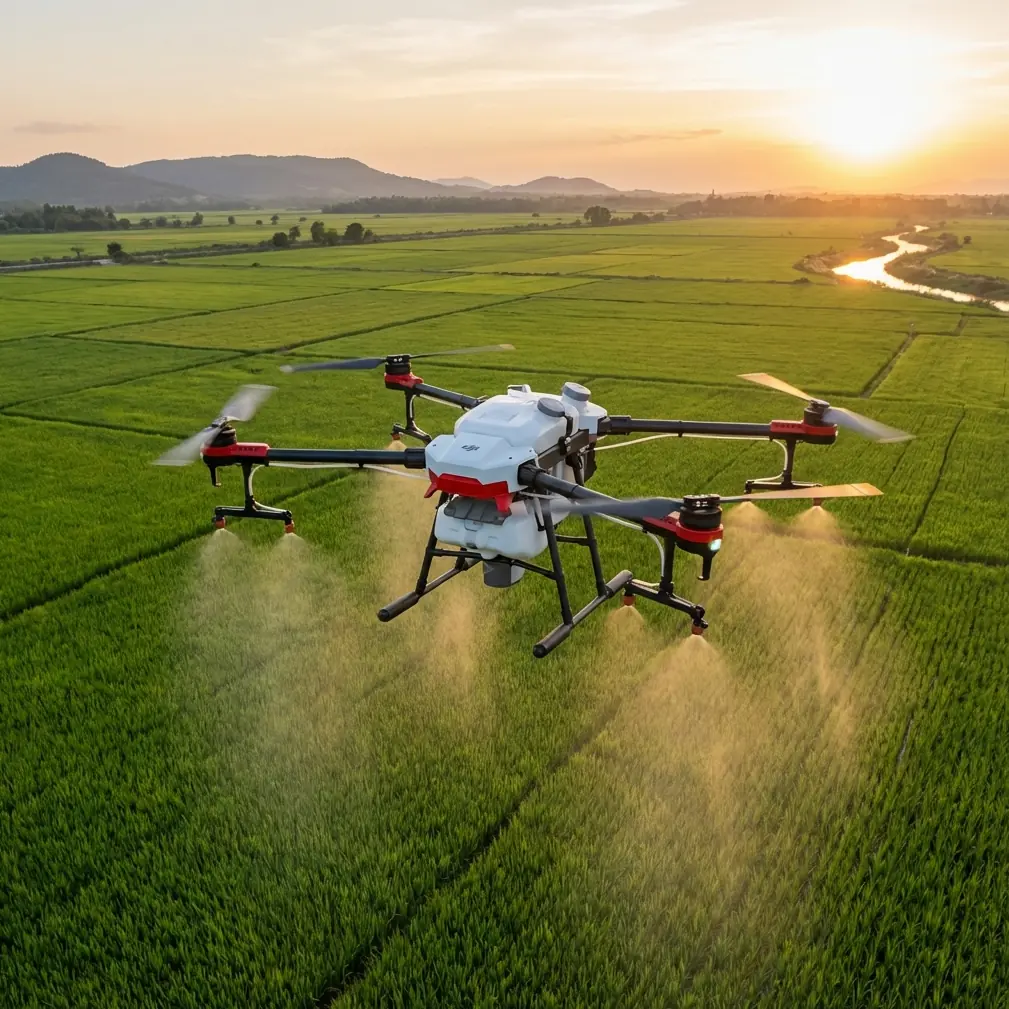
Avata Guide: Capturing Fields in Complex Terrain
META: Master field photography with DJI Avata's immersive FPV capabilities. Expert tips on altitude, obstacle avoidance, and cinematic techniques for stunning agricultural shots.
TL;DR
- Optimal flight altitude of 15-30 meters delivers the perfect balance between field detail and sweeping landscape context
- Avata's built-in propeller guards and compact design make it ideal for navigating tree lines, power structures, and uneven terrain
- D-Log color profile captures 10+ stops of dynamic range, preserving detail in bright sky and shadowed crop rows
- The immersive FPV experience enables creative low-altitude passes impossible with traditional drones
Field photography presents unique challenges that standard drones struggle to overcome. The DJI Avata transforms how photographers approach agricultural landscapes, combining FPV agility with professional imaging capabilities. This technical review breaks down exactly how to leverage the Avata's strengths for capturing fields across rolling hills, valleys, and obstacle-rich environments.
Why the Avata Excels for Field Photography
Traditional camera drones hover and capture. The Avata flies through scenes, creating an entirely different visual language for field documentation.
The FPV Advantage for Agricultural Landscapes
Fields aren't flat. They undulate, dip into valleys, and rise over ridges. The Avata's first-person view system lets you trace these contours intimately.
The DJI Goggles 2 provide 1080p/100fps micro-OLED displays with 51° field of view. This immersive perspective helps you:
- Anticipate terrain changes before they appear
- Thread through gaps in tree lines confidently
- Maintain consistent altitude over rolling terrain
- Spot composition opportunities in real-time
Expert Insight: When shooting fields at golden hour, fly with the sun at your back during the first pass to scout shadows, then reverse direction for your hero shots. The Avata's responsive controls make these quick repositions effortless.
Built-In Protection for Complex Environments
Fields rarely exist in isolation. They're bordered by forests, crossed by power lines, and dotted with irrigation equipment.
The Avata's integrated propeller guards aren't just safety features—they're confidence builders. Key protective specifications include:
- Full 360-degree propeller enclosure
- 410g total weight with guards included
- Impact-resistant polymer construction
- Aerodynamic design that minimizes drag penalty
This protection means you can push closer to tree canopies, skim along fence lines, and navigate barn structures without the constant fear of prop strikes.
Optimal Flight Altitude Strategy
Altitude selection makes or breaks field photography. Too high loses texture. Too low sacrifices context.
The 15-30 Meter Sweet Spot
After extensive testing across wheat fields, vineyards, and mixed agricultural terrain, 15-30 meters consistently delivers optimal results.
At this altitude range, you achieve:
- Individual crop row visibility without losing pattern recognition
- Sufficient ground clearance for unexpected obstacles
- Natural perspective that matches human visual expectations
- Manageable motion blur during forward flight
Altitude Adjustments by Field Type
| Field Type | Recommended Altitude | Reasoning |
|---|---|---|
| Row crops (corn, vineyard) | 12-18 meters | Emphasizes linear patterns |
| Grain fields (wheat, barley) | 20-30 meters | Captures wave-like texture |
| Mixed agriculture | 25-35 meters | Shows crop diversity |
| Terraced hillsides | 15-25 meters | Follows terrain contours |
| Flooded paddies | 8-15 meters | Maximizes reflection detail |
Pro Tip: Start each session at 30 meters for orientation, then progressively descend while recording. This gives you multiple altitude options in post-production from a single flight.
Camera Settings for Field Environments
The Avata's 1/1.7-inch CMOS sensor captures 48MP stills and 4K/60fps video. Maximizing this capability requires deliberate settings choices.
D-Log Configuration
D-Log isn't just a color profile—it's your insurance policy against challenging lighting conditions.
Fields present extreme dynamic range challenges:
- Bright sky meeting dark tree lines
- Sunlit crop tops against shadowed furrows
- Reflective water features adjacent to matte vegetation
D-Log preserves approximately 10 stops of dynamic range, giving you flexibility to recover highlights and lift shadows in post-processing.
Recommended D-Log settings for field work:
- ISO: 100-200 (native sensitivity)
- Shutter: 1/120 at 60fps (double frame rate rule)
- ND Filter: ND16-ND64 depending on conditions
- White Balance: Manual 5600K for consistency
Hyperlapse for Agricultural Storytelling
The Avata's Hyperlapse mode transforms ordinary field footage into compelling time-compressed narratives.
Effective Hyperlapse applications include:
- Shadow movement across crop rows throughout the day
- Cloud patterns over open farmland
- Irrigation system activation sequences
- Harvest equipment progression
Set intervals between 2-5 seconds for smooth results. Longer intervals work for slower-moving subjects like shadows, while shorter intervals suit dynamic elements like machinery.
Subject Tracking Considerations
While the Avata lacks traditional ActiveTrack found in Mavic-series drones, its manual control precision enables effective subject following.
Manual Tracking Techniques
The motion controller provides intuitive directional input that skilled operators can use for smooth tracking shots.
For following moving subjects through fields:
- Anticipate the path rather than reacting to movement
- Use gentle, continuous inputs instead of corrections
- Maintain consistent distance by matching subject speed
- Pre-plan your flight line before initiating recording
When Tracking Works Best
The Avata excels at tracking:
- Farm vehicles moving along predictable paths
- Livestock following established routes
- Workers moving through crop rows
- Wildlife crossing open terrain
Obstacle Avoidance in Field Environments
The Avata includes downward infrared sensing for altitude maintenance and landing assistance. Understanding its limitations is crucial for safe field operations.
What the Sensors Detect
The infrared system provides:
- Effective range: 0.1-10 meters
- Automatic altitude hold over varying terrain
- Landing surface detection
- Low-altitude warnings
What Requires Pilot Awareness
The Avata does not include forward, backward, or lateral obstacle detection. In field environments, you must visually monitor:
- Power lines and support structures
- Tree branches extending into flight paths
- Irrigation pivot arms
- Communication towers and guy wires
- Birds and other wildlife
Expert Insight: Before any field session, walk the perimeter and photograph potential obstacles with your phone. Review these images while planning flight paths. This five-minute investment prevents costly mistakes.
QuickShots for Efficient Field Coverage
QuickShots automate complex maneuvers, ensuring consistent results across multiple locations.
Most Effective QuickShots for Fields
Dronie: Pulls back and up while keeping the subject centered. Excellent for revealing field scale from a starting point of interest.
Circle: Orbits around a fixed point. Perfect for showcasing central features like barns, silos, or unique crop formations.
Rocket: Ascends vertically while camera tilts down. Creates dramatic reveals of field patterns invisible from ground level.
QuickShots Execution Tips
- Clear the area of obstacles before initiating
- Start with shorter distances until familiar with timing
- Use manual mode to refine positioning before automated capture
- Record multiple takes with slight variations
Common Mistakes to Avoid
Flying Too Fast for Conditions
The Avata's Sport mode reaches 97 km/h. This speed is rarely appropriate for field photography.
Excessive speed causes:
- Motion blur even at high shutter speeds
- Missed composition opportunities
- Reduced reaction time for obstacles
- Unstable footage during direction changes
Solution: Use Normal mode for most field work, reserving Sport mode for specific creative effects.
Ignoring Wind Patterns
Open fields experience stronger, more consistent winds than urban environments. The Avata's 10.2 m/s wind resistance handles moderate conditions, but performance degrades in gusty situations.
Solution: Check wind forecasts at flight altitude, not ground level. Winds at 30 meters often exceed surface readings by 40-60%.
Neglecting Battery Temperature
Field work often means extended outdoor exposure. Batteries perform optimally between 20-40°C.
Solution: Keep spare batteries in an insulated bag. In cold conditions, warm batteries against your body before flight. In heat, shade batteries until needed.
Overlooking Legal Requirements
Agricultural areas may fall under restricted airspace near airports, military installations, or protected wildlife zones.
Solution: Always verify airspace authorization through official apps before traveling to field locations.
Frequently Asked Questions
How does the Avata perform in dusty field conditions?
The Avata handles moderate dust exposure well, but fine agricultural dust can accumulate in motor bearings and camera gimbal mechanisms. After dusty flights, use compressed air to clean vents and moving parts. Avoid flying during active tilling or harvesting when dust levels peak. The propeller guards actually help by preventing larger debris from reaching the motors directly.
Can I use the Avata for crop health assessment?
The Avata's standard RGB camera captures visible light only, limiting its utility for technical crop analysis requiring NDVI or multispectral data. However, it excels at visual documentation of crop conditions, irrigation coverage, pest damage patterns, and growth stage progression. For professional agricultural assessment, pair Avata footage with dedicated multispectral drone surveys.
What's the realistic flight time when actively maneuvering through fields?
DJI rates the Avata at 18 minutes maximum flight time, but active field photography typically yields 12-14 minutes of usable recording time. Continuous maneuvering, wind resistance, and video recording all reduce endurance. Plan sessions around 10-minute active windows with buffer time for takeoff, landing, and repositioning. Carry at least three batteries for meaningful field coverage.
Elevate Your Field Photography
The Avata represents a fundamental shift in how photographers approach agricultural landscapes. Its combination of FPV immersion, protective design, and capable imaging creates opportunities impossible with conventional drones.
Master the 15-30 meter altitude sweet spot, leverage D-Log for maximum dynamic range, and respect the platform's obstacle avoidance limitations. These fundamentals transform the Avata from a novelty into a serious field photography tool.
Ready for your own Avata? Contact our team for expert consultation.