
Avata Delivering Tips for Fields in Low Light
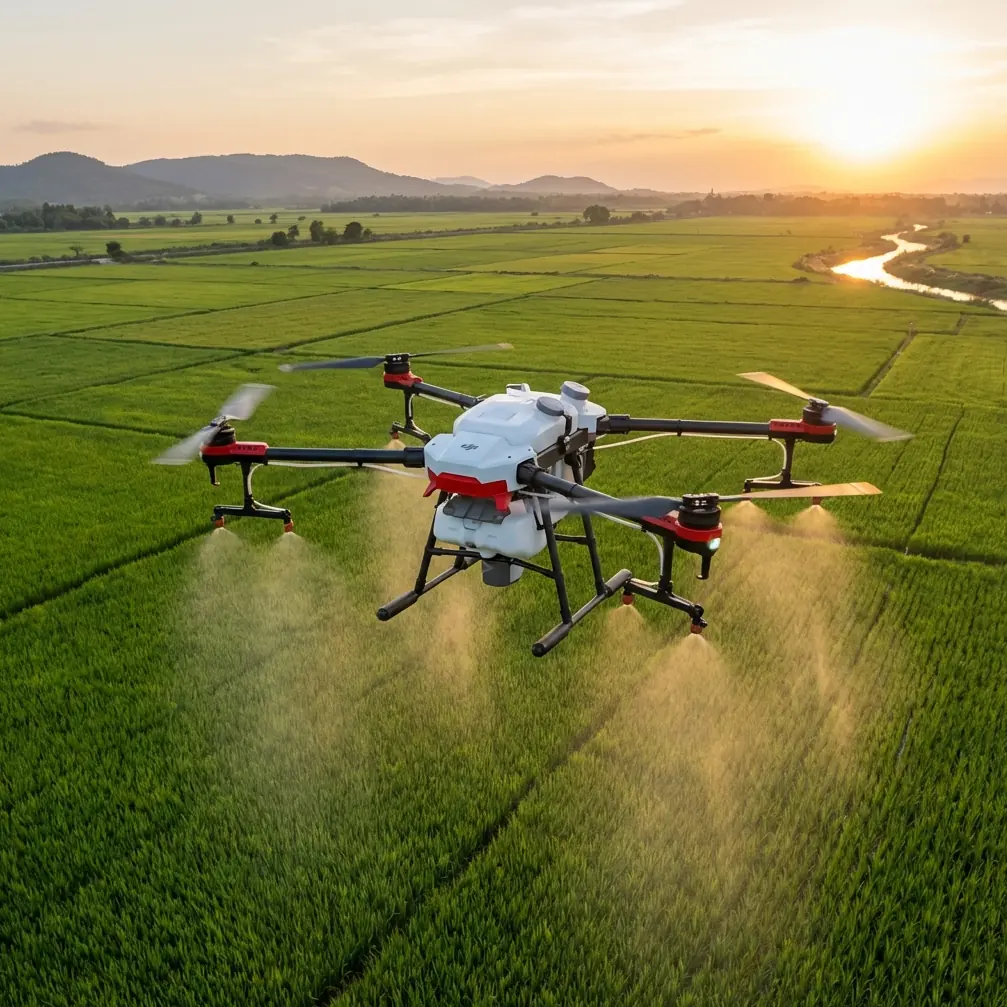
Avata Delivering Tips for Fields in Low Light: What Medical Drone Corridors Can Teach Civilian Operators
META: Learn practical Avata low-light field flying tips through the lens of China’s medical drone emergency corridors, with real guidance on route planning, obstacle awareness, weather shifts, and safer delivery-style missions.
I’ve spent enough time around cameras and drones to know that low-light flights over open land can fool even experienced pilots. Fields look simple from the ground. From the air, especially near dusk or under a dim cloud deck, they become a patchwork of dark textures, thin poles, irrigation lines, isolated trees, and shifting contrast. That matters if your focus is an Avata-style delivery workflow across farmland, training grounds, or remote rural property.
A recent report from UAVCN offers a useful lens for thinking about this. It describes how drones are being integrated into China’s medical emergency system to create what it calls an “airborne life corridor.” The point isn’t abstract innovation. It’s operational value: drones are being used to improve the transport efficiency of urgent supplies and rescue resources, while serving as a supplement to traditional ground response.
That single idea changes how we should think about field operations with Avata.
Even if you’re not flying medical missions, the same logic applies to civilian work in agriculture support, site checks, rural logistics trials, and training scenarios. The aircraft is not just there to capture dramatic footage. It becomes a tool for bridging distance when roads are slower, visibility is inconsistent, and time matters.
Why the medical corridor model matters to Avata pilots
The strongest takeaway from the emergency-response example is not speed alone. It’s redundancy.
The report makes clear that drones are being used as a complement to ground rescue, not a full replacement. That is a smart model for any civilian operator planning low-light field routes. If you’re using Avata around fields to move small urgent items in a controlled private setting, inspect route viability, or rehearse rural logistics concepts, you should adopt that same mindset.
Treat the drone as the fast layer, not the only layer.
In practice, that means:
- pre-identifying a ground access path
- defining a safe launch and recovery zone
- deciding what happens if weather changes mid-flight
- keeping payload expectations realistic
- planning for communication loss or visual degradation before takeoff
That emergency-system framing is valuable because it removes the fantasy from drone operations. The mission is not “Can I get there?” It’s “Can I get there reliably, safely, and in a way that still makes sense if something changes?”
That’s exactly the right question for low-light field flying.
Start with route discipline, not camera settings
Most people talk about cinematic settings first. I’d argue the route is more important than the image when you’re flying over fields in fading light.
In the medical emergency context, the reason drones help is straightforward: they can move urgent materials and resources more efficiently. Efficiency, though, is only useful if the route is predictable. A bad route over open land wastes the one advantage you actually have.
With Avata, field route planning should be broken into three layers:
1. The clean corridor
This is your preferred line between launch point and destination. It should avoid tree edges, power infrastructure, sheds, netting, irrigation rigs, and sudden elevation changes. During daylight, walk the first and last sections if you can.
2. The weather escape line
You need a second path in mind if wind direction shifts or visibility drops. This became very real for me on a rural evening flight after a calm golden-hour setup turned into a darker, gustier run within minutes. The cloud cover thickened, contrast collapsed over the crop rows, and a route that looked obvious on takeoff became visually flatter on return. The drone remained controllable, but the lesson was immediate: never assume the return leg will look like the outbound leg.
3. The abort zone
Choose at least one safe area where the aircraft can pause, hover, or land if needed. In field environments, that often means a flat margin road, an open harvested patch, or a clearly visible service track.
This sounds basic. It isn’t. Low-light mistakes usually come from pilots treating open land as empty land.
Low light over fields is harder than it looks
Fields absorb light. They also hide contrast. At dusk, rows can blend together, wet ground can reflect in odd ways, and isolated hazards seem to appear late.
This is where obstacle awareness becomes operationally significant.
If your flight is delivery-oriented, inspection-oriented, or part of a training run modeled on time-sensitive transport, obstacle avoidance is not just a convenience feature. It’s part of your margin. In rural environments, the most dangerous objects are often the least visible ones: fence wires, utility lines near road crossings, orchard edges, lone branches extending into a route, or equipment parked near field entrances.
The emergency medical use case from the report reinforces a bigger truth: when drones are moving resources that matter, reliability beats aggression. A stable route flown with conservative speed is better than a fast, improvised line that depends on perfect visibility.
So if you’re flying Avata in low light:
- reduce speed on approach and return
- keep extra stand-off distance from tree lines
- avoid dropping below the height where wires and poles become harder to read against the background
- make your turns wider than you would in bright daylight
- preserve battery margin for a slower, more careful return
What changed for me when weather shifted mid-flight
One of my most instructive field sessions began as a simple late-day practice run. I wanted smooth passes across a remote agricultural strip and a few controlled tracking shots of a utility vehicle moving along the farm road. Then the weather turned.
Not dramatically. Just enough.
The breeze picked up, the light flattened, and the horizon lost definition. Those are exactly the kinds of subtle changes that can destabilize judgment. The aircraft was still flyable, but the mission had changed. I stopped thinking like a photographer and started thinking like an operator.
That is the mindset the medical drone corridor story demands.
If drones are supporting emergency systems by improving the movement of urgent supplies and rescue assets, then weather response cannot be emotional or improvised. It has to be procedural.
My adjustments were simple:
- I abandoned the more scenic route along the tree border.
- I climbed slightly to maintain a clearer safety buffer.
- I cut the planned creative passes.
- I returned using the most visually readable path over the field access road.
That final point matters. In low light, the best route is often not the most direct one. It’s the one your eyes can interpret fastest.
Where Avata’s creative tools still fit
A lot of readers looking at Avata are also interested in image quality and dynamic footage. That’s fair. And yes, features like QuickShots, Hyperlapse, D-Log, ActiveTrack, and subject tracking can be useful in field environments. But they belong after route control, not before it.
ActiveTrack and subject tracking
These tools can help when documenting slow-moving farm vehicles, service carts, or inspection walks along field edges. Their value is consistency. Instead of over-correcting manually in dim light, you can keep your framing more stable and focus on broader situational awareness.
Still, low light is not the time to surrender judgment to automation. If the route includes branches, poles, or changing ground texture, tracking should be treated as an aid, not a substitute for piloting decisions.
QuickShots
QuickShots can be useful for repeatable visual documentation of a field site, especially if you want the same motion pattern over time for project records or marketing footage. But in low-light conditions, repeatability only helps if the airspace is clean and unchanged. A new vehicle, temporary equipment, or a moved irrigation arm can turn a routine automated shot into a poor decision.
Hyperlapse
Hyperlapse can make fields look elegant, but it’s demanding on route clarity. In open land at dusk, subtle weather changes can affect consistency across the sequence. If your primary mission has any delivery or inspection logic to it, leave the hyperlapse for a separate, fully visual flight.
D-Log
D-Log is one of the more useful tools for low-light field work because it gives you more flexibility in grading difficult scenes with dark ground and bright sky remnants. Operationally, that means you can preserve more information when conditions are uneven. It won’t make an unsafe flight safe, but it can make practical flights more usable in post.
Delivery thinking for fields: borrow from emergency systems
The UAVCN report is about medical rescue support, but the operational lesson scales down well for civilian field use: drones matter most when they shorten the gap between need and access.
In agriculture and rural property work, that might mean:
- moving a small urgent item across a private field where vehicle access is slow
- scouting a route before sending people on foot
- checking whether a distant work area is accessible after weather changes
- transporting lightweight essentials in a controlled internal workflow
- training teams to coordinate air and ground response on large sites
Again, the key detail from the report is that drones enhance transport efficiency and supplement traditional ground methods. That second point is the one many hobby-minded operators skip. Supplement means integration. It means your drone flight should fit into a broader process rather than acting as a stand-alone trick.
If you’re building a real-world field workflow, document:
- launch point
- receiving point
- communication protocol
- weather threshold
- return threshold
- alternate recovery location
That’s how drone operations mature from “flying in a field” to “running a reliable field mission.”
A practical low-light checklist for Avata field runs
Here’s the checklist I actually trust when the light is fading:
Before takeoff
- Walk the launch and landing area.
- Identify poles, wires, netting, and tree encroachment.
- Confirm the clean corridor and one alternate path.
- Check wind not just at ground level, but by observing tree movement farther out.
- Decide your minimum battery reserve before launch.
During the flight
- Prioritize readability over aesthetics.
- Keep turns soft and deliberate.
- Use the most visually distinct terrain markers available, such as access tracks or field boundaries.
- If contrast drops suddenly, simplify the route immediately.
- Watch for weather changes that flatten the horizon or erase texture in the crops.
If conditions deteriorate
- Climb enough to restore margin from low obstacles, but stay conservative.
- Abandon creative plans first.
- Return on the route with the clearest visual cues, not necessarily the shortest line.
- If needed, land at the preselected abort zone.
If you’re building out a more formal field workflow and want to compare setup ideas with experienced operators, you can message the team here.
The real lesson from the “airborne life corridor”
What stayed with me from the UAVCN piece was its clarity. Drones are helping form an aerial corridor for emergency medical support in China. They are improving the transport efficiency of critical supplies and rescue resources. And they are doing it as a practical extension of existing ground systems.
That should reset how Avata pilots think about low-light field operations.
The best flights are not the bravest ones. They are the ones designed with purpose, flown with margin, and adapted quickly when reality changes. Fields at dusk can be beautiful, but beauty is secondary. The mission comes first.
For photographers like me, that can be a hard lesson. We see atmosphere and motion. Operators see routes, contingencies, and safe recovery options. The strongest civilian drone work happens when those two instincts finally meet.
So if you’re taking Avata into low-light field environments, borrow the logic of emergency aviation support. Plan like the route matters. Fly like conditions can shift. Treat the aircraft as part of a system, not the whole system.
That’s how open land becomes manageable, and how a short flight becomes genuinely useful.
Ready for your own Avata? Contact our team for expert consultation.