
Expert Delivering With Avata in Remote Fields: What a 5,000
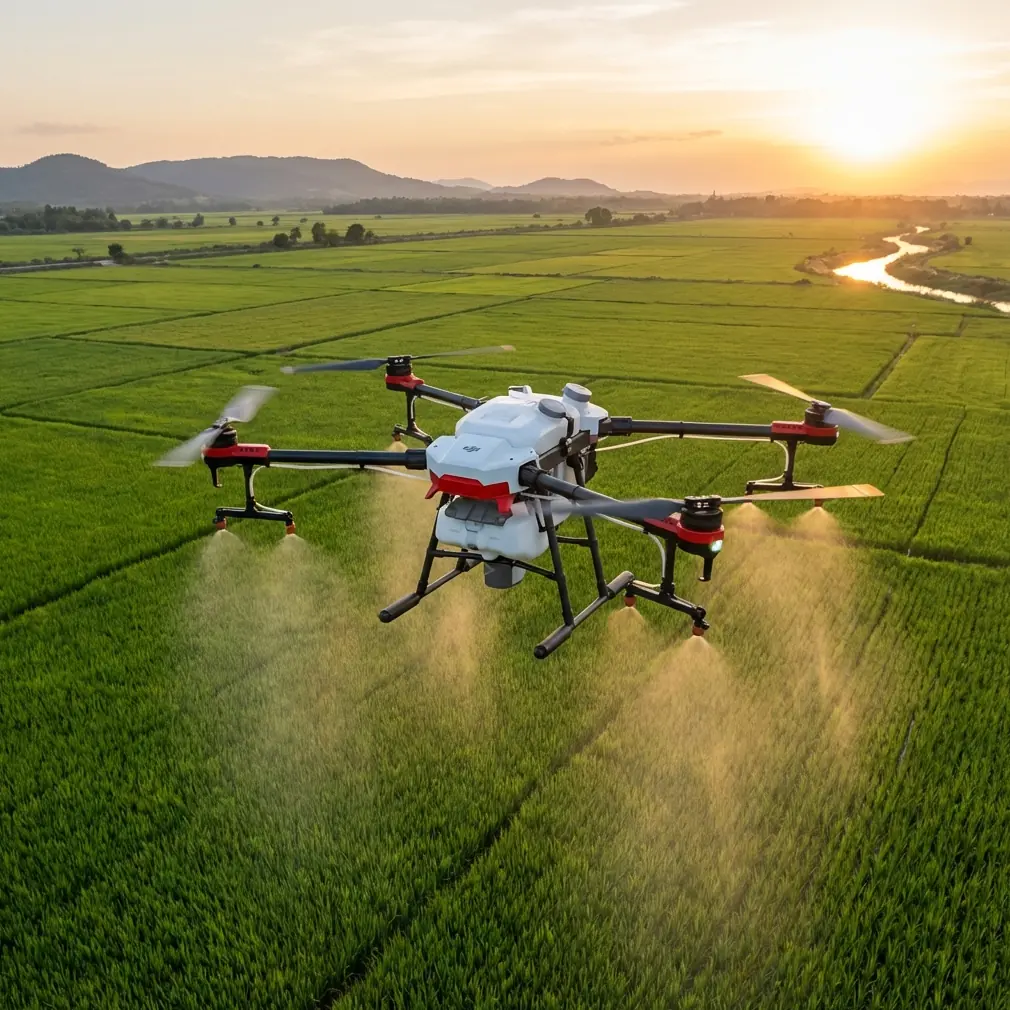
Expert Delivering With Avata in Remote Fields: What a 5,000-Product Drone Expo Tells Us About Real-World Flight Strategy
META: A practical Avata field guide for remote delivery missions, using lessons from the 9th World Drone Congress and focused advice on altitude, obstacle avoidance, tracking tools, and stable flight planning.
Remote field delivery sounds simple until you actually fly it.
A parcel, sensor, or small agricultural sample needs to move from one point to another across uneven ground, tree lines, utility poles, irrigation equipment, and changing wind. On paper, the route is short. In the air, it becomes a series of decisions about visibility, control margin, obstacle separation, battery timing, and safe altitude discipline.
That is where the Avata becomes interesting.
The recent 9th World Drone Congress put more than 5,000 products on display, all centered on drone and related industry development. That number matters. Not because bigger trade shows automatically produce better aircraft, but because an event at that scale reveals where the market is putting its attention: practical use, mature workflows, and flight systems that can survive outside demo environments. When thousands of products and technologies are gathered in one place, the takeaway is clear. Civilian drone work is no longer about novelty. It is about task fit.
For operators thinking about remote-field delivery, that matters directly. The question is not whether a drone can fly from A to B. The question is whether the platform, camera view, control feel, and obstacle-management behavior make that route repeatable when the land is imperfect and the day is less than ideal.
This article looks at how to approach that problem with Avata, especially if your mission involves delivering small items or operational materials across remote terrain.
Why Avata deserves a serious look for field delivery support
Avata is often discussed through the lens of immersive flight. Fair enough. But in remote-field operations, the more useful conversation is about spatial awareness and route confidence.
In open farmland or undeveloped rural tracts, pilots face an odd mix of conditions. One section may be clear and flat. Another may hide wires, pumps, small outbuildings, hedges, or isolated trees. Ground vehicles can be slow or blocked by mud, crop rows, or damaged access tracks. A drone helps bridge that gap, but only if it gives the pilot enough information to make smooth, low-stress decisions.
That is why obstacle avoidance becomes more than a checkbox feature. In this setting, it is operational breathing room. When flying over remote fields, you are often transitioning between open space and clutter in a single leg. A platform that helps you maintain separation from obstacles reduces the chance that a routine supply hop turns into an avoidable recovery exercise.
The same logic applies to subject tracking tools such as ActiveTrack. Even if your delivery workflow does not rely on automated following during transport, tracking functions can help when coordinating with a moving field worker, utility cart, or ground team receiving the item. It is less about cinematic convenience and more about maintaining visual context during handoff and confirmation.
The altitude mistake most pilots make in remote fields
If you want one operational insight that improves Avata performance in this scenario, start here:
Do not pick one fixed altitude for the entire route.
Pilots new to field delivery often choose a height that feels “safe” and hold it all the way across the mission. In reality, the best altitude is dynamic. It should reflect terrain, vegetation, structures, and the phase of the flight.
A useful working range for many remote-field support runs is roughly 8 to 20 meters above local ground level, with adjustments based on visibility and obstacle density.
Why that range?
- Below about 8 meters, you may gain precision, but you also narrow your reaction window around fencing, bushes, poles, and uneven land features.
- Above about 20 meters, you often lose some close-in detail that helps with accurate drop-off spotting or visual coordination near the destination.
- Inside that mid-band, Avata can stay low enough for strong route awareness while keeping enough vertical separation from ground clutter.
The phrase “above local ground level” is doing a lot of work here. In remote terrain, ground height changes. A route that starts over a flat access lane may cross a drainage cut or rise toward a berm. If you simply lock altitude based on takeoff point, your real clearance can shrink without you noticing soon enough.
So the better habit is this:
- Cruise higher on transit sections with uncertain terrain.
- Descend only when the route is visually confirmed.
- Climb before crossing tree breaks, machinery zones, or isolated structures.
- Reassess altitude again on the return leg, because reverse visibility is rarely identical.
That approach matters more than chasing a single “best” number.
Build the route in layers, not a straight line
One lesson implied by a large industry event like the 9th World Drone Congress is that drone work is becoming system-driven. With over 5,000 products presented, the field is clearly moving toward integrated workflows rather than one-off flights. For Avata users, that means thinking in route layers.
Layer 1: Transit corridor
This is the cleanest portion of the route, where your goal is efficient movement with maximum visibility. Here, fly at the upper end of your chosen field-safe altitude band if the terrain allows it.
Layer 2: Hazard transition
This includes irrigation rigs, tree edges, sheds, utility lines near field boundaries, or road crossings. Slow down. Increase separation. Let obstacle avoidance support your awareness, but do not fly as if the aircraft is making all the decisions for you.
Layer 3: Delivery approach
This is where many mistakes happen. Pilots get target-focused and stop scanning the wider area. On approach, reduce speed before reducing height. That order matters. A low, fast aircraft gives you less time to correct.
Layer 4: Exit path
Do not improvise your departure. In agriculture and remote land operations, the exit can be trickier than arrival because the pilot’s attention often shifts to whether the delivery was successful. Preselect a clean climb-out direction before you descend for handoff.
How Avata features support civilian field delivery workflows
Not every Avata feature is equally useful in remote delivery work. Some are genuinely practical. Others are secondary.
Obstacle avoidance
This is the obvious one, and for good reason. In remote fields, obstacles are not always dense, but they are often irregular. A lone power pole or unexpected branch line can be more dangerous than an urban block because you are less primed to expect it. Obstacle support helps preserve margin during transitions and approach work.
Operational significance: it reduces the mental load during low-to-mid altitude routing, especially when flying across mixed terrain where the environment changes faster than the mission plan.
ActiveTrack and subject tracking
When a receiving worker is moving across a field road or repositioning near equipment, tracking functions can help keep them visually centered while you maintain spacing. That can be useful for verification, not just footage.
Operational significance: it helps maintain continuity during handoff coordination, especially when radio communication is limited or visual landmarks are weak.
QuickShots and Hyperlapse
These are not primary delivery tools, but dismissing them entirely would be shortsighted. In some commercial contexts, especially farm management, land development, or rural site support, documenting the route environment before or after a mission has value. QuickShots can assist with quick visual overviews, while Hyperlapse can show changing movement patterns, access conditions, or work progress over time.
Operational significance: they can support training review, site familiarization, and lightweight visual reporting around field operations.
D-Log
For strict delivery execution, color profile may seem irrelevant. It is not always. If your operation includes documenting terrain conditions, site access issues, crop edge changes, or infrastructure around the route, D-Log gives more flexibility in post-processing.
Operational significance: better visual latitude can improve the usefulness of recorded footage for analysis, reporting, or stakeholder review, especially under harsh light common in open fields.
A practical How-To for delivering in remote fields with Avata
Here is a field-ready workflow built for civilian operations.
1. Define the payload purpose before the route
Are you moving a sample, a lightweight repair item, a memory card, a sensor, or documentation? The mission profile changes based on urgency and handoff precision. A field support run is different from a simple scouting pass.
2. Walk the first and last 30 meters
The middle of the route gets attention. The endpoints deserve more. Launch and delivery zones often contain the highest risk because of nearby people, vehicles, fencing, or stacked materials.
3. Choose altitude by terrain phase
Start near the upper portion of your safe working range if the route is unfamiliar. Descend only after confirming the destination approach is clear. For many remote-field runs, 8 to 20 meters above local ground level is a sensible planning band, not a rigid rule.
4. Use visual landmarks that remain visible on return
A dirt road junction, irrigation line angle, solitary tree, or storage shed can anchor orientation better than crop texture, which often looks repetitive from the air.
5. Let obstacle avoidance support, not replace, pilot judgment
This is where overconfidence creeps in. Tree lines with gaps, wires near field edges, and machinery booms can all create visual complexity. Technology helps, but route discipline matters more.
6. Reserve tracking tools for coordination moments
ActiveTrack is best used when there is a clear reason to keep a person or vehicle centered, such as confirming the receiver’s position. It should not become a distraction during the higher-risk transit sections.
7. Record flights when possible
Use footage for debriefs. Even if you are not producing media, reviewing delivery runs can reveal better altitudes, safer approach angles, and recurring obstacles. D-Log can be especially useful if you need to pull detail from shadow-heavy tree edges or bright midday field scenes.
8. Standardize the climb-out
After delivery, gain safe clearance before turning aggressively. That one habit alone can clean up a lot of rushed exits.
What the 9th World Drone Congress signals for Avata operators
A conference showcasing more than 5,000 products is not just a headline. It is evidence of industry depth. Drone operations are fragmenting into specialized roles, and that is healthy. Some aircraft are built for endurance mapping. Others for heavy agricultural application. Others for close, visually managed support tasks.
Avata fits best when the mission rewards nimble movement, strong pilot awareness, and close environmental reading. Remote field delivery support falls into that category when the payload is small, the route is irregular, and the handoff area is not vehicle-friendly.
The Congress theme, focused on drone and related industry development, also highlights something easy to miss: success in this sector now depends less on owning a drone and more on understanding where a specific platform fits operationally. Avata is not the answer to every field logistics challenge. But in the right lane, it can be a highly effective tool.
That is the mature way to think about aircraft selection. Not hype. Fit.
Final field advice from a practical operator’s perspective
If I were setting up an Avata workflow for remote delivery across fields, I would prioritize three things above all else:
Altitude discipline Use a flexible band, not a fixed height. Stay alert to changes in local ground level.
Approach management Slow first, descend second. Most preventable problems happen when those are reversed.
Route repeatability A successful one-off flight is nice. A route that can be repeated safely with the same visual cues and exit path is what actually creates operational value.
If you are comparing route setups, field constraints, or handoff planning for Avata work, you can also message a field workflow specialist here to discuss practical deployment questions.
Remote fields do not reward sloppy habits. They reward pilots who think in margins, layers, and terrain cues. That is where Avata can shine—not as a novelty aircraft, but as a precise tool in a real working environment shaped by the same industry momentum reflected at a global event with thousands of products on display.
Ready for your own Avata? Contact our team for expert consultation.