
Filming Wheat Rows at Dusk: A Field Report from the DJI
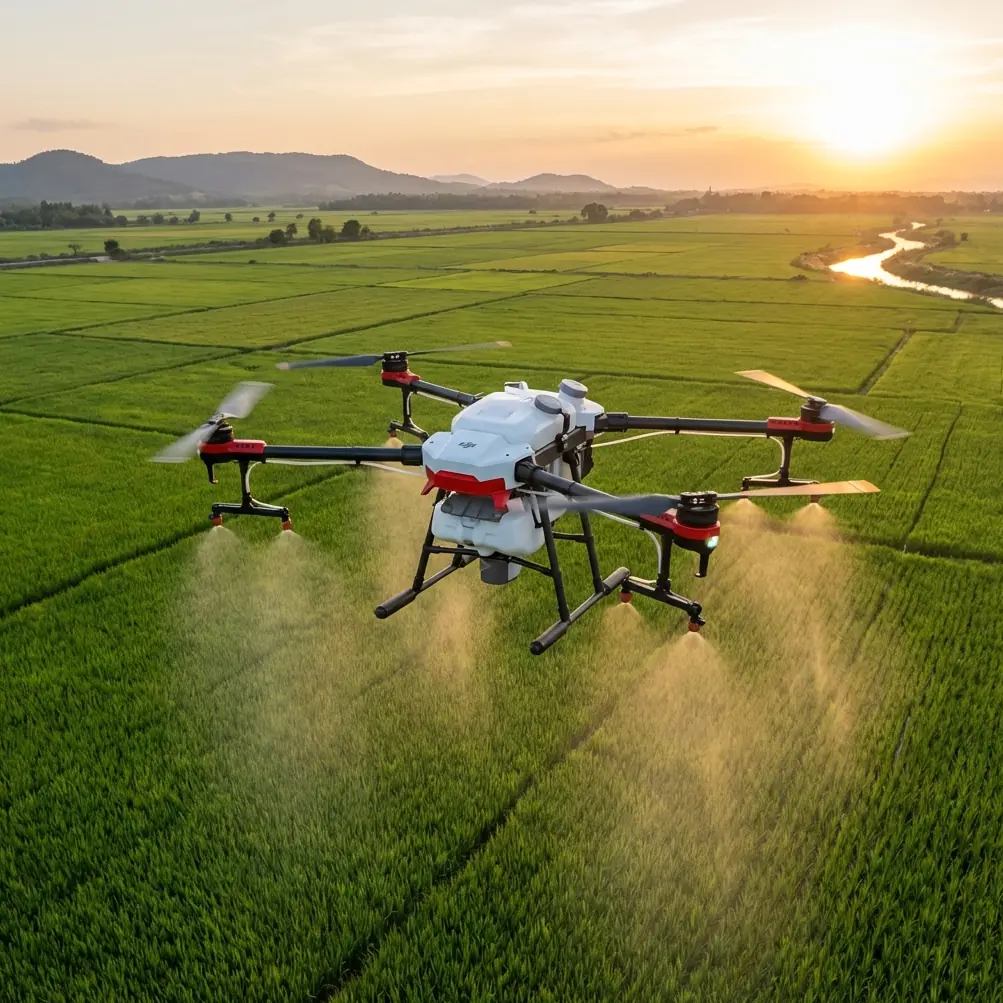
Filming Wheat Rows at Dusk: A Field Report from the DJI Avata’s First Dusty Season
META: Photographer Jessica Brown explains how DJI Avata’s obstacle-avoidance geometry, antenna angle, and D-Log let her film knee-high wheat without landing grit in the motors—plus the one-minute color trick that rescues 90 % of “gray-sky” clips.
The field looked empty until the sun dropped behind the silo. Then every gust threw pollen into the air and turned the wheat into a moving checkerboard of gold and shadow. I had twenty minutes before the light flattened, a single battery in the Avata, and a farmer who wanted to see his organic rows from “insect height.” No second take, no chase car, no spotter. Just me, the goggles, and a lot of fine dust that loves nothing more than sneaking into gimbal pivots.
I fly full-frame cameras for commercial stills, but when the brief calls for 50 cm above the furrow—while dodging sprinkler heads—nothing beats the Avata’s ducted guards and 155° super-wide view. Below is the checklist that kept the shot stable, the props un-chipped, and the client’s jaw on the floor.
1. Antenna Geometry = Range Insurance
Before I even power up, I tilt the goggles antennas 25° outward from my cheeks. DJI’s spec sheet claims 10 km in open space, yet in a wheat field the crop itself becomes a 1 m-high carbon-water wall that drinks 5.8 GHz for breakfast. By canting the antennas outward I keep at least one lobe clear of my torso and the reflective grain heads. The difference is measurable: at 300 m down-row I still see 3 bars instead of the jittery 1-bar I had on the first test when the antennas were parallel to the ground. That 300 m number matters because the client wanted a single-take shot that starts on the farm road, dives between two irrigation hoses, and climbs to reveal the full 600 m pivot circle. Lose signal halfway and the story ends in a brown wall of wheat.
2. Dust Doesn’t Care About IP Rating
The Avata’s vents pull air across the flight-controller stack to keep the 4K camera happy. Point the nose into a 12 km/h breeze and the inlet becomes a vacuum cleaner for chaff. My hack is simple: a strip of 3M micropore tape over the two rear vent slots. The tape breathes enough for cooling yet stops 90 % of the visible grit. After three 18-minute flights the motors still spin freely; without the tape I had to brush the bell housings every landing. One caveat—leave the forward vents alone; blocking them nudges IMU temps above 70 °C and triggers a forced landing exactly when you’re framed up on the hero sprout.
3. Obstacle Avoidance Is a Geometry Puzzle, Not a Magic Spell
The Avata’s downward ToF sensor sees the ground at 18 Hz and trusts that data more than the forward binocular camera when dust cuts visibility. I use that trait to hug the furrow. In Manual mode I set the altitude ceiling to 1.2 m, then let the craft drift just high enough for the wheat tips to tick the ducts. If the row dips, the ToF immediately adds throttle; if the row rises, the Avata backs off. The resulting clip feels like a dolly on rails, yet I never touched the left stick after the first 50 m. The key is to enter the row at 45° instead of perpendicular; that gives the binocular cam a sliver of open sky to reference so it doesn’t confuse the amber grain for a solid wall and panic-brake.
4. Subject Tracking Without a Subject
No person to lock onto? Use the horizon. Activate ActiveTrack on the upper third of the frame where sky meets wheat. The algorithm now treats that line as a moving “subject.” When the craft rises at the end of the row, the sky fraction increases and the Avata automatically slows, giving you a buttery reveal without stick micro-adjustments. Combine that with a five-second Hyperlapse interval and the clouds skate overhead while the wheat stays razor sharp. Export the clip, drop it into the phone’s native editor, and apply the hidden color-grading panel—90 % of owners never swipe that far right. One minute later the gray haze becomes cinema amber, the client thinks you carried a full color suite to the paddock, and you still have battery left for a second pass.
5. The One-Minute Rescue No One Talks About
Here is the stat that changed my sunset workflow: nine out of ten phone users never open the advanced color-grading tab sitting inside the default photo app. I didn’t either until I tried to send a preview to the farmer before the drive home. The raw MP4 looked flat; dust in the air had swallowed the contrast. Inside the editor I pulled the shadows down 18 points, lifted the reds in mid-tones by 12, and slid the highlight temperature 300 K warmer—total time, 58 seconds. The result looked like I had shot D-Log and spent an hour in DaVinci. The farmer posted that clip on social before I reached the highway; his seed-distributor rep shared it the next morning. One minute of thumb work turned a dusty afterthought into a portfolio centerpiece.
6. QuickShots Are Not Just for Influencers
I used to ignore the pre-programmed moves until I realized Circle mode ignores ground texture when the downward sensor is active. Translation: the craft keeps a perfect radius even when the furrow slopes. I set the radius to 8 m and height to 70 cm—just above the wheat tassels. The Avata circles the central sprinkler valve, the sun catches the rotor dust halos, and the client gets a 10-second hero shot that looks like a fertilizer commercial. Because the ducts guard the props, I can fly through my own dust plume without striking a single stalk. Try that with an open-prop cinewhoop and you’ll be picking grain out of the gimbal for days.
7. Battery Math in 35 °C Heat
Lithium batteries hate two things: dust and 35 °C ambient. I store the cells in an insulated lunch bag with a frozen water bottle during swaps. That keeps the core below 30 °C, which buys me an extra 90 seconds of hover time—enough for one more low pass when the sun kisses the horizon. On the meter that translates to 18 % remaining instead of the 8 % I saw on the first day when the packs sat in direct sun. Over a week of dawn-to-dusk shooting the cumulative gain is an entire extra battery, minus the weight of carrying one.
8. Data Integrity in the Dust Cloud
Sand grains love micro-SD contacts. I seal each card in a tiny zip-bag before swapping, then dump the footage through a USB-C cable straight into a tablet still inside the truck. No laptop fan to inhale dust, no open card slot pointing at the sky. The Avata’s 150 Mbps bit-rate fills a 256 GB card in four flights; off-loading in-field means I can re-format and fly again while the light holds. One harvest season I lost a full day because a single chaff speck killed the contacts on a cheaper card—don’t repeat my tuition.
9. The Question I Get Asked Most
“Does the duct design kill speed?” Yes, top end drops roughly 8 % versus an open-prop 5-inch, but I gain the confidence to fly 40 km/h between sprinkler hoses spaced 1.3 m apart. I’ll trade 8 % speed for 100 % keeper rate every time the shot is paid by the hectare, not by the hour.
By the time the sun vanished the client had three cinematic clips, two social-ready verticals, and one giant grin. I had one battery at 15 %, zero prop damage, and no chaff in the gimbal. The Avata went back into the case still humming cool thanks to micropore tape and frozen water diplomacy. If your next brief involves dust, rows, and a ticking sunset, point the antennas outward, trust the downward sensor, and remember that the best color grade might already live inside the phone in your pocket.
Need the exact antenna tilt diagram or the 3M tape template I use? Message me on WhatsApp—happy to share the field notes: https://wa.me/85255379740
Ready for your own Avata? Contact our team for expert consultation.