
Avata: Inspecting Fields Reliably in Windy Conditions
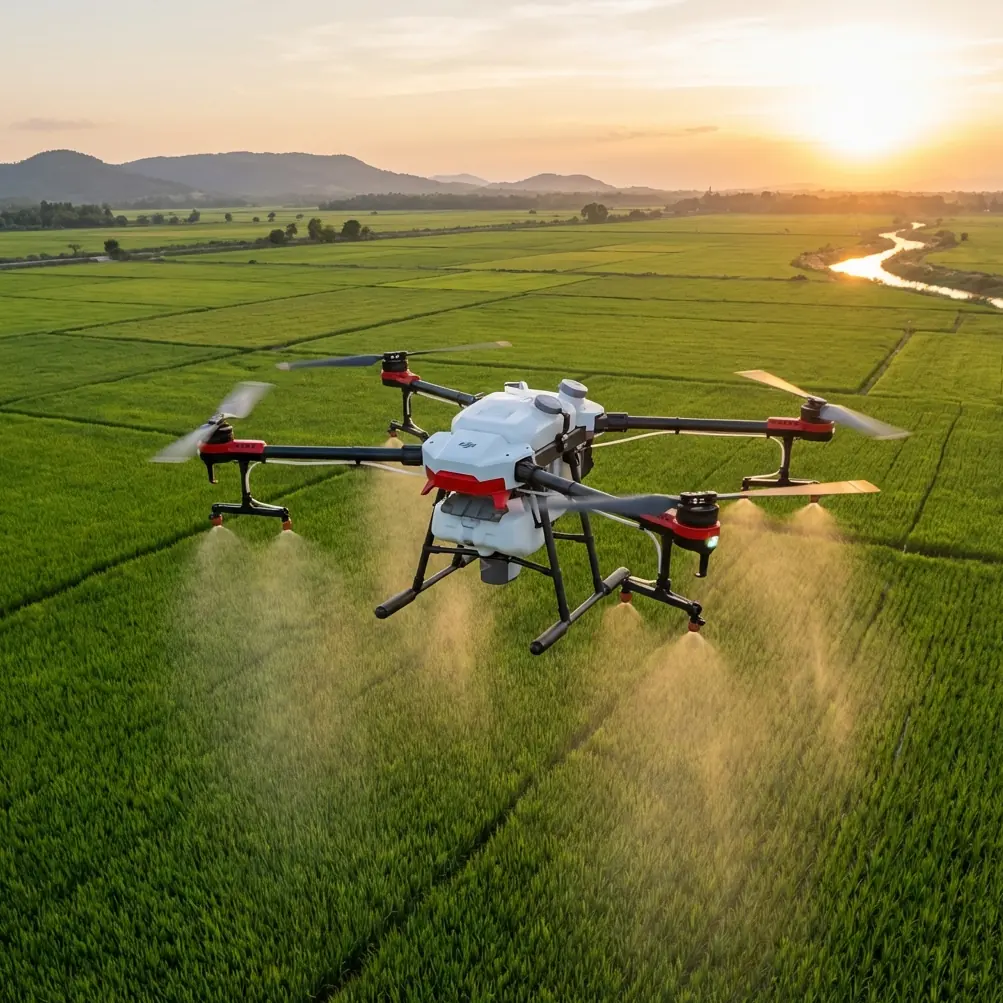
Avata: Inspecting Fields Reliably in Windy Conditions
META: Discover how the DJI Avata handles windy field inspections with precision obstacle avoidance, stable FPV footage, and expert antenna tips for maximum range.
By Chris Park | Drone Creator & Field Inspection Specialist
TL;DR
- The DJI Avata maintains stable flight in winds up to 10.7 m/s, making it a reliable tool for agricultural and open-field inspections where gusts are unavoidable.
- Proper antenna positioning on your motion controller and goggles can extend your effective range by 30-40% in challenging wind environments.
- Built-in obstacle avoidance sensors protect the compact airframe during low-altitude passes over crops, fences, and uneven terrain.
- D-Log color profile and Hyperlapse modes allow you to capture inspection-grade footage that reveals crop stress, drainage issues, and structural damage invisible to the naked eye.
The Problem: Wind Kills Inspection Quality
Field inspections are rarely performed in perfect weather. You schedule a day to survey 200 acres of farmland, check irrigation infrastructure, or assess storm damage—and the wind picks up to 25 mph. Traditional camera drones fight the gusts, producing shaky footage that obscures the very details you need to document.
Larger inspection platforms handle wind well but lack the agility to fly between tree lines, under power cables, or along fence rows at close range. You're left choosing between stability and access.
The DJI Avata eliminates that tradeoff. This guide breaks down exactly how to configure, fly, and optimize the Avata for field inspections when wind refuses to cooperate.
Why the Avata Thrives Where Other FPV Drones Fail
The Avata was designed as a cinewhoop-style FPV drone, but its engineering advantages translate directly to inspection work. Its ducted propeller design serves double duty: it protects the props from contact with obstacles like fence posts and crop canopies, and it increases thrust efficiency in turbulent air.
At only 410 grams, the Avata is light enough to maneuver through tight corridors between rows of crops or along the edges of storage buildings. Yet its motors generate enough thrust to maintain a stable hover in sustained winds of 10.7 m/s (approximately 24 mph).
Key Inspection Advantages
- Low-altitude confidence: The ducted prop guards prevent catastrophic blade strikes when flying 2-3 feet above crop rows.
- Immersive FPV perspective: The Goggles 2 system gives you a first-person view that reveals ground-level details no top-down survey can match.
- Subject tracking via ActiveTrack: Lock onto a fence line, irrigation pipe, or field boundary and let the Avata follow it automatically while you focus on visual assessment.
- Quick deployment: The Avata goes from case to airborne in under 90 seconds—critical when weather windows are shrinking.
Antenna Positioning: The Range Multiplier Nobody Talks About
Here's where most pilots lose performance before they even take off. The DJI Motion Controller and Goggles 2 both use directional antenna elements, and their orientation relative to the drone determines your effective range and video feed stability.
Expert Insight: Always keep your goggles' antennas pointed upward at roughly 45 degrees from horizontal, and angle them slightly toward the drone's operating area. In field environments with no vertical obstructions, signal reflection off the ground creates multipath interference. Tilting antennas upward reduces ground-bounce noise and can extend your usable range from 6 km to over 8 km in open terrain.
Step-by-Step Antenna Setup for Field Work
- Position yourself on elevated ground if available—even standing on a truck bed adds 3-4 feet of antenna height that matters.
- Rotate the Goggles 2 antennas so they form a "V" shape, each angled 45 degrees outward from center.
- Hold the Motion Controller at chest height, not waist level. The internal antenna radiates forward from the controller's face.
- Face the direction of flight. Your body absorbs 2.4 GHz and 5.8 GHz signals—standing sideways to your drone's flight path can cut signal strength by 40%.
- Avoid positioning near metal structures like grain bins, metal fences, or vehicles. Move at least 15 feet away from large metallic surfaces.
Configuring the Avata for Inspection-Grade Footage
Raw flight capability means nothing if your captured footage can't reveal the details inspectors need. The Avata's 48MP 1/1.7-inch CMOS sensor records 4K at 60fps, which is more than sufficient for documenting crop health, erosion patterns, and structural wear.
Recommended Camera Settings for Field Inspections
| Setting | Recommended Value | Reason |
|---|---|---|
| Color Profile | D-Log | Preserves shadow and highlight detail in high-contrast outdoor scenes |
| Resolution | 4K / 30fps | Balances detail with file size for long inspection sessions |
| ISO | 100-400 (manual) | Prevents noise in crop detail shots |
| Shutter Speed | 1/120s minimum | Freezes motion blur caused by wind-induced drone movement |
| White Balance | Manual / 5500K | Consistent color across changing cloud cover |
| EIS | ON (RockSteady) | Smooths wind-induced vibration without gimbal weight |
| FOV | Wide (155°) | Captures maximum field area per pass |
Why D-Log Matters for Inspections
When you're scanning a wheat field for signs of fungal infection or water stress, the differences between healthy and affected plants often exist in subtle color shifts—slightly yellowed tips, faint brown spots, uneven green saturation. Shooting in a standard color profile crushes these differences into a narrow band that's hard to distinguish in post-processing.
D-Log retains approximately 10 stops of dynamic range, preserving those subtle variations so you can apply color grading in post that amplifies problem areas. This is the difference between a report that says "possible stress detected" and one that pinpoints exactly which 50-meter section of a field needs treatment.
Pro Tip: Pair D-Log footage with a LUT designed for agricultural analysis. Several free LUTs are available that shift the color space to emphasize the NDVI-adjacent color ranges, making crop health variations pop on screen without requiring multispectral sensors.
Flight Strategies for Windy Field Inspections
Strategy 1: The Cross-Wind Grid
Fly your inspection passes perpendicular to the wind direction, not parallel. When you fly with the wind at your back, the Avata accelerates easily but struggles to decelerate for detailed observation. Flying into the wind gives you maximum control but drains the battery fighting resistance.
Cross-wind passes maintain consistent ground speed in both directions, giving you uniform footage quality and predictable battery consumption. Plan your grid so each pass is no longer than 800 meters, which keeps the drone within strong signal range.
Strategy 2: The Low-Altitude Boundary Sweep
For fence lines, drainage ditches, and field edges, fly at 3-5 feet altitude along the boundary using the Avata's obstacle avoidance sensors as your safety net. The downward-facing infrared sensors detect terrain changes and prevent ground strikes even when wind gusts push the drone downward.
Use QuickShots in Dronie or Circle mode to capture contextual shots of specific problem areas—a collapsed fence section, a blocked drainage outlet, or an erosion gully. These automated maneuvers produce professional documentation footage in 15 seconds without manual stick input.
Strategy 3: Hyperlapse for Time-Based Monitoring
Set up recurring Hyperlapse captures of the same field section across multiple visits. The Avata's Hyperlapse mode compresses 30 minutes of slow drift over a field into a 15-second clip that reveals patterns invisible in real-time observation: water pooling trajectories, shadow patterns indicating terrain unevenness, and wildlife traffic paths that may indicate pest issues.
Technical Comparison: Avata vs. Common Inspection Alternatives
| Feature | DJI Avata | DJI Mini 3 Pro | DJI Air 3 |
|---|---|---|---|
| Weight | 410g | 249g | 720g |
| Max Wind Resistance | 10.7 m/s | 10.7 m/s | 12 m/s |
| Obstacle Avoidance | Downward + Backward | Tri-directional | Omnidirectional |
| FPV Capability | Native (Goggles 2) | Via DJI RC | Via DJI RC 2 |
| Prop Guards | Built-in ducted | Optional accessory | None |
| Low-Altitude Agility | Excellent | Good | Moderate |
| Flight Time | 18 min | 34 min | 46 min |
| Best Use Case | Close-range FPV inspection | Lightweight survey | Wide-area mapping |
| ActiveTrack | Yes | Yes | Yes |
The Avata's shorter flight time is its primary tradeoff. Compensate by carrying 3-4 batteries and planning efficient grid patterns that maximize coverage per flight.
Common Mistakes to Avoid
- Flying in Sport mode during inspections: Sport mode disables obstacle avoidance sensors. In windy conditions near ground level, this is a recipe for a crash. Use Normal mode for inspection passes.
- Ignoring wind direction during takeoff: Always launch into the wind. A downwind takeoff in gusty conditions can push the Avata into nearby obstacles before it gains altitude.
- Using Auto ISO in D-Log: Auto ISO in D-Log creates exposure flicker between frames as clouds pass overhead. Lock your ISO manually and adjust shutter speed instead.
- Neglecting ND filters: Bright field conditions often force shutter speeds above 1/1000s, creating a jittery, unnatural look in video. An ND16 or ND32 filter brings the shutter speed back to the 1/60-1/120 range for smooth motion.
- Returning with less than 20% battery in wind: The Avata needs reserve power to fight headwinds on the return trip. Set your RTH battery threshold to 25-30% when operating in sustained wind above 15 mph.
- Storing footage without backup: Field inspections produce legally and financially significant documentation. Back up to a secondary device before leaving the site.
Frequently Asked Questions
Can the DJI Avata replace a traditional inspection drone for agricultural fieldwork?
For close-range, visual inspections at low altitude, the Avata excels in ways that traditional platforms cannot match. Its FPV perspective and ducted design allow it to fly safely through environments where conventional drones risk prop strikes. However, for large-area mapping or missions requiring flight times beyond 18 minutes, pair the Avata with a longer-endurance platform like the DJI Air 3 for a comprehensive inspection toolkit.
How do I maintain video feed stability in gusty wind conditions?
Three factors control feed stability: antenna orientation, distance, and interference. Follow the antenna positioning protocol described above, keep flights within 4 km in windy conditions (even though the system supports longer range), and avoid flying near high-voltage power lines or cellular towers that create electromagnetic interference. Switching from 5.8 GHz to 2.4 GHz transmission in the goggles settings also improves penetration through wind-blown dust and debris.
Is the Avata's obstacle avoidance reliable enough for low-altitude field passes?
The Avata's downward-facing infrared sensors are highly reliable for detecting flat terrain changes, gentle slopes, and solid obstacles like fence posts. They are less effective against thin objects like individual wire strands or very thin branches. In practice, maintain a minimum altitude of 3 feet over known hazard areas, and use the FPV feed through Goggles 2 as your primary situational awareness tool. The obstacle avoidance system should be treated as a backup safety layer, not a substitute for pilot awareness.
Ready for your own Avata? Contact our team for expert consultation.