
Using DJI Avata for Field Inspection in Extreme Temperatures
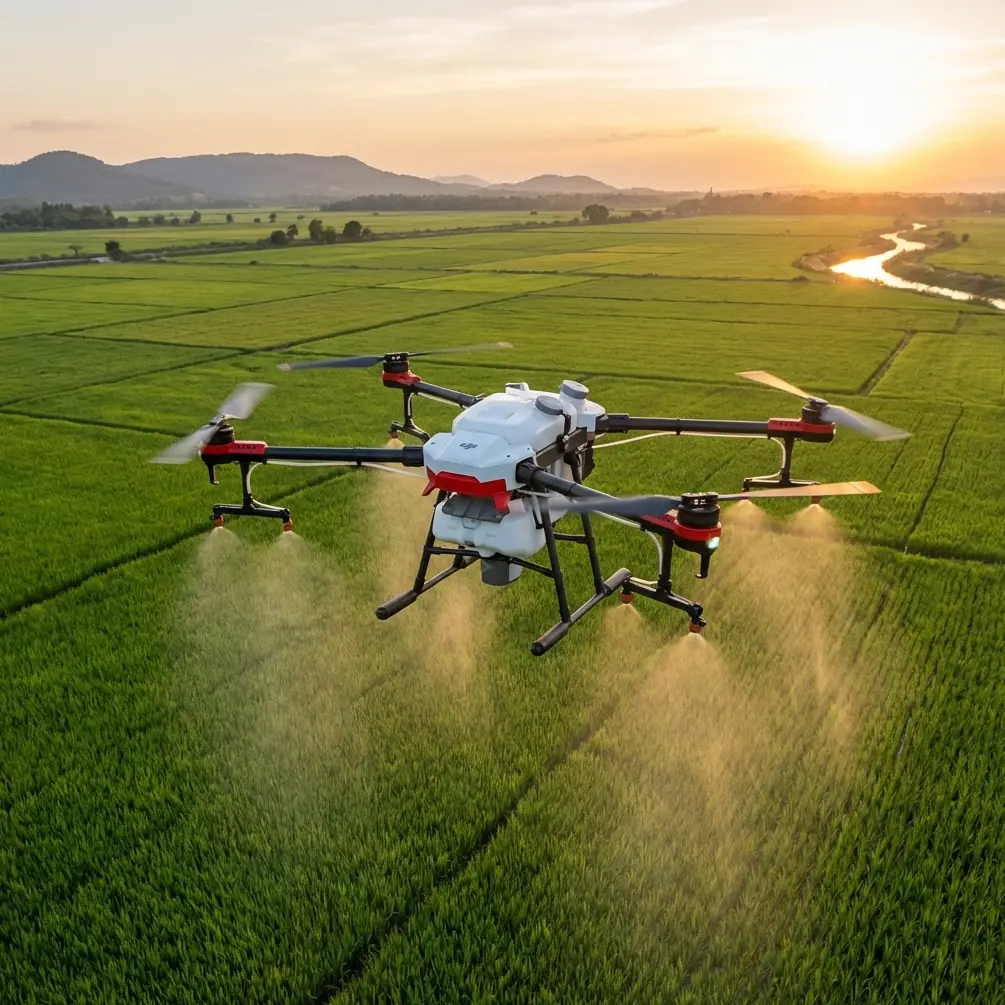
Using DJI Avata for Field Inspection in Extreme Temperatures: What Actually Matters
META: A technical review of DJI Avata for field inspection in extreme temperatures, with practical battery management advice, terrain-mapping context, and operational considerations tied to real surveying standards.
The DJI Avata is usually discussed as an immersive FPV aircraft. That framing misses something useful. In the field, especially when you are inspecting agricultural land, embankments, irrigation corridors, or rough terrain in punishing heat or bitter cold, Avata’s value is less about spectacle and more about control in tight spaces, stable low-altitude observation, and the ability to keep a pilot visually engaged with terrain features that matter.
I’ve spent enough time around outdoor imaging workflows to know that temperature changes everything. Batteries sag. Plastic feels different. Wind behaves differently near slopes. Light gets harsh and flat at the same time. If you are taking Avata into fields under extreme conditions, the aircraft is only part of the story. The real question is whether your operating method matches the terrain and the precision expectations of the job.
That is where the reference standards behind topographic work become surprisingly relevant.
Why terrain classification matters more than people think
The source material points back to several Chinese surveying standards, including GB 50026-2007, GBT 14912-2005, GBT 7930-2008, and CJJT 8-2011. On paper, these are not “Avata documents.” They are mapping and engineering measurement rules. But for anyone inspecting fields, they tell you something operationally valuable: terrain should not be treated as visually uniform.
One of the cited details is that terrain categories are classified by ground slope angle, α. Another repeats the same idea in slightly different wording: terrain class can be determined by the slope represented across most of the ground surface. That sounds dry, but in practice it changes how you fly.
A flat planted field, a stepped orchard, and a sloped drainage edge are not just different scenes. They impose different demands on line selection, altitude holding, image interpretation, and safe return margins. In extreme temperatures, those differences become sharper. On steep ground, cold batteries or heat-stressed packs reduce the margin you have when climbing back out of a low inspection pass. Near uneven terrain, obstacle awareness is not just about avoiding a tree or pole. It is about managing closure rate when the ground itself rises toward the aircraft.
Avata is not a survey platform in the classical sense, and it should not be mistaken for one. But when you use it to visually inspect field conditions, slope-driven terrain classification is still a smart planning tool. Before takeoff, ask a surveyor’s question instead of a hobbyist’s question: what kind of ground am I dealing with, and how does that affect positional judgment and image usefulness?
Inspection quality is not only about camera sharpness
The source material also references a core measurement principle from GBT 14912-2005 section 3.7.1: the positional mean error of a feature point relative to a nearby control point, and the distance mean error between adjacent feature points, must stay within prescribed limits. That standard was written for topographic mapping, not freestyle drone footage. Still, the principle translates well.
If you are inspecting fields, the practical issue is repeatability.
Can you revisit the same ditch edge, irrigation head, crop boundary, access road shoulder, or erosion line and judge whether a change is real? Can two image sets captured on different days be interpreted with confidence? If not, then even beautiful footage has limited operational value.
This is where many pilots overestimate what “subject tracking” or automated cinematic functions can do for inspection work. ActiveTrack, QuickShots, and Hyperlapse are useful in their own lanes, but field inspection in extreme conditions usually depends more on disciplined path repetition than on automation. Avata’s responsive handling and FPV-style awareness can help you hold a deliberate line along a fence, canal, or tree row. That matters more than flashy movement.
The standards cited in the reference are fundamentally about spatial trust. The takeaway for Avata users is simple: if the mission involves documenting land conditions, fly in a way that supports consistent interpretation. Obstacle avoidance and controlled low-speed passes help. So does maintaining a repeatable altitude relative to the local surface rather than only relying on a rough visual estimate from the launch point.
The overlooked role of contour thinking
Another important detail in the reference set is the requirement that basic contour interval selection should follow established rules, with Table 24 specifically cited for large-scale topographic mapping standards. The exact contour interval values are not reproduced in the extract, but the operational lesson is clear: vertical representation must match the terrain and the map purpose.
For Avata field inspection, this matters in two ways.
First, steepness is easy to underestimate in wide-angle imagery. FPV views can make a slope look dramatic, but they can also distort judgment about actual grade and relief. If your inspection objective includes drainage performance, rut depth, berm shape, or erosion progression, you need to think in contour terms even if you are not generating a contour map. Where does the land break? Where does runoff likely accelerate? Which ridgeline or depression deserves another pass from a lower angle?
Second, extreme temperatures often coincide with periods when terrain behavior becomes more meaningful. In summer heat, dry cracked surfaces and stressed vegetation reveal irrigation problems. In cold weather, frozen ground and shallow depressions can expose drainage or access risks. Avata’s camera, especially when used thoughtfully with D-Log for more flexible tonal handling, can preserve detail in difficult light. But the pilot still needs a topographic mindset. The aircraft captures the scene. The operator decides whether the scene is being read correctly.
Battery management in extreme temperatures: the field lesson that saves missions
Here is the practical tip I trust from experience: never judge battery readiness only by the percentage shown at takeoff when working in extreme temperatures.
In cold conditions, I keep packs insulated until they are needed and avoid leaving them exposed on a truck bed or in open wind. In very hot conditions, I do the opposite: I keep batteries out of direct sun, never let them bake inside a vehicle, and give them time to cool between sorties. The mistake is assuming the same number on the screen means the same real-world performance.
With Avata, this matters because field inspection often involves low-level route work with frequent attitude changes, small accelerations, and occasional climbs over vegetation, trellises, or berms. A battery that looks fine at launch can drop faster than expected once it is asked to deliver sustained power in temperature stress.
My own rule is simple: in harsh conditions, fly the first battery as a diagnostic battery. Watch voltage behavior, not just percentage. If you see an early sag in the cold or unusual heat buildup after landing, shorten the next sortie immediately. That one decision can preserve both aircraft safety and data quality because it prevents the rushed final minute that ruins inspection discipline.
This also connects back to terrain classification. On flatter ground, a conservative reserve may be enough. On sloped ground classified by the sort of α-based terrain categories referenced in GB 50026-2007 and GBT 14912-2005, reserve margins should be higher. A return path that includes climbing out over rising terrain is not equivalent to a flat return over open rows.
Where Avata fits in a field inspection workflow
Avata is not the aircraft I would choose for every mapping task. If the assignment requires formal orthomosaic production tied tightly to control and strict positional tolerances, a dedicated mapping drone is the proper tool. The source standards make that clear by emphasizing feature-point positional error and contour interval discipline. Those frameworks exist for a reason.
But that does not make Avata irrelevant. It makes Avata specialized.
Its strength is the inspection layer that sits before or beside formal survey work:
- checking field access corridors before crews enter
- examining irrigation lines along vegetation edges
- reviewing embankments, ditches, and drainage cuts at low altitude
- visually verifying anomalies discovered by other datasets
- documenting conditions in areas where a more agile, immersive flight path helps reveal detail
In these use cases, obstacle avoidance is not just a safety checkbox. It expands what can be inspected confidently at lower altitude. Around tree lines, posts, netting, and uneven ground transitions, the ability to manage proximity better can turn Avata into a useful close-visual assessment tool.
ActiveTrack is more limited in this setting than many buyers expect, but it can still help in controlled follow scenarios when tracking slow-moving equipment for workflow observation on open land. QuickShots and Hyperlapse, despite being associated with creative flying, also have practical value when used sparingly: a Hyperlapse sequence over a fixed route can reveal cloud-shadow movement, water pooling changes, or activity patterns around a field edge. The key is intent. These are not gimmicks if they answer an inspection question.
Image profile and interpretation under harsh light
Extreme temperatures often bring harsh lighting. Summer glare can flatten crop texture at noon, while winter light can produce strong contrast across ridges and furrows. D-Log becomes useful here because it protects tonal flexibility, especially where you need to hold detail across both reflective soil and shaded recesses.
That matters operationally because field inspection is often about subtle differences. A drainage issue is sometimes only a slight tonal change. A stressed patch in a field might appear first as texture inconsistency rather than bold color contrast. If you blow out highlights or crush shadows, you lose the evidence.
Still, no picture profile rescues poor route planning. If the goal is comparison over time, keep your line, altitude band, and viewing angle consistent. The standards in the reference material focus on error limits and terrain-aware representation for exactly this reason: the usefulness of spatial information depends on consistency.
A disciplined way to fly Avata in extreme field conditions
For readers actually putting Avata to work in fields, this is the operating mindset I recommend:
- Classify the ground first. Flat, rolling, or steep by dominant slope. Think in terms of the α-based terrain categorization mentioned in the reference standards.
- Set the mission goal. Visual inspection, anomaly verification, progress documentation, or route scouting. Do not confuse these with formal mapping deliverables.
- Manage batteries by temperature, not optimism. Protect them from cold soak and heat soak. Use the first sortie to read battery behavior.
- Fly repeatable lines. This is the practical translation of standards that care about point-position and spacing error relative to nearby reference.
- Use Avata’s agility where it helps. Low, careful passes around ditches, rows, banks, and access edges are where it earns its place.
- Avoid overusing automated modes. ActiveTrack, QuickShots, and Hyperlapse are tools, not mission design.
- Capture for interpretation. D-Log and deliberate framing beat dramatic motion every time when the task is land assessment.
If you are trying to build a serious field workflow around Avata and want to compare setup options or accessories for harsh-weather operations, you can message the team here and discuss the use case directly.
The bottom line
Avata becomes more valuable when you stop treating it like a toy for cinematic passes and start treating it like a close-range observational platform. The source material, although written around photogrammetry and topographic standards, reinforces a discipline that field operators should borrow: respect terrain classification, respect positional consistency, and respect vertical context.
Two details from those standards stand out. First, feature-point positional error relative to nearby control and adjacent features is not allowed to drift casually under GBT 14912-2005. Second, terrain category is determined by slope angle α, with related rules for basic contour interval selection under GB 50026-2007 and CJJT 8-2011. Even if Avata is not your formal survey aircraft, those ideas still shape better flights. They push you toward consistency, toward terrain-aware planning, and away from the false belief that a good-looking clip is automatically a useful inspection record.
For extreme-temperature field work, that mindset matters as much as the aircraft itself.
Ready for your own Avata? Contact our team for expert consultation.