
Avata Inspecting Tips for Fields in Complex Terrain
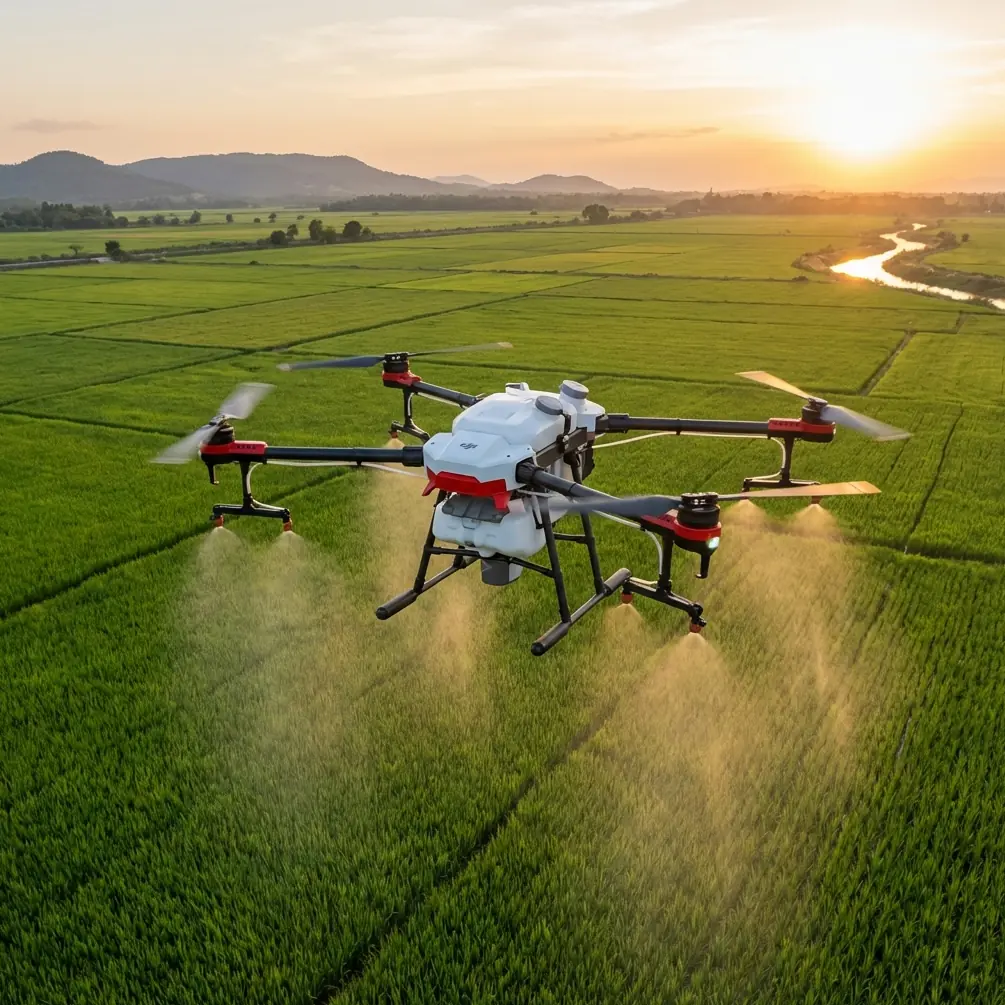
Avata Inspecting Tips for Fields in Complex Terrain: What Sichuan’s Low-Altitude Airspace Hiring Signal Means on the Ground
META: A field-tested look at using DJI Avata for inspection work in difficult terrain, grounded in Sichuan’s low-altitude airspace recruitment news and practical workflow tips for safer, smarter flights.
When a provincial low-altitude airspace operation service center starts hiring with formal public staffing status, that is not background noise. It tells you something basic and very practical: low-altitude flight is becoming more organized, more managed, and more operationally significant.
The recent recruitment notice for the 四川省低空空域运行服务中心, or Sichuan Low-Altitude Airspace Operation Service Center, stands out for two reasons. First, the hiring itself confirms that the unit is actively building capacity. Second, the phrase “有编制” signals that these are not casual temporary roles but positions tied to an established public institutional framework. For anyone flying small UAVs in demanding landscapes, especially for civilian field inspection, that matters more than it might seem at first glance.
I shoot and document landscapes for a living, but I also think like an operator. If your reader scenario is field inspection in complex terrain, Sichuan is almost the perfect lens through which to understand the challenge. Mountain shadows change fast. Terraced plots break line of sight. Valleys distort your sense of distance. Wind moves differently along ridges than it does over open ground. A drone that feels simple over a flat test field can become far more difficult to use when your target area is folded into slopes, tree lines, irrigation structures, and uneven access roads.
That is where Avata becomes interesting—not as a generic drone choice, but as a tool whose strengths need to be matched to a more structured airspace environment.
The real problem: complex fields punish sloppy flight planning
People often talk about image quality first. In field inspection, that is rarely the first issue. The first issue is whether you can get repeatable, usable coverage without putting the aircraft into a bad position.
In broken terrain, the obstacles are not isolated. They stack. Utility lines cross narrow farm roads. Tree canopies overhang embankments. Small sheds, poles, and slope transitions appear suddenly when you round a contour. If you are trying to inspect crop condition, drainage, access paths, fence lines, or terrain changes around planted sections, the challenge is less about pure range and more about confidence in confined low-altitude movement.
Avata’s compact, protected design gives it a different personality in these environments. For close-in visual documentation, especially around edges, narrow passages, and awkward approach angles, it can do work that feels less natural with larger airframes. That does not remove risk. It changes the type of risk you are managing.
Obstacle awareness and careful route selection become operationally significant here. In a terraced or hillside field, “just fly higher” is not always the answer because height can flatten the visual information you actually need. You may need to follow the slope, skim along a retaining edge, or check a narrow run of irrigation where vertical separation is limited. A platform like Avata is useful precisely because it can move through these visual layers while still producing footage clear enough for review.
Why the Sichuan hiring news matters to Avata operators
The recruitment by the Sichuan Low-Altitude Airspace Operation Service Center is a signal that the airspace side of drone work is maturing alongside the aircraft side. That center’s very existence points to a more formal operational ecosystem for low-altitude activity. And the fact that it is recruiting with institutional staffing status suggests continuity, administration, and oversight rather than ad hoc coordination.
For field inspectors, survey support crews, agronomy teams, and visual documentation specialists, this changes the mindset required before takeoff.
A more organized low-altitude environment means your flight workflow cannot stop at batteries, SD cards, and weather checks. It should include local airspace awareness, route discipline, and a better understanding of where your mission sits within broader regional flight activity. In mountainous agricultural zones, that is especially relevant because low-altitude corridors may be busier than they look. Utility inspection, agricultural service flights, training activity, and infrastructure documentation can all converge in the same vertical space.
So while Avata is often discussed in terms of immersion and agility, the Sichuan story reframes it. The drone is only one layer. The operating environment is becoming a system.
A practical Avata workflow for difficult field inspections
If your task is inspecting fields in complex terrain, the goal is not cinematic novelty. It is readable data, minimal repositioning, and safer control margins.
Here is the approach I recommend.
1. Break the site into terrain logic, not map rectangles
On a standard map, a field looks like a shape. On location, it behaves like a sequence of micro-environments. A lower wet edge, a middle planting section, a tree-screened corner, a terrace drop, a vehicle track, an upper boundary. Plan around those changes.
With Avata, this matters because each terrain segment may demand a different flight style. One section may be suited to a slow lateral pass. Another may need a shallow climbing arc. Another may be better documented with a stationary hover and yaw-based scan rather than forward movement.
This is where subject tracking and ActiveTrack-related thinking can help conceptually, even if your inspection target is not a person or vehicle. The lesson is consistency of framing. If you want repeatable review footage, define visual anchors—a ditch line, row edge, fence, path, or contour break—and build each pass around them.
2. Use obstacle avoidance as a margin, not an excuse
In complex terrain, obstacle avoidance is there to preserve margin, not to justify aggressive line choices. That distinction separates recreational flying from disciplined inspection.
If Avata gives you a safer buffer around trunks, poles, embankments, or built structures, good. Use that buffer to maintain image stability and reduce workload. Do not spend it by pushing deeper into clutter than the mission requires.
Operationally, this matters because field inspections are often repetitive. The risk is rarely one dramatic mistake. It is accumulated complacency over multiple passes.
3. Capture wide context first, then low passes
I prefer starting with a high-level establishing circuit, then tightening the work. A broad first pass helps identify shadow pockets, glare zones, wind effects, and access constraints. It also reveals where the terrain will visually compress distance, which is common in valleys and stepped fields.
After that, Avata can move into its most useful role: low-altitude contextual inspection. You are not only looking for crop condition or boundary integrity. You are checking relationships—water runoff versus planting rows, slope wear versus vehicle access, tree overhang versus field edge, or erosion near retaining features.
QuickShots and Hyperlapse are not usually the core of an inspection workflow, but they do have selective value. A controlled Hyperlapse from a fixed route can help show change across a broader field environment if you are documenting movement patterns like shifting shadows, vehicle circulation, or weather build-up over a site. QuickShots, used sparingly, can generate fast visual summaries for non-pilot stakeholders who need orientation before reviewing closer passes.
The key is restraint. Use automation when it clarifies the site, not when it distracts from it.
Why image profile choice matters more than people admit
Field inspection is often reviewed later, on a different screen, by someone who was not on site. That is why D-Log can be genuinely useful.
In flat midday light or high-contrast hillside conditions, D-Log preserves more flexibility for balancing highlights and shadow detail in post. This matters when your key evidence sits in a transition zone: damp soil beneath a bright terrace edge, vegetation stress near reflective plastic covering, or structural wear under a shaded overhang.
The operational significance is simple. Better tonal recovery means fewer return flights. If a review team can pull usable detail from one well-planned session, your mission efficiency improves immediately.
That does require discipline in exposure and post workflow. D-Log is not a magic fix. But for field inspection teams trying to build a consistent archive, it is a smarter foundation than treating every mission like casual straight-out-of-camera capture.
The accessory that made Avata more useful in the field
One third-party addition I have seen make a tangible difference is a high-gain patch antenna setup for the controller side, especially in undulating farmland where folds in the terrain can weaken link confidence faster than expected.
This kind of accessory does not change the legal or procedural side of flying, and it should never be treated as a substitute for proper positioning. But in practical terms, it can improve signal stability when you are working near ridges, terraces, or vegetation breaks that partially complicate the line between pilot and aircraft. In field inspection, smoother link performance often translates to calmer inputs and cleaner footage.
Just as important, it can reduce the temptation to keep shifting your stance mid-mission in rough ground. A steadier operator usually becomes a better image-maker.
If you are evaluating options for field-oriented Avata setup choices, it helps to discuss real terrain use cases with someone who understands them. I’ve seen teams compare notes through this direct WhatsApp channel when sorting through practical accessory questions.
What Sichuan teaches the rest of the market
The Sichuan recruitment item may look local, but the pattern is broader. When a provincial low-altitude airspace operation service center is hiring, and doing so under formal establishment status, it reflects a wider transition from fragmented drone activity to structured low-altitude operations.
That should influence how commercial and industrial drone users think about Avata.
Not every mission needs a large mapping platform. Not every inspection requires multispectral data. There is a real place for compact aircraft that can document hard-to-reach visual conditions quickly and with lower setup friction. But as the surrounding ecosystem becomes more formal, pilots who treat lightweight operations casually will feel increasingly out of step.
The smarter approach is to combine Avata’s strengths with institutional awareness:
- Understand local flight context before you arrive.
- Design routes around terrain, not assumptions.
- Use obstacle avoidance conservatively.
- Prioritize repeatable framing.
- Capture footage in a profile that supports later analysis.
- Treat accessories as workflow refinements, not shortcuts.
In places like Sichuan, where topography can humble even experienced operators, these habits are not optional. They are the difference between getting a useful inspection record and returning with dramatic but operationally thin footage.
Avata’s best role in field inspection
I would not describe Avata as a universal inspection aircraft. That misses the point. Its best role is focused and specific.
It excels when the field environment is visually complex, physically awkward, and rich in low-altitude detail. It is especially effective when you need to understand how a site feels spatially, not just how it looks from above. That includes checking embankments, terraces, drainage runs, field entrances, perimeter vegetation, and other features that gain meaning from perspective.
The Sichuan hiring news reminds us that low-altitude work is becoming part of a larger managed framework. In that context, Avata is most valuable not as a toy-like flyer for exciting footage, but as a disciplined visual tool for close-range inspection in terrain that resists easy observation.
That is the real takeaway. Better drones matter. Better operators matter more. And better operating systems around them may matter most of all.
Ready for your own Avata? Contact our team for expert consultation.