
Avata in Dusty Wildlife Mapping: A Field Tutorial Shaped by
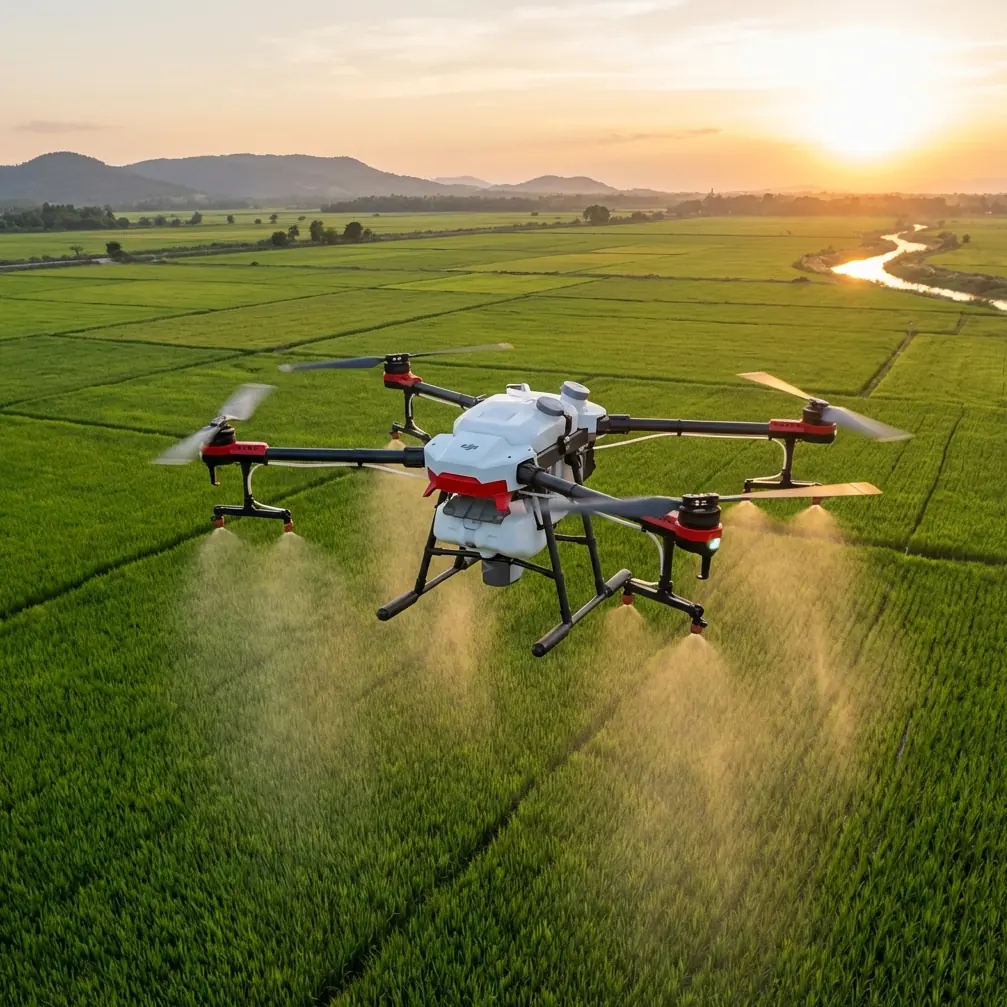
Avata in Dusty Wildlife Mapping: A Field Tutorial Shaped by Flight Control Reality
META: A practical expert tutorial on using Avata for dusty wildlife mapping, with obstacle avoidance, D-Log workflow, weather adaptation, and why classic UAV control research still matters in the field.
Dust changes everything.
It softens contrast, clogs visibility, unsettles light, and turns a simple wildlife mapping session into a moving technical problem. If you are flying Avata in that environment, you are not just composing nice footage. You are managing stability, situational awareness, and repeatability while animals move through terrain that rarely gives you a second chance.
I approach this as a photographer first, but dusty wildlife mapping is not only about imagery. It is about extracting usable visual information from a flight that may start in calm air and, ten minutes later, be dealing with gusts, shifting sun, and airborne grit. That is where Avata becomes more interesting than its compact footprint suggests.
This tutorial is built around one core idea: the reason a drone feels trustworthy in difficult conditions is rooted in flight control design. The reference material behind this article comes from a Harbin Institute of Technology undergraduate design paper on a hexacopter, and its cited research is revealing. It points to a long chain of control work, including Bouabdallah, Noth, and Siegwart’s 2004 comparison of PID and LQ control techniques for an indoor micro quadrotor, visual-feedback control research from 2002, and later work on real-time inertia tensor identification using adaptive control. Those are not abstract academic footnotes. For an Avata operator mapping wildlife in dust, they explain why the aircraft can hold attitude, recover from disturbance, and remain flyable when conditions stop being tidy.
Why control theory matters when you are trying to map animals
Most pilots do not think about control architecture once the props are spinning. They think about battery, route, subject behavior, and line of sight. Fair enough. But the field rewards the pilot who understands what the aircraft is solving in the background.
The reference paper is nominally about a six-rotor design, yet the cited literature leans heavily into quadrotor control: PID versus LQ, backstepping, sliding mode, visual feedback, and adaptive parameter identification. That mix tells us something operationally useful. Stable UAV flight is not a one-trick problem. It is a negotiation between sensor input, model accuracy, and control response. In wildlife mapping, especially in dust, this matters because the aircraft is constantly being nudged off its ideal path.
A gust from a dry riverbed does not care about your shot plan. Neither does a sudden plume of dust when a herd shifts direction. If the drone can rapidly correct attitude and preserve predictable movement, your map remains coherent. If not, your overlap, tracking, and framing fall apart.
That is the practical significance of the 2004 PID vs LQ comparison cited in the source. PID remains familiar because it is intuitive and effective across many scenarios. LQ-style optimization, by contrast, reflects a more model-driven effort to balance control objectives. You do not need to derive the equations in the field. You just need to appreciate what they produce: a drone that feels less nervous, less sloppy, and better able to translate pilot intent into usable flight lines.
Pre-flight setup for dusty wildlife work with Avata
Avata is not a survey-only platform in the traditional sense, so you need to build a method that suits its strengths. I use it for low-altitude visual mapping of animal movement corridors, water access points, and edge habitats where standard overhead passes are not the whole story. Its compact form helps when access is tight and the terrain is awkward.
Before takeoff, I work through five priorities.
1. Read the dust, not just the wind
A weather app may give you average wind, but dust reveals local turbulence. Watch grass tops, loose soil, and how particulates drift near rocks or scrub. Wildlife zones often create microcurrents around ridges and dry gullies. If dust is lifting in pulses rather than flowing cleanly, expect irregular corrections from the aircraft once you descend near terrain.
2. Plan for low-contrast imaging
Dust flattens the scene. If your goal is to identify paths, nesting zones, burrows, or movement clusters, protect dynamic range. This is where D-Log matters. It gives you more room to recover highlights and muted shadow detail later, especially when sunlight breaks through cloud or haze mid-flight.
3. Choose a route that respects animal behavior
Do not fly directly at wildlife to “capture” the scene. Build lateral passes and offset approaches. The point is to map presence and movement without causing displacement. Avata’s agility helps here because you can arc around the area instead of forcing linear approaches.
4. Keep obstacle avoidance in your mental model
Obstacle avoidance is useful, but dusty air and cluttered environments can complicate any sensing system’s confidence. I treat it as an aid, not a substitute for route discipline. In dry woodland, thorn scrub, fence wire, and dead branches can all become bigger problems when visibility shifts.
5. Define your data target before launch
Are you documenting watering patterns? Trail density? Shelter use under heat stress? Or producing a visual baseline before a land-management intervention? Your answer changes altitude, camera angle, and speed. Wildlife mapping is much more reliable when the flight objective is narrow.
My field workflow when the weather flips mid-flight
This is the moment that teaches you whether your setup is real or theoretical.
On one flight in a dusty grassland edge, I launched under stable light with only a light crosswind. The goal was to map animal entry lines converging on a shallow water point. About six minutes in, the weather shifted. Not dramatically. Enough to matter. Wind stiffened along the slope, and the air picked up dust from a dry patch to the west. Light changed too. The scene went from crisp and warm to milky and uneven.
This is where Avata handled itself well, and where the old control research becomes more than history.
The aircraft began making visible small corrections, but not the kind that destroy confidence. That steadiness is exactly why work on control techniques such as PID, backstepping, and adaptive control still deserves attention. The source references include research on real-time inertia tensor identification for a mini quad-rotor using adaptive control. Operationally, that line of thinking matters because a drone in the real world is never flying in a perfect, fixed model. Disturbances alter behavior. A system that can tolerate changing dynamics produces cleaner movement and less overreaction.
In practice, I responded in four steps.
First, I reduced speed. Dust punishes aggressive movement because it multiplies blur, raises collision risk, and makes subject interpretation harder.
Second, I shifted to slightly higher altitude over the roughest patch to avoid flying through the thickest particulate plume. That preserved visual clarity and reduced the chance of fighting near-ground turbulence.
Third, I stopped trying to “complete the original pattern” and focused on the most valuable corridor. This is a hard discipline for many pilots. Mapping gets worse when you stubbornly chase the entire plan through changing conditions.
Fourth, I leaned on framing discipline rather than automation for the key segment. Features like subject tracking and ActiveTrack can be useful in certain civilian observation scenarios, but wildlife in dust often presents ambiguous edges and crossing movement. I prefer manual supervision whenever multiple animals or brush lines compete in frame.
The result was not cinematic perfection. It was better than that. It was a usable record of movement behavior under real conditions, which is what mapping work is supposed to deliver.
How to use Avata’s intelligent features without letting them drive the mission
Avata attracts attention for the obvious reasons: immersive flying feel, compact size, and dynamic image capture. For wildlife mapping, the trick is to use those strengths selectively.
Obstacle avoidance
Helpful in edge habitat, especially near brush, trunks, and uneven terrain transitions. Its real value is not making you brave. It is giving you an extra margin while you maintain a conservative route. In dust, I assume the environment is less readable than it looks on a clean day.
Subject tracking and ActiveTrack
These can assist when monitoring a single clearly separated animal path or following movement along a visible line. They become less dependable when multiple animals intersect, when dust reduces edge clarity, or when vegetation creates false visual priorities. Treat tracking as a support tool, not as a field biologist.
QuickShots
Usually associated with creative content, but there is a practical angle. A repeatable short movement can quickly establish terrain context around a den area, water hole, or fence breach without improvising a complex manual move. The key is moderation. Wildlife mapping values consistency over flair.
Hyperlapse
Underused for habitat observation. If dust is moving across a landscape and you need to show how visibility, light, or animal presence changes over time, Hyperlapse can create a useful environmental record. That said, avoid it when the air is unstable enough to compromise repeatability.
D-Log
This one matters most for serious output. Dusty environments create veiled highlights and muddy midtones. D-Log gives you the latitude to separate trail marks, vegetation stress, and animal contrast during grading. If the weather changes mid-flight, that extra flexibility becomes even more valuable.
Building a repeatable mapping pass with Avata
If you want reliable results, do not fly “inspired.” Fly structured.
I use a three-layer pass design.
Layer one: establishing sweep.
A moderate-height pass to read terrain logic. Where are the access lines? Where do shadows hide surface patterns? Where is dust concentrating?
Layer two: corridor examination.
Lower, slower runs along the most active movement lines. Keep turns broad and avoid cutting close over subjects.
Layer three: contextual orbit or lateral reveal.
A short movement to relate trails to water, cover, fencing, or topographic breaks. This is where QuickShots can occasionally save time if the space is open and behavior is stable.
After landing, I compare not just image quality but route consistency. Did the aircraft remain composed in gusts? Were attitude corrections manageable in the footage? Did dust compromise obstacle reading? This review loop is where good pilots improve fastest.
If you need a second opinion on field setup or post-flight workflow, I’d point people to this direct WhatsApp channel for practical discussion: https://wa.me/85255379740
What the reference material quietly teaches Avata pilots
The source document is not about Avata specifically. It is a university design paper on a hexacopter, and the extracted page is a references section. That might sound too indirect to matter. I see it differently.
When a design paper cites work like visual-feedback control from 2002 and micro-quadrotor design and control research from 2004, it reflects the foundations of the confidence we now take for granted in modern UAVs. The chain from academic control experiments to present-day flight behavior is direct. Stable small-aircraft performance did not appear because drones got popular. It was built through years of work on how these machines estimate, correct, and hold themselves together in imperfect air.
That matters to an Avata user in dusty wildlife mapping because your mission quality depends on those hidden layers. Every time the aircraft stabilizes after a side gust, every time it remains readable near terrain, every time it turns pilot input into a smooth enough line for usable habitat documentation, you are benefitting from exactly the kind of control research cited in that 58-page academic project.
The specific detail that the paper is a Harbin Institute of Technology undergraduate thesis also matters in a broader way. It shows how deeply multirotor control knowledge has spread through engineering education. This is not niche theory living in isolated labs. It became standard enough to anchor student design work. That diffusion is part of why today’s civilian drone operators can expect a compact platform like Avata to perform with a level of refinement that once required far more specialized systems.
Final field advice
Dusty wildlife mapping rewards restraint.
Do less, but do it cleanly. Fly slower than your instincts suggest. Use D-Log when the atmosphere is flattening your scene. Trust obstacle avoidance as a backup, not a plan. Be selective with ActiveTrack and subject tracking when multiple moving elements compete. And when weather turns mid-flight, let the mission shrink rather than forcing the aircraft to satisfy a script written for calmer air.
The deeper lesson is simple: good footage is nice, but stable data is better. Avata earns its place in this work when you use its agility, imaging, and control confidence to document habitat honestly, even when the air starts to misbehave.
Ready for your own Avata? Contact our team for expert consultation.