
Avata Guide: Mastering Urban Field Monitoring
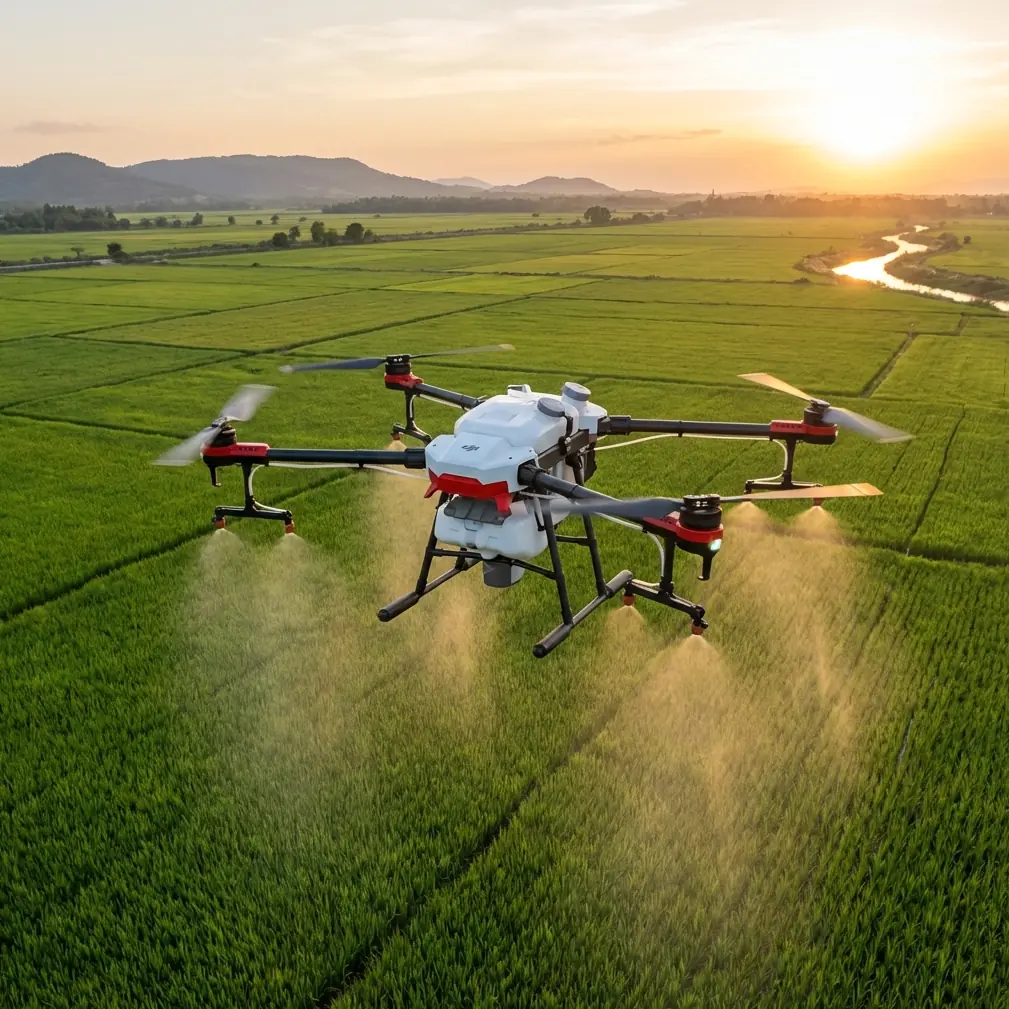
Avata Guide: Mastering Urban Field Monitoring
META: Learn how the DJI Avata transforms urban field monitoring with immersive FPV flight, obstacle avoidance, and pro-grade features for stunning aerial data.
TL;DR
- Avata's built-in propeller guards and downward sensors enable safe, low-altitude flights over urban agricultural plots
- D-Log color profile captures maximum dynamic range for post-processing field health analysis
- QuickShots and Hyperlapse modes create compelling documentation of crop progression
- Compact FPV design allows monitoring in tight spaces traditional drones cannot access
Why Urban Field Monitoring Demands a Different Approach
Urban agriculture presents unique challenges that standard camera drones struggle to address. Tight spaces between buildings, overhead power lines, and unpredictable obstacles require a platform built for agility and protection.
The DJI Avata fills this gap with its cinewhoop-style design. Weighing just 410 grams with fully enclosed propellers, this FPV drone navigates confined urban plots where larger platforms cannot operate safely.
During a recent monitoring session over a community garden in Portland, the Avata's downward binocular vision system detected a red-tailed hawk diving toward the aircraft. The obstacle avoidance triggered an automatic hover, preventing both a collision and potential crash into the vegetable beds below.
That encounter demonstrated why sensor-equipped FPV drones have become essential tools for urban agricultural monitoring.
Understanding the Avata's Core Monitoring Capabilities
Immersive FPV for Detailed Inspection
Traditional drone monitoring relies on a small screen mounted to a controller. The Avata changes this paradigm entirely.
Using the DJI Goggles 2, operators experience 1080p/100fps low-latency video transmission with a 51° field of view. This immersive perspective reveals plant stress, irrigation issues, and pest damage that flat overhead footage often misses.
The 4K/60fps camera sensor with a 155° super-wide FOV captures expansive field views in single passes. For urban plots surrounded by buildings, this wide angle reduces the number of flight passes required.
Expert Insight: Switch to Manual mode when monitoring narrow rows between raised beds. The Avata's 12m/s maximum speed in Normal mode can be too fast for detailed inspection—Manual mode gives you precise throttle control for slow, methodical passes.
Obstacle Avoidance in Complex Environments
Urban fields exist within cluttered environments. Fences, trellises, greenhouses, and neighboring structures create hazards that demand reliable obstacle detection.
The Avata employs downward infrared sensing combined with binocular vision for obstacle avoidance. While this system focuses on ground detection rather than 360-degree awareness, it provides critical protection during low-altitude monitoring runs.
The built-in propeller guards serve as physical backup protection. These guards have saved countless flights from ending in damaged crops or broken equipment.
Subject Tracking for Consistent Documentation
ActiveTrack technology enables the Avata to follow predetermined paths or lock onto specific field sections. This proves invaluable for creating consistent week-over-week documentation of crop development.
Set your tracking point on a specific plot corner, and the drone maintains that reference throughout your monitoring session. The resulting footage provides reliable comparison data across multiple flights.
Capturing Professional-Grade Field Data
D-Log Color Profile for Analysis
Raw footage optimized for social media fails agricultural monitoring needs. The Avata's D-Log M color profile preserves maximum dynamic range for post-processing analysis.
D-Log captures 10-bit color depth, retaining shadow and highlight detail that reveals subtle variations in plant health. When processed through agricultural analysis software, this footage provides actionable data about:
- Chlorophyll concentration variations
- Irrigation distribution patterns
- Early pest infestation indicators
- Soil moisture gradients
Standard color profiles crush this information into visually pleasing but analytically useless footage.
Pro Tip: Always shoot in D-Log when monitoring fields, even if you plan to create promotional content later. You can always add contrast and saturation in post—you cannot recover clipped highlights or crushed shadows.
QuickShots for Standardized Documentation
Consistency matters in agricultural monitoring. QuickShots provide repeatable flight patterns that eliminate operator variability from your documentation process.
The Dronie mode creates consistent pull-back reveals of specific plots. The Circle mode documents 360-degree views of individual growing areas. The Rocket mode captures vertical ascents showing plot context within the broader urban landscape.
These automated patterns ensure your week-three footage matches your week-one footage in framing and movement.
Hyperlapse for Long-Term Progression
Urban field monitoring extends across entire growing seasons. Hyperlapse mode compresses hours of footage into seconds, revealing growth patterns invisible to real-time observation.
Position the Avata at identical coordinates each session using GPS waypoints. The resulting Hyperlapse compilation shows plant development, canopy closure, and harvest progression in compelling visual format.
This documentation serves both analytical and promotional purposes—stakeholders respond to visual evidence of successful urban agriculture programs.
Technical Comparison: Avata vs. Traditional Monitoring Drones
| Feature | DJI Avata | Standard Camera Drone | Traditional FPV |
|---|---|---|---|
| Weight | 410g | 895g+ | 250-600g |
| Propeller Protection | Full guards | Partial/None | None |
| Obstacle Avoidance | Downward + IR | Omnidirectional | None |
| FOV | 155° | 84° | 120-180° |
| Flight Time | 18 minutes | 31-46 minutes | 4-8 minutes |
| Video Quality | 4K/60fps | 4K/60-120fps | 1080p-4K |
| Low-Light Performance | f/2.8, 1/8000s | f/2.8-4.0 | Variable |
| Tight Space Operation | Excellent | Poor | Good |
| Beginner Accessibility | High | High | Low |
The Avata sacrifices flight time for maneuverability and protection. For urban field monitoring where flights rarely exceed 15 minutes, this tradeoff favors the Avata's capabilities.
Step-by-Step Urban Field Monitoring Workflow
Pre-Flight Preparation
- Survey the site on foot before launching—identify power lines, guy wires, and overhead obstructions
- Check wind conditions—the Avata handles winds up to 10.7 m/s but performs best below 6 m/s
- Charge batteries to 100% and verify Goggles 2 battery status
- Set camera parameters: D-Log M, 4K/60fps, manual white balance at 5600K for consistent color
- Calibrate compass if operating near metal structures or in new locations
Flight Execution
Begin each monitoring session with a vertical ascent to 30 meters. This establishes context footage showing the entire plot within its urban surroundings.
Descend to 3-5 meters for detailed row-by-row passes. The Avata's wide FOV captures multiple rows simultaneously, reducing total flight time.
Use Normal mode for initial survey passes. Switch to Sport mode for rapid repositioning between plots. Reserve Manual mode for detailed inspection of specific problem areas.
Post-Flight Processing
Transfer footage via USB-C to your editing workstation. Apply LUT corrections to D-Log footage before analysis.
Create standardized export presets for:
- Full-resolution archive (4K ProRes for long-term storage)
- Analysis files (1080p with enhanced saturation for plant health visibility)
- Stakeholder reports (720p compressed for email distribution)
Common Mistakes to Avoid
Flying too fast during inspection passes. The Avata's agility tempts operators to zip through monitoring runs. Slow, deliberate passes at 2-3 m/s capture usable data—fast passes create motion blur and missed details.
Ignoring wind direction relative to obstacles. A sudden gust can push the Avata into structures. Always position yourself upwind of obstacles so gusts push the drone toward open space.
Neglecting battery temperature. Cold urban mornings reduce battery performance significantly. Keep batteries warm until launch—the Avata's 18-minute flight time drops to 12-14 minutes in temperatures below 10°C.
Using auto exposure for analytical footage. Lock exposure manually to ensure consistent brightness across multiple flights. Auto exposure adjusts for changing conditions, making week-over-week comparisons unreliable.
Forgetting to document GPS coordinates. Record exact launch positions and waypoints for each monitoring session. Consistent positioning enables meaningful time-lapse comparisons.
Frequently Asked Questions
Can the Avata fly in light rain for emergency crop monitoring?
The Avata lacks official water resistance ratings. Light moisture exposure risks damaging the camera sensor and electronic speed controllers. Postpone flights during precipitation and wait 30 minutes after rain stops for surfaces to dry.
How does the Avata's battery life compare to longer-endurance monitoring drones?
The Avata's 18-minute flight time requires more battery swaps than platforms offering 30+ minutes. However, its compact size allows carrying 4-6 batteries easily, providing 60-90 minutes of total monitoring time per session.
Is the Avata suitable for thermal imaging crop analysis?
The Avata does not support thermal camera attachments. For thermal analysis, pair Avata visual monitoring with dedicated thermal platforms. The Avata excels at detailed visual inspection while thermal drones handle temperature-based analysis.
Elevate Your Urban Monitoring Program
The DJI Avata transforms urban field monitoring from a logistical challenge into an efficient, repeatable process. Its protected design, immersive FPV perspective, and professional video capabilities deliver data that traditional drones cannot capture in confined spaces.
Master the techniques outlined in this guide, and your monitoring program will produce consistent, actionable intelligence across entire growing seasons.
Ready for your own Avata? Contact our team for expert consultation.