
How I’d Use DJI Avata to Monitor Vineyards in Extreme Temper
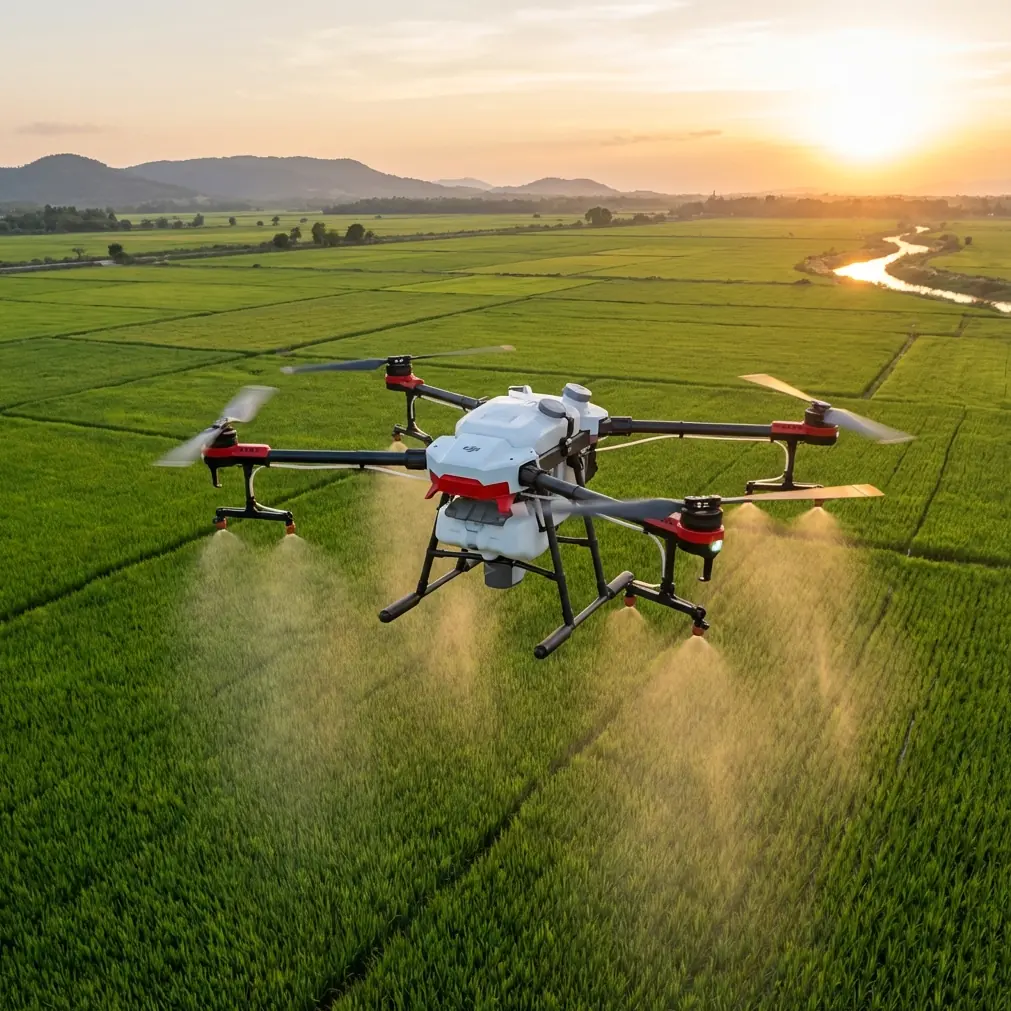
How I’d Use DJI Avata to Monitor Vineyards in Extreme Temperatures
META: A practical tutorial on using DJI Avata for vineyard monitoring in extreme heat or cold, with lessons drawn from railway drone safety workflows, real-time video feedback, sensor strategy, and antenna positioning for reliable coverage.
Vineyard work gets unforgiving when temperatures swing hard. Heat shimmer can flatten detail. Cold can shorten flight windows and make timing less forgiving. And when rows stretch across long, narrow blocks, ground checks alone become slow, repetitive, and strangely blind. You see what’s in front of you, but not the whole pattern.
That’s where Avata becomes interesting.
Not because it was built as a classic agricultural mapping aircraft. It wasn’t. And not because every vineyard job needs a large multirotor with a specialized payload. Many don’t. For fast visual monitoring, row-level inspection, training runs, and live operational awareness, Avata has a place—especially when the terrain is tight, the weather is punishing, and you need immediate eyes on the site rather than a slow manual sweep.
What shaped my thinking here wasn’t generic drone marketing. It was a railway safety monitoring framework. In that reference material, the core operational problem was a long, strip-like work area that is difficult to monitor efficiently by people on the ground. Railway construction lines are extended corridors, and the document points out that manual monitoring creates high workload, low efficiency, and weak global oversight of progress and safety. Vineyards share that geometry more often than people admit. A large estate block is essentially a corridor system broken into rows, access lanes, edges, drainage lines, and hazard zones.
The lesson is simple: when the environment is long, segmented, and operationally active, aerial monitoring matters less for “pretty footage” and more for restoring context.
Why this railway logic translates surprisingly well to vineyards
The source document emphasizes one benefit above the others: real-time image transmission back to a command center. In railway construction, that improves both immediacy and overall awareness. In vineyard operations during extreme temperatures, the same thing matters for different reasons.
Let’s say you’re monitoring:
- irrigation irregularities after a heat spike
- row stress near exposed slopes
- worker access routes in hot afternoon windows
- frost-prone low areas during cold mornings
- temporary infrastructure like pumps, shade structures, or tank locations
A live video feed lets the manager or agronomist evaluate conditions as the pilot moves. That changes the workflow. Instead of flying first and interpreting later, you can make decisions while the aircraft is in the air. If a section of canopy looks unusually thin, if a row end is showing vehicle congestion, or if a low basin is holding frost residue longer than expected, you can redirect immediately.
That operational significance is the real bridge between the railway reference and vineyard use. The drone is not just collecting footage. It is compressing the time between observation and response.
Why Avata works for this kind of job
Avata is not the obvious vineyard platform, which is exactly why it can be useful in the right niche.
Its strength is controlled movement through confined or irregular space. Vineyard blocks often include trellis lines, windbreaks, poles, netting infrastructure, utility edges, and tight service corridors. A heavier inspection aircraft can cover more area in one go, but Avata can thread visual routes with a level of immediacy that feels closer to a field walk—except faster, and with a better angle on the entire row system.
For extreme temperatures, that matters because time outside becomes a constraint. If workers should not be exposed for long inspection rounds in peak heat, Avata can shorten the routine. If cold conditions make early-morning checks urgent, you can get a quick visual pass done before the light and temperature profile changes.
It also helps that Avata can launch and land without demanding a perfect open pad. One of the reference facts from the railway solution is that drones have low environmental requirements for takeoff and landing. That’s not a trivial point. In real vineyard conditions, your launch area may be a dirt track, a narrow turnout, a compact maintenance zone, or a space between service vehicles. You do not always get ideal field conditions.
A practical mission profile for extreme-temperature vineyard monitoring
Here’s how I’d structure a session.
1. Define the monitoring question before takeoff
Don’t send Avata up to “see what’s there.” That usually leads to nice footage and weak results.
Choose one primary question per flight:
- Which rows are showing visible heat stress first?
- Are low-lying blocks retaining frost effects?
- Is irrigation distribution visually consistent at the row edge?
- Are work crews operating safely in exposed sections?
- Has access infrastructure shifted or degraded after weather stress?
The railway document talks about improving both real-time monitoring and global oversight. Those are two different goals. Your flight should know which one it serves.
If the aim is global awareness, fly higher boundary and corridor passes. If the aim is close inspection, work row-adjacent and low-altitude.
Trying to do both in one battery often produces a compromise that satisfies neither.
2. Fly the vineyard like a corridor, not like an open field
This is one of the strongest takeaways from the railway reference. Railway construction is “strip-distributed,” meaning long and linear. Many vineyards are, too.
So build your route around that geometry:
- Start at one edge of the block
- Run parallel to the rows
- Pause at transition points
- Check drainage breaks and elevation shifts
- Repeat only where conditions visibly change
This gives you consistency. If you fly one row section at 2 meters above canopy edge and the next at 12 meters, your visual comparisons become less useful.
Avata is particularly good when you want to move with the line of the environment. That can reveal subtle transitions in vigor, shading, exposed soil, or access conditions that a top-down perspective may underplay.
3. Use live view as a decision tool, not a recording tool
The source material repeatedly stresses real-time image return to a command center. In the vineyard context, that could be a manager in a utility vehicle, a field supervisor under shade, or an agronomy lead reviewing the feed from a cooler sheltered location.
That live collaboration is where the value jumps.
The pilot sees movement and obstacles. The observer sees agronomic or operational anomalies.
If you’re working with a team and want to set up a clean communication workflow for these flights, I’d keep it simple and agree on a live review process before launch. If you need help designing that setup, you can message here for field workflow advice.
4. Respect Avata’s role: visual intelligence, not heavy sensor work
The railway solution mentions aircraft that can carry multiple payload types including HD cameras, thermal infrared systems, and oblique cameras. That’s an important detail because it highlights what professional monitoring platforms gain from payload flexibility.
Avata does not compete on that axis.
Its operational value is different:
- fast deployment
- high-quality visual observation
- dynamic low-altitude movement
- immediate situational awareness
- repeatable spot checks
So if your vineyard program requires rigorous thermal analysis across large acreage, Avata should support that workflow, not replace the right aircraft. But if your immediate need is to check visible canopy condition, row access, frost aftermath, damaged structures, or worker route conditions in extreme weather, Avata can be the fastest answer.
Settings and flight features that actually matter
There’s a temptation to overuse cinematic features in farm environments. I’d be selective.
Obstacle awareness mindset first
Whether or not people casually say “obstacle avoidance,” vineyards are messy. Wires, trellis components, bird netting, and irregular edge vegetation can create visual traps. Avata performs best when you fly with obstacle discipline rather than feature dependence. Keep lateral movement deliberate, especially when moving near row ends where infrastructure tends to cluster.
Subject tracking and ActiveTrack: useful, but not central
If you’re monitoring a moving service vehicle or supervising a repeated route with a clearly isolated target, tracking tools can help. But vineyards rarely present clean tracking subjects for long. Poles, leaves, shadows, and overlapping lines can complicate automated visual lock. I would treat ActiveTrack-style logic as a secondary aid rather than the backbone of inspection.
QuickShots and Hyperlapse: use sparingly for documentation
QuickShots are not a primary monitoring tool, but they can help create repeatable visual summaries for weekly reporting. Hyperlapse can be useful if you want to show how morning fog, frost melt, or worker movement changes over time. Still, these are support tools. The core mission remains direct observation.
D-Log for difficult light
This is more valuable than many operators realize. Extreme temperatures often coincide with harsh light conditions—hard summer glare or pale winter contrast. D-Log gives you more flexibility when reviewing footage later, especially if you need to pull detail from bright soil, reflective leaves, or shaded row interiors. For vineyards where visual nuance matters, that extra grading room can help separate surface glare from actual plant condition.
Battery and endurance planning in harsh conditions
The railway reference gives a useful benchmark from a different class of UAVs: fixed-wing endurance reaching 90 minutes and rotary endurance reaching 70 minutes. Those numbers are not about Avata specifically, but they underline a planning truth professionals already know—endurance shapes inspection logic.
With Avata, don’t plan like you have a long-endurance industrial platform. Plan like each battery is a targeted question.
That means:
- one battery for one block or one issue
- avoid wandering flights
- keep reserve for re-checks
- account for temperature effects on battery behavior
In heat, batteries and electronics need protection before and after flight. In cold, performance can drop faster than expected, especially if packs are not managed properly before launch.
The mistake I see most often is trying to stretch one battery to cover an entire property. The result is rushed flying at the end of the mission, which is exactly when detail gets missed.
Antenna positioning advice for maximum range
This is one place where small adjustments make a real difference.
If you’re flying a vineyard with long rows and trying to maintain stable transmission, think less about raw distance and more about clean signal geometry.
Here’s my practical approach:
- Stand where you can “look down” the row corridor rather than across multiple obstructions.
- Keep your body from blocking the controller antennas.
- Point the antenna faces toward the aircraft’s operating area, not directly like a spear tip. With most systems, broadside orientation matters more than aiming the ends at the drone.
- If the vineyard has elevation changes, choose a launch point with the clearest line of sight to the lowest or most obstructed section.
- Reposition yourself when needed. Don’t stay fixed out of habit if the aircraft is moving behind tree lines, buildings, or terrain breaks.
In vineyards, netting lines, dense edge vegetation, metal structures, and even parked equipment can interrupt signal quality more than pilots expect. Good antenna positioning is really about preserving the live feed. And if your monitoring workflow depends on real-time video review, preserving that feed is not optional.
How I’d brief a vineyard team before using Avata
I’d keep the expectations honest.
Avata is excellent for:
- fast visual checks
- row and edge inspection
- live review during extreme weather windows
- documenting narrow or hard-to-reach sections
- training staff to think aerially about vineyard operations
It is not the aircraft I would choose as the sole platform for:
- broad-acre precision mapping
- advanced multispectral analysis
- heavy payload sensing
- long-duration property-wide survey missions
That distinction matters because the railway reference also contrasts richer UAV configurations and platform types. Fixed-wing and rotary systems each suit different jobs. The same principle applies here. Avata earns its place when agility, immediacy, and visual access are worth more than payload complexity or long endurance.
The bigger lesson from the railway monitoring model
What stayed with me from the source material was not the hardware list. It was the operational framing.
Manual monitoring over long, linear environments is labor-heavy and often weak at seeing the whole picture. Real-time aerial feedback improves timeliness. Flexible deployment improves responsiveness. And platform choice should match the environment rather than forcing one aircraft into every mission.
That logic fits extreme-temperature vineyard monitoring almost perfectly.
When heat or cold compresses your safe working window, you need faster eyes. When the property is long and segmented, you need corridor awareness. When management decisions depend on current field reality, you need live video, not just post-flight media.
Used that way, Avata stops being a recreational flyer with cinematic flair and becomes something much more useful: a compact aerial observer that helps vineyard teams make better decisions when the weather is working against them.
Ready for your own Avata? Contact our team for expert consultation.