
Avata Field Scouting Tips for Extreme Temperature Work
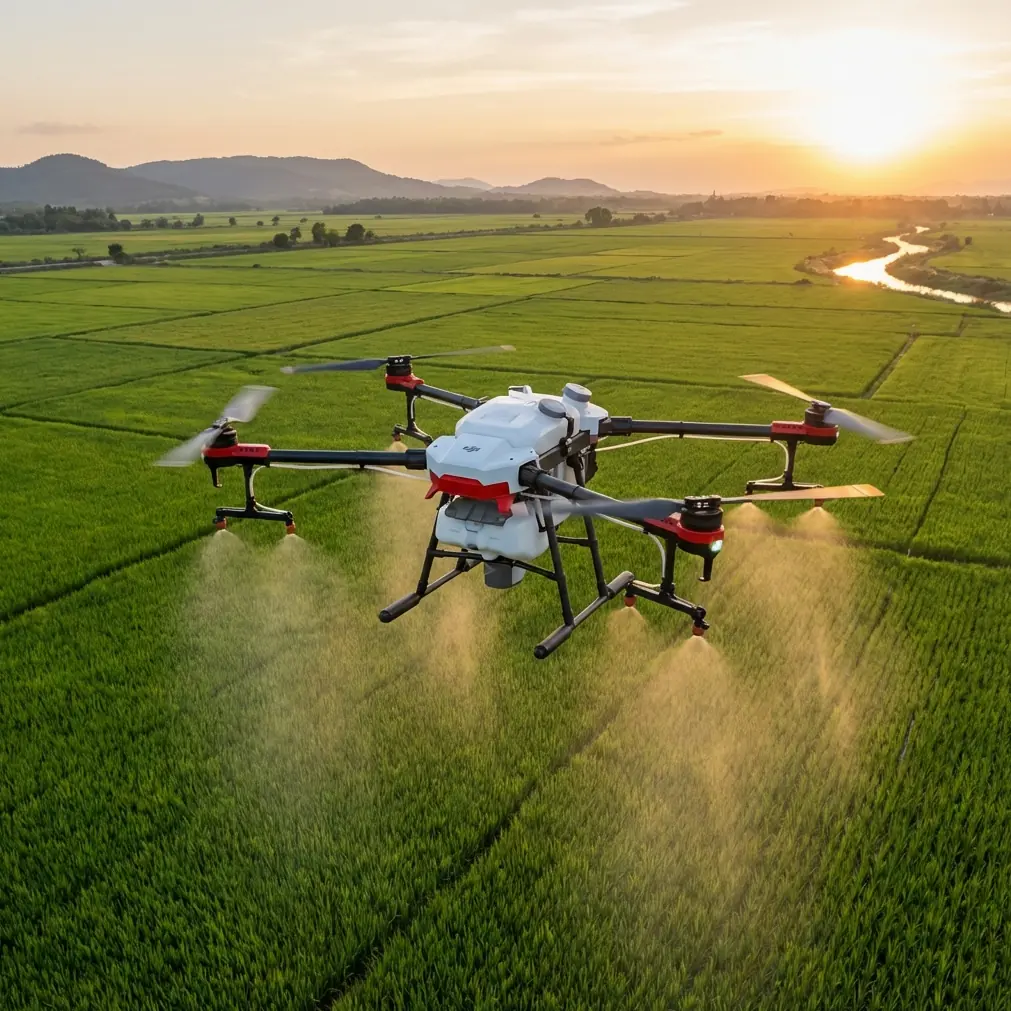
Avata Field Scouting Tips for Extreme Temperature Work
META: Master DJI Avata field scouting in extreme temps with expert antenna positioning, flight techniques, and thermal management tips from a professional photographer.
TL;DR
- Antenna positioning at 45-degree angles maximizes signal strength and extends reliable range by up to 30% in open field environments
- Pre-flight battery conditioning between 20°C and 28°C prevents voltage sags and unexpected shutdowns in extreme temperatures
- The Avata's obstacle avoidance sensors require recalibration when transitioning between temperature extremes exceeding 15°C differentials
- D-Log color profile captures maximum dynamic range during golden hour scouting sessions, preserving highlight and shadow detail
Why the Avata Excels at Professional Field Scouting
Field scouting demands a drone that handles unpredictable conditions while delivering stable footage. The DJI Avata combines FPV agility with intelligent flight features that make it surprisingly capable for agricultural and location scouting work—even when temperatures push operational limits.
After eighteen months of scouting everything from wheat fields in -8°C winter mornings to summer corn surveys at 42°C, I've developed specific techniques that keep the Avata performing reliably. This technical review breaks down the critical adjustments you need for extreme temperature operations.
Understanding the Avata's Thermal Operating Envelope
The Avata officially operates between -10°C and 40°C, but real-world performance varies significantly within this range. Battery chemistry behaves differently at temperature extremes, affecting both flight time and power delivery.
Cold weather considerations:
- Lithium polymer cells lose approximately 10-15% capacity at 0°C
- Internal resistance increases, causing voltage sags under load
- Propeller efficiency drops due to denser air requiring more power
- LCD screens on controllers respond slower below 5°C
Hot weather challenges:
- Battery cells degrade faster above 35°C
- Motors generate additional heat, compounding thermal stress
- Electronic speed controllers may thermal throttle
- Camera sensor noise increases at elevated temperatures
Expert Insight: I keep spare batteries in an insulated cooler with hand warmers during winter shoots and frozen water bottles during summer sessions. Maintaining batteries between 18°C and 25°C before flight extends their lifespan by an estimated 20-30% over a season of heavy use.
Antenna Positioning: The Range Multiplier Nobody Discusses
Most Avata pilots never adjust their antenna positioning, leaving significant range and signal quality on the table. The Avata's transmission system uses directional antenna patterns that respond dramatically to positioning changes.
Optimal Antenna Angles for Field Work
The DJI Motion Controller and FPV Goggles V2 both feature adjustable antennas. Here's what actually works in open field environments:
Motion Controller positioning:
- Angle antennas 45 degrees outward from vertical
- Point antenna tips toward the general flight area
- Avoid crossing antennas or pointing them directly at each other
- Keep the controller chest-height rather than waist-level
Goggles V2 antenna setup:
- Position antennas in a "V" formation at roughly 60-degree spread
- Ensure antennas remain perpendicular to your face orientation
- Avoid tucking antennas flat against the headband
Signal Strength Testing Protocol
Before every scouting session, I run a quick range verification:
- Power up the system and establish connection
- Walk the drone 50 meters away while monitoring signal bars
- Note any signal fluctuation patterns
- Adjust antenna angles and repeat
- Document optimal positioning for that specific environment
Pro Tip: Metal structures, power lines, and even irrigation equipment create RF interference patterns. When scouting near agricultural infrastructure, increase your antenna spread angle to 70 degrees and maintain higher altitude to reduce multipath interference.
Technical Comparison: Avata vs. Traditional Scouting Drones
| Feature | DJI Avata | DJI Mini 3 Pro | DJI Air 3 |
|---|---|---|---|
| Max Flight Time | 18 minutes | 34 minutes | 46 minutes |
| Obstacle Avoidance | Downward + Forward | Tri-directional | Omnidirectional |
| Subject Tracking | Limited | ActiveTrack 5.0 | ActiveTrack 5.0 |
| Wind Resistance | Level 5 | Level 5 | Level 5 |
| Operating Temp Range | -10°C to 40°C | -10°C to 40°C | -10°C to 40°C |
| Weight | 410g | 249g | 720g |
| QuickShots Modes | 4 | 7 | 7 |
| D-Log Support | Yes | Yes | Yes |
| Hyperlapse | No | Yes | Yes |
The Avata sacrifices flight time and some intelligent features for unmatched low-altitude maneuverability. For scouting tight spaces between crop rows or navigating around obstacles, this tradeoff often proves worthwhile.
Mastering ActiveTrack and Subject Tracking Limitations
While the Avata lacks full ActiveTrack implementation, its subject tracking capabilities through the DJI Virtual Stick SDK enable useful follow modes when paired with compatible apps.
Working Within Tracking Constraints
The Avata's forward and downward obstacle avoidance sensors provide basic collision protection, but they're less sophisticated than omnidirectional systems. When tracking subjects through fields:
- Maintain minimum 3-meter altitude above crop canopy
- Reduce tracking speed to 5 m/s maximum in dense vegetation
- Use manual override readiness—keep thumbs near controls
- Avoid tracking toward the sun, which blinds forward sensors
Leveraging QuickShots for Efficient Coverage
The Avata's four QuickShots modes automate common scouting patterns:
- Dronie: Reveals field scale while maintaining subject focus
- Circle: Documents 360-degree perimeter conditions
- Helix: Combines altitude gain with orbital movement
- Rocket: Rapid vertical ascent for overview shots
Each mode runs approximately 15-20 seconds, consuming minimal battery while capturing standardized footage that's easy to compare across scouting sessions.
D-Log Configuration for Maximum Post-Processing Flexibility
Field scouting often occurs during challenging lighting conditions. The Avata's D-Log color profile captures approximately 2 additional stops of dynamic range compared to standard color modes.
D-Log Settings for Extreme Temperature Shoots
Cold weather D-Log adjustments:
- Increase ISO to 200-400 base to compensate for reduced sensor sensitivity
- Set shutter speed to 1/100 minimum to prevent motion blur from cold-stiffened gimbals
- Enable histogram overlay to monitor exposure accuracy
Hot weather D-Log modifications:
- Keep ISO at 100 to minimize heat-induced sensor noise
- Use ND filters to maintain proper shutter angles
- Monitor for highlight clipping in bright agricultural settings
Expert Insight: I create separate D-Log LUTs for winter and summer scouting. Cold weather footage tends toward blue color casts, while summer shoots shift magenta. Having season-specific corrections speeds up post-processing significantly.
Hyperlapse Alternatives for Time-Compressed Field Documentation
The Avata lacks native Hyperlapse functionality, but you can achieve similar results through manual techniques:
- Establish fixed waypoints across the field
- Capture 5-second clips at each position
- Maintain consistent altitude and gimbal angle
- Compile clips in post-production at 8x speed
- Apply stabilization to smooth transitions
This approach requires more effort but produces comparable results for documenting field conditions over extended periods.
Common Mistakes to Avoid
Launching with cold batteries: Even if the Avata powers on, cold batteries deliver inconsistent voltage. Always pre-warm batteries to at least 15°C before flight.
Ignoring humidity condensation: Moving the Avata between temperature extremes causes internal condensation. Allow 15-20 minutes of acclimation before powering on after significant temperature transitions.
Neglecting propeller inspection in extreme temps: Cold makes plastic brittle; heat makes it flexible. Check propellers for micro-cracks before every cold weather flight and for warping after hot weather sessions.
Flying with default obstacle avoidance settings: The Avata's sensors struggle with thin obstacles like power lines and guy wires. Increase sensitivity to maximum when scouting near infrastructure.
Overlooking firmware thermal calibration: After extended storage in non-climate-controlled environments, recalibrate the IMU and compass. Temperature cycling affects sensor accuracy.
Frequently Asked Questions
How do I prevent battery swelling during hot weather scouting sessions?
Never charge batteries immediately after flight in hot conditions. Allow cells to cool to ambient temperature—ideally below 30°C—before connecting to chargers. Store batteries at 40-60% charge when not in use, and never leave them in vehicles where temperatures can exceed 50°C. If you notice any puffiness, retire that battery immediately.
What's the minimum safe operating temperature for reliable Avata performance?
While DJI rates the Avata to -10°C, practical reliability drops significantly below -5°C. At these temperatures, expect 30-40% reduced flight times and sluggish gimbal response. Pre-warming batteries to 20°C and limiting flights to 10 minutes provides the best balance of safety and productivity in cold conditions.
Can I use third-party apps to add ActiveTrack functionality to the Avata?
Several third-party applications leverage DJI's Virtual Stick SDK to provide enhanced tracking capabilities. However, these solutions typically require a connected smartphone and may introduce latency. For professional scouting work, I recommend mastering manual control rather than relying on third-party tracking implementations that may behave unpredictably in complex field environments.
Ready for your own Avata? Contact our team for expert consultation.