
How I’d Use Avata to Scout Power Lines in Low Light Without
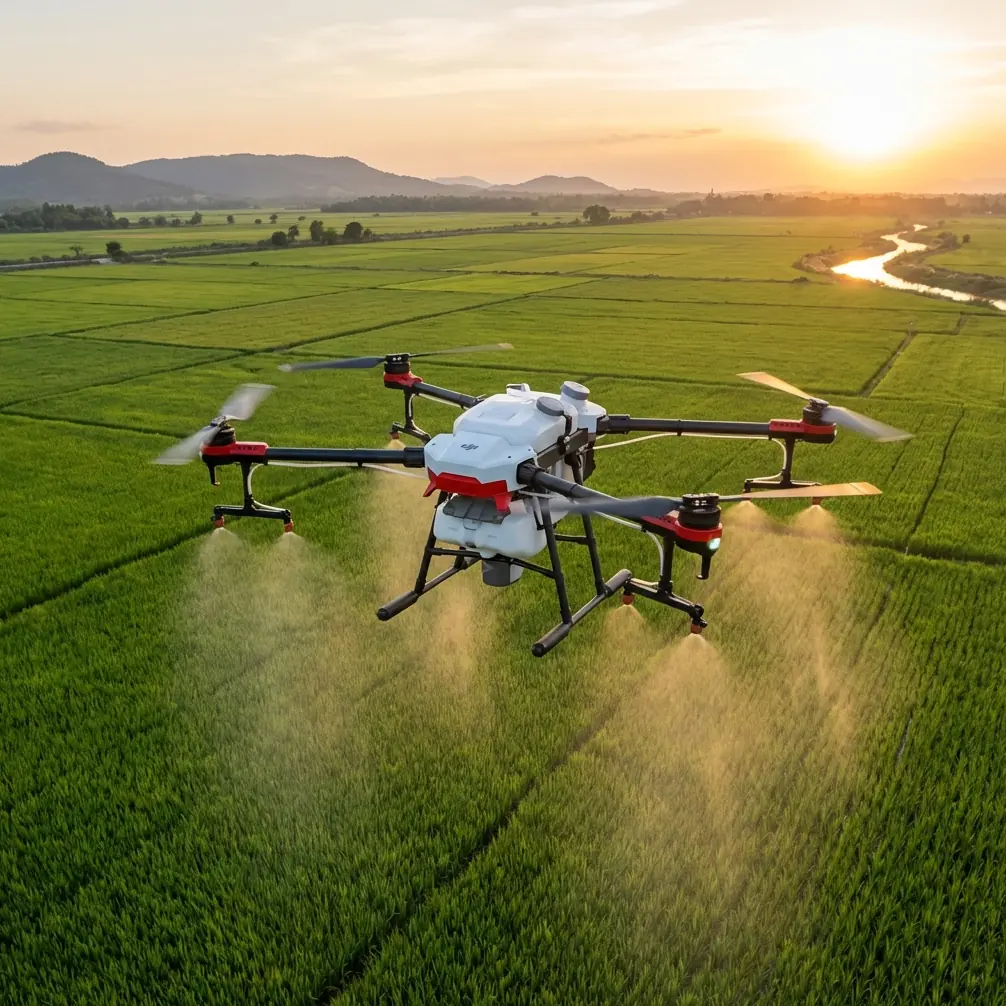
How I’d Use Avata to Scout Power Lines in Low Light Without Losing the Detail That Matters
META: A practical Avata tutorial for low-light power line scouting, covering pre-flight cleaning, gimbal stability, exposure control, obstacle awareness, and why precise attitude control matters for inspection-quality footage.
Low-light utility scouting is where a drone’s weak habits show up fast.
Power lines don’t give you much visual margin. The background can flatten into dusk haze. Poles and branch encroachment sit in the same tonal range. Fine wires are easy to lose, especially if your lens has a smear on it or your aircraft is making small attitude corrections that ripple through the frame. If I were preparing an Avata for this kind of mission, I wouldn’t treat it like a casual cinematic flight. I’d set it up like an inspection tool.
That mindset matters because aerial imaging quality has always depended on two things working together: stable flight and stable camera alignment. The reference material behind this article comes from a civilian stereoscopic mapping aircraft system, and even though that platform is a different class of UAV, its engineering logic translates surprisingly well to Avata operations. The paper describes a flight control approach that combines strapdown attitude calculation with dual-vector attitude solving to keep the aircraft’s posture smooth, then layers feedback PID and feedforward control over route tracking so the aircraft can keep correcting itself in real time. That is not just a control-theory footnote. For power line scouting in dim conditions, it explains a simple operational truth: if the aircraft’s orientation is noisy, your footage becomes harder to trust.
With Avata, your goal is not to imitate a fixed-wing mapping run. It’s to borrow the discipline behind it.
Start with the least glamorous step: clean the aircraft before you power up
I always do one thing before a low-light line inspection flight: I clean every sensor window and the camera lens.
Not casually. Properly.
Avata’s obstacle awareness and stabilization logic are only as good as the optical surfaces feeding them. If you’ve picked up dust, moisture residue, or oily fingerprints during transport, those issues become more visible at dusk. Contrast is already reduced. Any haze across the lens lifts blacks, lowers edge definition, and makes thin conductors blend into the background. The same goes for the aircraft’s safety-related vision surfaces. A dirty sensor window can reduce the reliability of obstacle sensing right when you’re flying near poles, crossarms, insulators, and tree limbs.
So my pre-flight cleaning routine is short and strict:
- Blow off grit before touching the glass.
- Use a clean microfiber for the lens.
- Check the edges of the lens, not just the center.
- Wipe obstacle sensing surfaces gently and dry.
- Recheck for streaks under a flashlight, because low-angle light reveals residue you won’t see indoors.
This sounds basic, but it’s one of the highest-value safety steps you can take. The prompt here asked for a pre-flight cleaning step tied to safety features, and this is exactly where it belongs. People talk endlessly about flight modes and color profiles. Dirty optics will ruin the mission before any setting does.
Why stable attitude matters more than people think
The reference system’s camera stabilization architecture is worth paying attention to. It used a 3-axis stabilized gimbal with a 3-axis digital compass and a 2-axis accelerometer to measure the camera’s orientation, then applied PID control to drive servo corrections. The reported performance was tight: heading error no more than 1°, with a correction range of ±45°, and tilt error no more than 0.5°, with a correction range of ±60°.
Those numbers come from a dedicated mapping platform, but they tell us what “good enough” actually looks like when image alignment matters. Half a degree of unwanted tilt may sound tiny until you’re trying to evaluate whether a line corridor is genuinely clear or whether branch growth is only appearing closer due to perspective shift. In low light, small unwanted angle changes also increase the odds of reflective flare from insulators or metallic hardware entering the frame.
With Avata, I use that lesson in a practical way: I do not rush my yaw inputs around line infrastructure. Small, deliberate movements preserve image readability. Fast snap turns might look dramatic in recreational flying, but for utility scouting they create blur, exposure swings, and orientation changes that make comparison between passes much harder.
That same mapping paper also notes that in test conditions, with ground wind below force 4, a 3 km autopilot flight held the actual path within a maximum planar deviation of about ±10 m and altitude deviation within ±15 m, while roll and pitch stayed within 20°. For inspection readers, that’s the useful takeaway: route discipline and bounded attitude changes create usable survey imagery. With Avata, your version of that discipline is slower corridor flying, repeatable lines, and avoiding aggressive banking unless the environment forces it.
Build your route for visibility, not drama
If I’m scouting power lines in low light, I want a route that answers operational questions:
- Is there vegetation encroachment near the conductors?
- Are poles or fittings showing obvious visible damage?
- Are access paths passable?
- Is there enough visual evidence to justify a closer daylight follow-up?
That means I’m not relying on QuickShots or Hyperlapse as the backbone of the mission. They can help document the broader corridor after the primary task is complete, but they are not my inspection method. QuickShots are built for stylized movement. Hyperlapse can be useful for showing corridor progression over distance, yet low-light hyperlapse also magnifies flicker, exposure inconsistency, and motion artifacts. I’d rather fly a deliberate manual or assisted route and capture footage I can actually review frame by frame.
If the corridor allows it, I prefer multiple short passes over one long hero run. First pass for general context. Second for line-side clearance. Third for pole detail if signal and battery margins support it. Shorter segments reduce pressure, and pressure causes rushed decisions near infrastructure.
Exposure choices in low light: preserve evidence, not mood
A lot of photographers love the look of low light. Inspection work is less romantic.
You need information in the shadows, enough highlight control to avoid clipping bright sky gaps, and footage that remains readable when paused. The reference document used a CCD camera with a 4992 × 3328 pixel array, 7.2 µm pixel size, and a 17–35 mm lens. Before flight, the team fixed focus at infinity and locked the focus ring to preserve internal geometry and lens behavior. That procedure came from photogrammetry, but it has a very practical echo for Avata users: eliminate unnecessary autofocus uncertainty before you launch.
In other words, do not wait until you are near energized infrastructure at dusk to discover the camera is hunting.
Here’s how I’d think about it on Avata:
- Confirm lens clarity before startup.
- Set exposure behavior intentionally rather than letting the camera chase every brightness shift.
- Watch for focus instability when transitioning between open sky and pole background.
- Favor settings that keep conductor edges and branch outlines distinguishable.
If you plan to grade footage later, D-Log can help hold more tonal information, especially where dark tree lines sit under a brighter horizon. But D-Log is only useful if you are prepared to manage it properly in post. If the priority is fast operational review the same evening, a more direct profile may be the smarter choice. The point is not to choose the “pro” setting for ego. The point is to choose the setting that preserves field evidence.
Obstacle awareness is not permission to get casual
Avata pilots sometimes overestimate what obstacle sensing means around linear infrastructure.
Power lines are difficult subjects for many vision-based systems. Thin conductors can be hard to interpret, and low light does not improve that. Poles, transformers, and vegetation are more visually obvious than the wire itself, so obstacle avoidance should be treated as a backup layer, not your primary separation strategy.
This is why the pre-flight cleaning step is so valuable. It protects the reliability of the sensors that can help you detect larger hazards, but it does not remove the need for conservative flight geometry. I keep generous standoff distance, especially when the background is cluttered or the line is backlit.
The reference paper also described an air-ground wireless communication subsystem where onboard status data was sent to the ground station over UHF, with feedback returning to the flight computer. That detail matters because safe inspection flights depend on closed-loop awareness. Even though Avata’s ecosystem is different, the operating principle is the same: monitor live telemetry continuously, not occasionally. Signal quality, battery status, aircraft state, and orientation cues are part of the inspection workflow, not separate from it.
If you are building a utility scouting program and want to compare setup options, this is a useful place to ask practical questions: message a drone specialist here.
What to do about tracking features
The LSI hints here include ActiveTrack and subject tracking, so let’s address that carefully.
For power line scouting, I would not make ActiveTrack the center of the mission. Utility infrastructure is not a running cyclist or a vehicle moving through open terrain. The route is usually constrained, the hazards are fixed, and the real need is controlled framing, not automated pursuit. Subject tracking features may assist in certain corridor-adjacent documentation tasks, but close-to-line inspection at low light should remain pilot-led.
That may sound less flashy, but it is operationally cleaner. You need the freedom to stop, hover, adjust angle, inspect branch spacing, and back out slowly if contrast drops. Automation is useful when it reduces workload without hiding risk. Around lines, risk tends to hide in the thin details.
A practical flight sequence I’d actually use
If I were writing this as a working field checklist for Avata, it would look something like this:
1. Site read before takeoff
Walk the launch area. Note wind direction, tree movement, obstructions, and likely dead zones in visual contrast. Dusk can make one side of a corridor far harder to interpret than the other.
2. Clean optics and sensor surfaces
This is non-negotiable. Lens, sensor windows, and any surface tied to visual safety systems get checked and cleaned.
3. Confirm camera behavior
Make sure the image is crisp before moving toward the line. If exposure is pumping on the ground, it will be worse in the corridor.
4. Fly the first pass for orientation
Stay wider than you think you need. Map the corridor visually. Identify poles, branch intrusions, and turnaround points.
5. Fly the second pass for detail
Use slower movement and smaller yaw inputs. Frame the line offset against a background that reveals it. Sometimes a slight lateral change makes the conductors easier to read.
6. Capture context shots only after primary inspection footage
If you want broader corridor visuals, this is when tools like Hyperlapse or more cinematic movement can enter the workflow. Not before.
7. Review footage on site
Low-light surprises usually show up immediately: blur, haze, underexposure, or line invisibility against the background. If the line does not read clearly on review, refly before packing up.
The deeper lesson from older aerial mapping systems
The most useful thing in the source material is not the parachute emergency system or the exact camera model. It’s the engineering attitude behind the system.
That aircraft was designed so the camera, flight control, route tracking, and communications loop all supported one another. The camera was calibrated before and after flight. The focus was fixed to preserve consistency. The gimbal actively corrected orientation. The flight controller blended attitude-solving methods to keep the aircraft stable. Route control used both feedback PID and feedforward logic to stay on plan. Every subsystem existed to make the imagery reliable.
That is exactly the mindset Avata operators should borrow for low-light power line scouting.
Not because Avata is a large-format mapping aircraft. It isn’t. But because utility work punishes sloppy process. If you want footage that a maintenance team can trust, your aircraft prep, flight path, stabilization habits, and exposure choices all need to point in the same direction.
And yes, that starts with wiping the lens before takeoff.
Ready for your own Avata? Contact our team for expert consultation.