
Avata at a Remote Construction Site: What a Naval Drone
Avata at a Remote Construction Site: What a Naval Drone Incident Reveals About Safe Civilian Flight
META: A field-focused look at using DJI Avata around remote construction sites, with practical lessons on obstacle awareness, weather shifts, flight discipline, and why unidentified unmanned craft incidents reinforce strict civilian safety standards.
Remote work sites have a way of exposing every weakness in a drone operation.
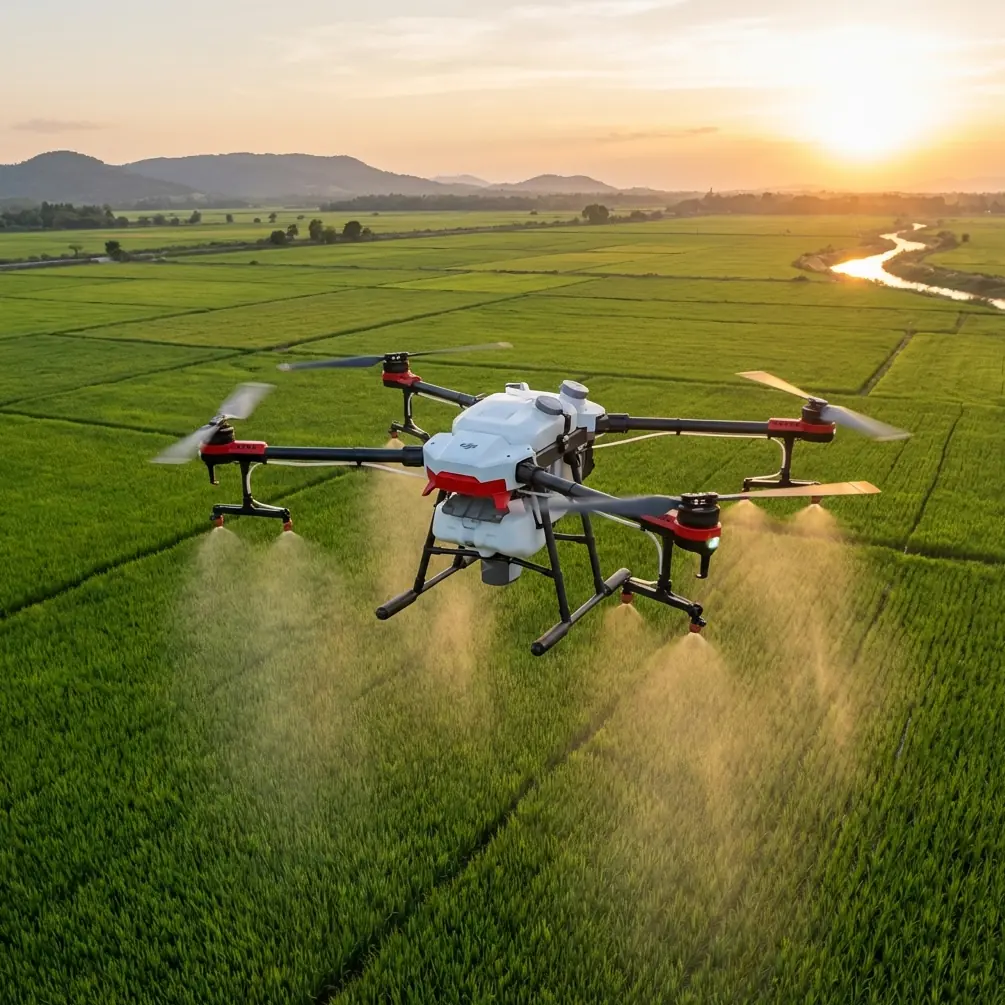
Distance strips away convenience. Wind behaves differently around half-finished structures. Dust, rebar, scaffolding, concrete walls, and narrow access routes turn a simple flight into a judgment test. If the job involves documenting or monitoring spraying activity across a remote construction site, the pilot needs more than a drone that looks agile on paper. The aircraft has to be manageable when conditions stop cooperating.
That is where the Avata enters the conversation in an interesting way.
Not as a sprayer, because it is not built to carry and distribute material, but as a highly useful close-range visual platform for inspection, progress verification, safety observation, and confined-space situational awareness around spraying operations. On sites where teams are coating retaining walls, wetting dusty zones, or treating difficult-to-reach surfaces, Avata can serve as the eye that gets close without putting a person in the hazard area.
And right now, there is another reason to talk about disciplined civilian drone use.
A recent BBC-reported incident described Greek authorities carrying out a controlled explosion to neutralize explosives on an unmanned naval vessel discovered in Greece. According to the report, fishermen found the unmanned vessel in a cave on Thursday, and it was suspected to be of Ukrainian origin. That event did not involve a construction site or a commercial drone mission. Still, it matters to the civilian UAV sector because it underscores a hard truth: when an unmanned craft is unidentified, out of place, or poorly understood, risk management takes over immediately.
For commercial operators using Avata in remote environments, that principle should shape every mission.
The real problem on remote construction sites
A remote construction site rarely fails because of one dramatic issue. Most flight problems are cumulative.
The crew is under time pressure. The weather window narrows. The site map is outdated. Spray teams move faster than expected. Wind channels between structures. Signal confidence changes when the pilot walks behind stacked materials. Dust reduces contrast. The aircraft still flies, but the margin gets thinner.
Pilots often think first about camera quality, and fair enough. Avata’s appeal is obvious if your background is visual storytelling. I say that as someone with a photographer’s instincts: when you are trying to show whether a spray pass covered an uneven retaining wall, or whether runoff is reaching an adjacent section, seeing the job from a low and precise angle can reveal what a ground photo misses.
But on a remote site, the image only matters if the aircraft can maintain control, orientation, and predictable behavior close to obstacles.
That is why the conversation around Avata should start with operational discipline, not cinematic ambition.
What the Greece incident actually teaches civilian operators
The BBC detail that stands out is not just that authorities found an unmanned vessel. It is that they performed a controlled blast to neutralize explosives after the craft was discovered by fishermen in a cave. In other words, once the origin, intent, or onboard condition of an unmanned platform becomes uncertain, nobody treats it casually.
For civilian drone teams, the lesson is not geopolitical. It is procedural.
If your Avata mission involves a remote construction site with limited access, never allow your aircraft to drift into the category of “mystery object.” That means:
- every aircraft should be clearly accounted for before and after flight
- mission logs should be retained
- launch and recovery points should be designated
- local site teams should know what is flying and why
- loss-of-control, crash, and flyaway procedures should be agreed in advance
This sounds basic until a site worker spots a small aircraft near an unfinished structure after hours and no one claims it. Suddenly a manageable job becomes a safety event.
The Greek incident is an extreme reminder that unmanned systems are judged not only by what they are, but by how clearly they are identified and controlled.
Why Avata fits observation work around spraying operations
Let’s be precise: if the job is “spraying construction sites in remote” locations, Avata is not the application drone doing the spraying. It is the support aircraft.
That distinction matters because many site managers still lump all drones together. They assume every aircraft should carry payload, cover large acreage, and remain high overhead. Avata does something different. It shines when the goal is close-quarters observation in difficult geometry.
Think about common construction spraying scenarios:
- checking whether dust suppression reaches a cut slope evenly
- confirming coating consistency on a wall face
- documenting overspray risk near finished materials
- observing runoff paths after wetting surfaces
- reviewing access hazards before sending a worker toward a difficult edge
- producing visual records for contractors and stakeholders without walking every unsafe section
Avata’s compact, agile design makes it suitable for moving through tighter environments than many larger enterprise aircraft. That does not mean reckless proximity. It means practical visibility where larger platforms are cumbersome.
Obstacle avoidance is especially relevant here, not as a magic shield, but as part of a larger safety setup. On remote sites, one of the most common mistakes is assuming that visible obstacles are the only obstacles that matter. Spray mist, hanging cables, netting, protruding rebar, and temporary braces all complicate flight. The pilot who uses obstacle sensing intelligently gains time to react. The pilot who treats it as a substitute for judgment usually runs out of room.
Mid-flight weather changes: where Avata either earns trust or doesn’t
Weather at a remote site changes faster than many crews expect.
I have seen flights begin in flat light with calm air, only to turn tricky minutes later when a breeze starts curling around a concrete shell. Suddenly the drone is not just moving through space; it is fighting uneven air masses and changing visibility.
That is the moment that separates a well-planned Avata mission from a casual one.
Picture a practical scenario. The drone is tracking progress around a sprayed retaining wall. The goal is to verify coverage along the lower edge and then climb to show the upper transition near drainage channels. Halfway through the orbit, the weather shifts. Gusts begin hitting from the open side of the site, while fine spray and dust start drifting across the lens path. The sky darkens enough to flatten contrast.
Avata’s value here is not that it makes weather irrelevant. No responsible pilot would say that. Its value is that it gives the operator a stable, responsive platform for making a smart exit decision before conditions become unacceptable. If the aircraft remains manageable as the air becomes less predictable, the pilot can break off smoothly, retrace through known safe space, and recover without drama.
That is operational significance, not brochure language.
A drone that feels easy in ideal conditions tells you very little. A drone that remains legible to the pilot when the site atmosphere turns messy is the one that saves time, protects equipment, and keeps the team confident.
The role of D-Log and image discipline on a technical site
Construction-site spraying is not only about flying safely. It is also about producing footage people can actually use.
This is where D-Log becomes more than a spec-sheet term. On remote worksites, you often have harsh highlights from exposed concrete, deep shadow pockets under structural elements, and uneven reflective surfaces caused by moisture. Capturing footage with greater flexibility in post can help teams distinguish where material has been applied consistently and where visual confirmation is still ambiguous.
That matters for documentation.
If a contractor needs visual evidence showing that a sprayed section was completed before a weather event interrupted work, image latitude can make the difference between usable proof and muddy footage. For a photographer, that is obvious. For site managers, it becomes obvious the first time they try to review low-contrast clips under bad light.
The point is not artistry for its own sake. It is reliable interpretation.
Subject tracking and ActiveTrack: useful, but only with boundaries
LSI terms like subject tracking and ActiveTrack tend to attract attention because they promise easier footage capture. On a remote construction site, they can be helpful for following moving equipment or documenting a spray crew’s route from a safe offset.
Used correctly, that reduces pilot workload.
Used carelessly, it creates tunnel vision.
A drone following a worker or vehicle during spraying operations may maintain framing beautifully while the environment changes around it. That is why ActiveTrack should never be treated as autonomous understanding. The drone may follow a subject; it does not understand site context the way a trained operator does. It does not know which temporary surface is shedding debris, which suspended hose may swing into the flight path, or which gust corridor is forming near a wall opening.
So yes, use subject tracking where it serves the mission. But define the corridor, rehearse the path, keep the subject speed moderate, and build an exit route before you start.
QuickShots and Hyperlapse on a worksite: not fluff if used properly
QuickShots and Hyperlapse can sound ornamental in an industrial setting, but that is too simplistic.
A Hyperlapse sequence can show progression across a remote site over time, helping supervisors visualize changes in surface treatment zones, vehicle movement patterns, or shifting environmental conditions. QuickShots, if used carefully and legally within site safety rules, can help produce standardized repeatable angles that make before-and-after comparisons more useful.
The keyword is repeatable.
Construction documentation gains value when angles are consistent. If the same pass is flown at similar height and distance across several days, teams can compare spray coverage, site access, and material staging with less guesswork. The tools are only gimmicks when the operator has no documentation objective.
A practical problem-solution framework for Avata site use
The problem is straightforward: remote construction spraying work creates visibility gaps in places that are inconvenient, hazardous, or time-consuming for ground staff to inspect.
The solution is not to force one drone to do everything.
Instead, use Avata as a specialized visual platform with a narrow and disciplined role:
- pre-spray route review
- active operation observation from safe stand-off positions
- post-spray verification in hard-to-access sections
- visual documentation for supervisors, contractors, and clients
- repeatable progress capture under changing site conditions
This division of labor is what makes the system useful. The aircraft does not need to be a payload carrier to deliver operational value.
How to keep the mission clearly civilian, safe, and professional
The BBC report about the unmanned vessel found in a cave by fishermen on Thursday is a reminder that public trust in unmanned systems depends on transparency and control. Commercial crews cannot afford ambiguity.
If you are deploying Avata at a remote construction site:
- brief all site personnel before takeoff
- mark the operating zone
- log who is piloting and when
- avoid unnecessary overflight near uninvolved workers
- stop immediately when weather reduces safe visibility or control margin
- recover and account for the aircraft after every mission segment
If your team is refining workflow for remote site observation, it helps to compare procedures with experienced operators who understand both image requirements and construction realities. For direct coordination on field-oriented drone workflow questions, you can reach out here: https://wa.me/85255379740
The bigger takeaway
Avata earns its place on a remote construction site when it is treated as a precision observation tool, not a do-everything machine.
Its strengths show up in the spaces between larger systems and ground inspection: tight paths, awkward angles, changing light, quick verification, and visually rich documentation that supports real decisions. Obstacle awareness, tracking functions, D-Log, and repeatable automated capture modes all matter, but only when the pilot uses them inside a disciplined operating plan.
And the wider unmanned world is giving civilian operators a clear message. When authorities have to neutralize a mystery unmanned vessel, as happened in Greece, it sharpens the standard for everyone else. Know what is flying. Know where it is. Know why it is there. Make that obvious to everyone on site.
That is how a commercial Avata operation stays useful, trusted, and safe when the weather shifts mid-flight and the site stops being forgiving.
Ready for your own Avata? Contact our team for expert consultation.