
Avata in Dusty Field Work: A Practical Pre
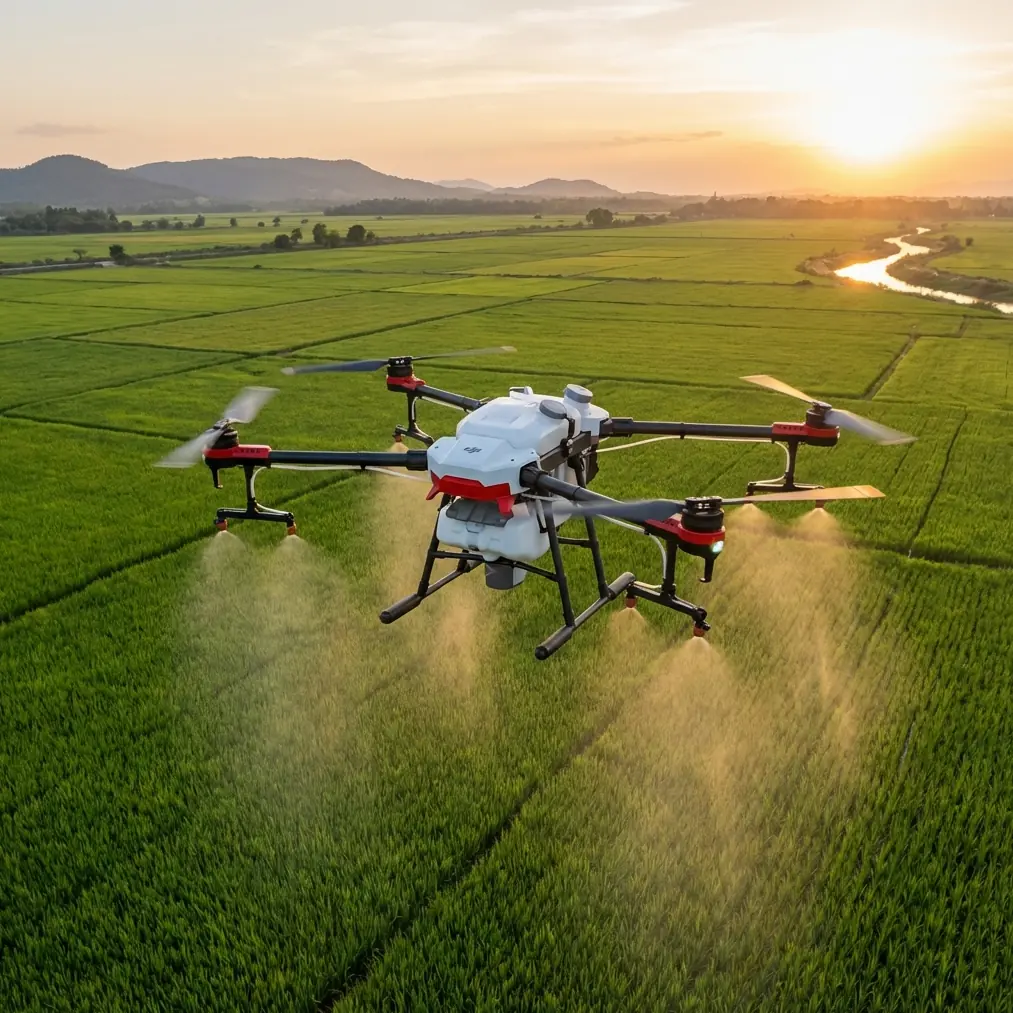
Avata in Dusty Field Work: A Practical Pre-Flight Routine for Safer Low-Altitude Mapping
META: Learn how to prepare DJI Avata for dusty agricultural field work, with a practical pre-flight cleaning routine, safer low-altitude flight habits, and mapping-focused insights grounded in UAV surveying realities.
Dust changes how a drone behaves long before it becomes visible on the lens.
That matters when the aircraft is flying low over sprayed fields, where fine residue can collect on the camera cover, settle around vision sensors, and interfere with the very features pilots rely on to stay stable near terrain. If you are using Avata around agricultural plots in dry conditions, the real question is not whether it can fly there. It can. The better question is how to prepare it so its sensing, imaging, and flight behavior still make sense in a working environment.
I come at this from a field-image perspective. As a photographer, I care about what the camera sees. But in field operations, what the drone sees is just as important. That includes obstacle sensing, position awareness, route consistency, and the quality of imagery you may later use for site review, crop-edge documentation, or lightweight visual mapping support.
The old problems in surveying explain why this matters. Traditional manual survey work is labor-intensive, slow to collect, and often difficult in places where people or vehicles cannot easily reach. The source material behind this discussion also points out another reality: when weather or terrain turns hostile—snow, floods, earthquakes, landslides, or simply hard-to-reach ground—conventional methods become inefficient or dangerous. Satellite remote sensing helps in some scenarios, but revisit cycles can be long and resolution may be too low for detailed local decisions. Manned aircraft solve other problems, yet bring higher operating complexity and more demanding access requirements.
That gap is where small UAV workflows became useful. Not as a buzzword. As a practical tool.
For readers focused on Avata, especially in dusty sprayed-field conditions, the smartest way to use it is not to pretend it is a heavy survey platform. It is to understand where a compact FPV-style aircraft can contribute: close-range site inspection, visual condition capture, edge-of-field checks, drainage observation, structure-over-field inspection, and short, repeatable passes for documentation when conditions are too awkward for ground teams. If you approach it that way, a simple pre-flight cleaning step becomes part of data quality control, not just maintenance.
Why dusty agricultural work is harder on Avata than many pilots expect
Sprayed fields create a strange environment for any drone. There may be dry soil, chemical residue, plant debris, and fine particulate hanging near the canopy. Even when the wind looks mild, rotor wash can lift more dust during takeoff and landing than pilots realize. On a compact aircraft like Avata, that matters in three ways.
First, vision-based safety features depend on clear optical surfaces. If the lenses or sensor windows are hazed over, obstacle-related functions can become less trustworthy. Readers often talk about obstacle avoidance as if it is either on or off. In the field, there is a middle ground: the feature may still be active, but with degraded environmental input. That is not where you want to be when flying close to irrigation structures, fence lines, poles, or field-edge trees.
Second, image quality suffers fast. If you are trying to produce usable visual records—whether for agronomy discussions, drainage tracking, or a simple before-and-after field log—a dusty lens can flatten contrast and reduce detail. The reference document emphasizes the value of high-resolution orthophoto output, known as DOM, because it helps update linework, improve data freshness, and accelerate map updates. Avata is not the first aircraft most teams choose for formal orthophoto production, but the principle still applies: if the image source is compromised at capture, the usefulness of the resulting field record drops immediately.
Third, low-altitude work near uneven terrain stresses pilot judgment. The original survey solution highlights how terrain can make human access difficult and hazardous. In sprayed field operations, the same terrain issue appears in a smaller way: ruts, embankments, irrigation channels, berms, crop height variation, and service roads all change apparent clearance. A pilot who assumes “flat field” often discovers the field is not flat at all.
The pre-flight cleaning step that actually protects safety features
Here is the field routine I recommend before every dusty sortie with Avata. It is simple, but skipping it defeats the point of flying carefully.
1. Clean before power-on, not after takeoff prep
Do the cleaning step before you start the full pre-flight sequence. Once the aircraft is powered and you are mentally moving toward launch, people rush. That is when they miss a smeared sensor window or dusty camera cover.
Use a blower first. Not your shirt, not your glove, and definitely not a dry swipe across a gritty surface. Blowing loose particles off before wiping reduces the chance of dragging abrasive dust across the lens or sensor covers.
2. Inspect the forward-facing optical surfaces in angled light
Dust is easy to miss when viewed straight on. Tilt the drone and catch the light across the glass. You are looking for residue films, not just visible dirt clumps. In sprayed fields, residue can leave a faint haze that is enough to reduce image clarity and affect how consistently visual sensing performs.
This is the operational significance of the cleaning step: obstacle-related features are only as good as the sensor input they receive. If the pilot trusts the aircraft to help manage proximity but launches with contaminated optical surfaces, that trust is misplaced from the start.
3. Check the camera cover separately from the safety sensors
Pilots often clean the main lens and forget the other viewing surfaces. Keep those tasks separate in your mind. The camera affects what you record. The sensing windows affect how the drone interprets the environment. Different consequences, same dust problem.
4. Look at the ducts, vents, and body seams
Avata’s design is more protected than an open-prop layout, which helps around vegetation and casual contact, but dust still enters the workflow through airflow and handling. If debris has accumulated around openings, clear it before flight. This will not turn the aircraft into a sealed agricultural platform, but it reduces the chance of pulling field grit deeper into the system over repeated flights.
5. Clean the takeoff zone, not just the drone
This is the most overlooked step. If you launch from loose dust, the aircraft can re-contaminate itself immediately. Use a landing pad or a flat case lid if conditions permit. Even a short lift-off over bare powdery ground can undo your lens cleaning in seconds.
That one habit often improves both image quality and sensor reliability more than people expect.
How this connects to real mapping and survey value
The source document puts a strong emphasis on high-resolution orthophoto acquisition and explains why up-to-date imagery matters: it can support linework updates, improve the timeliness of geographic data, and serve directly as a background layer in urban GIS systems. Translate that idea into agricultural field work and you get something very practical.
Fresh imagery beats stale assumptions.
If a field edge has shifted, a drainage path has cut deeper, a service track is eroding, or an access route is partially blocked, old basemaps do not help much. Even when Avata is used for close visual documentation rather than formal survey deliverables, the principle is the same as in the reference material: recent, high-detail aerial observation improves decisions.
That is especially useful where ground access is awkward. The document also notes that manual methods become difficult and risky in areas where people and vehicles cannot easily reach. In field operations, that can mean muddy margins after irrigation, unstable embankments, washout zones, or narrow boundaries near ditches. Avata can be used to inspect those areas from a safer standoff position, provided the operator respects visibility, local rules, and environmental limits.
Flight settings and features: what helps, what to treat cautiously
Avata owners often arrive with a feature list in mind: QuickShots, Hyperlapse, ActiveTrack, subject tracking, D-Log. In dusty field work, some of these are useful, some are secondary, and all require judgment.
Obstacle awareness
This is where your pre-flight cleaning earns its keep. In fields with poles, netting, fence wire, irrigation rigs, and scattered edge vegetation, any sensing aid is only valuable when the optical path is clear. Do not treat obstacle-related functions as a guarantee. Treat them as assistance layered on top of conservative flight paths.
Subject tracking and ActiveTrack
These can be useful when documenting slow-moving farm vehicles on access roads or capturing repeatable movement for training footage, but dusty conditions can reduce visual consistency. If the subject blends into the field or dust clouds obscure contrast, tracking reliability may drop. Use tracking only where you have a clean line of sight and a predictable route.
QuickShots and Hyperlapse
For creative overviews, these features can produce clean visual summaries of a site. But automated movement close to obstacles or near drifting dust should be approached carefully. In a working field, the goal is usually usable operational footage, not cinematic flourish. Use these modes when the area is open and the launch zone is clean.
D-Log
If your goal includes post-processing for clearer vegetation detail, drainage contrast, or visual comparison across dates, D-Log can be useful because it preserves more flexibility in grading. Just remember that flatter profiles do not rescue footage degraded by dust on the lens. Clean optics still come first.
A workable field pattern for Avata over sprayed plots
For most dusty agricultural checks, I prefer a short mission structure:
- one high pass to read wind and dust behavior
- one medium-altitude orientation lap to identify poles, cables, pivots, and edge obstacles
- then low, deliberate runs only where the aircraft has a clean, predictable corridor
This matters because field dust often looks manageable from the ground and then gathers unexpectedly in rotor wash close to the surface. Short initial passes let you learn the site before committing to tighter lines.
If the purpose is visual inspection rather than formal mapping, fly for consistency. Similar height. Similar direction. Similar time of day if you are creating repeat records. That kind of discipline makes field imagery more useful later, especially for comparing conditions.
When Avata is the right tool—and when it is not
Avata makes sense when you need agile, close-range visual access in places that are inconvenient or mildly risky to walk, and where quick deployment matters. It is well suited to field-edge inspection, drainage checks, infrastructure looks around farm property, and training flights that teach pilots to manage low-altitude environmental interference.
If the task requires large-area orthomosaic production, survey-grade accuracy, or systematic geospatial output across broad farmland, a dedicated mapping platform will usually be the stronger choice. The reference document itself reflects that larger surveying context, including route planning, post-processing, and orthophoto generation. That does not make Avata irrelevant. It simply clarifies its lane: near-field observation, fast situational awareness, and visually rich documentation in areas where conventional access is inefficient.
That distinction keeps expectations realistic and results better.
One final habit that separates careful pilots from careless ones
After landing, clean the aircraft again before packing it away.
Field dust left sitting on the drone does not stay harmless. It gets rubbed into surfaces during transport, transferred to the next lens wipe, and carried into future flights. A 60-second post-flight clean often saves much more time than a deep cleanup later.
If you are building an agricultural Avata workflow and want help matching the aircraft to practical field use, you can message a UAV specialist here.
The drone world likes to talk about specs. Real field performance is usually decided by smaller things: launch surface, dust control, route discipline, and whether the pilot understands what the sensors need to see. In sprayed fields, that pre-flight cleaning step is not cosmetic. It is part of safe operation, and part of getting footage that still means something after the flight is over.
Ready for your own Avata? Contact our team for expert consultation.