
DJI Avata for Dusty Highway Survey Work: What Actually
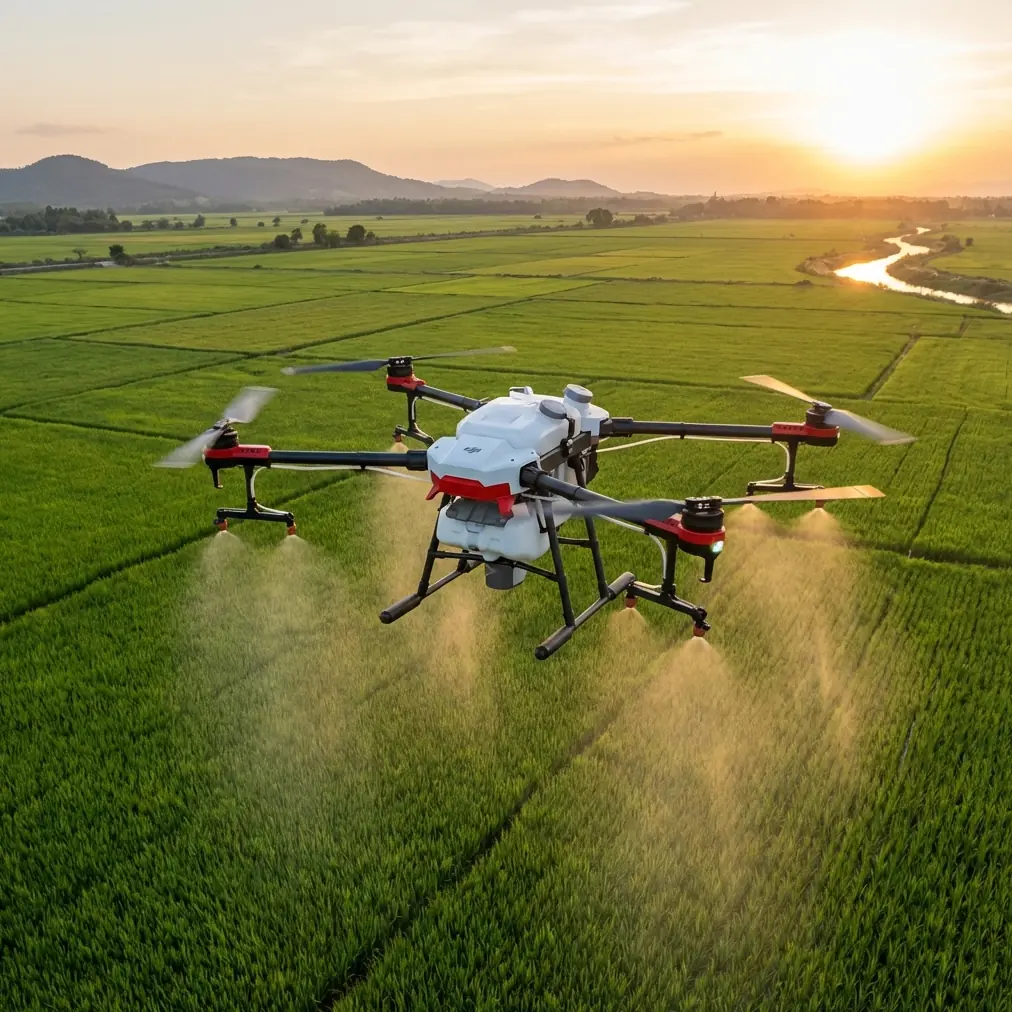
DJI Avata for Dusty Highway Survey Work: What Actually Matters in the Field
META: A technical review of using DJI Avata in dusty highway survey scenarios, grounded in RTK control accuracy, CGCS2000 map verification, and practical interference handling.
Dust changes everything.
Not in the abstract, but in the small operational ways that decide whether a highway survey day produces usable data or just pretty footage with weak positional trust. When people look at DJI Avata, they often start with flight feel, immersion, or creative FPV performance. For survey-adjacent work near roads, embankments, access lanes, culverts, and rural right-of-way corridors, the better question is different: how does Avata fit into a controlled measurement workflow where accuracy checks, reference networks, and dirty environmental conditions are not optional?
That is where the reference material becomes useful. The source document is not a general drone brochure. It is a technical design framework for 1:500 rural cadastral aerial surveying with a 10 cm standard, and it is built around GNSS-RTK discipline, control verification, and map accuracy checks in the CGCS2000 coordinate system. Even if Avata is not the primary mapping aircraft in a formal cadastral project, the standards in that document are exactly the kind of backbone that should shape how any drone is used around survey operations.
Why Avata belongs in the conversation at all
Avata is not a textbook fixed-route mapping platform. It is compact, protected, agile, and comfortable in constrained spaces where dust, roadside structures, construction clutter, bridge approaches, retaining walls, and intermittent traffic infrastructure create awkward flying geometry. That matters on highway work.
In dusty environments, survey teams often need more than one aerial role:
- a platform for quick visual reconnaissance before control deployment
- a way to inspect road edges, drainage features, access points, and obstacle zones
- a tool for documenting changed ground conditions before revising an older topographic base
- a close-range aircraft for checking features that are difficult to verify from a higher, wider-area mission
That last point links directly to the source document’s emphasis on verifying whether an older map remains mathematically usable after coordinate transformation. The document states that existing topographic mapping should first be tested against new data and new standards before it is reused. Operationally, this is a huge deal. Too many field teams assume old mapping is “close enough.” The design standard says otherwise: use newly established CGCS2000 control points, test the transformed legacy map, produce a detection report, and only then decide whether it is acceptable.
Avata can support that validation phase well. It gives the team a nimble way to inspect likely change areas—house corners, road edges, roadside structures, slope breaks, drainage entries—before investing time in full rework.
The real survey story is RTK discipline, not just flight capability
The strongest takeaway from the source is not drone-related at all. It is procedural.
Under the existing control network, GNSS-RTK is used in accordance with CH/T 2009-2010, the Chinese technical specification for GPS real-time kinematic measurement. The extracted requirements include a point position mean error of less than 10 cm and a rover-to-single-base distance of less than 6 km. Those numbers define the trust envelope of the survey control.
If you are using Avata in a dusty highway corridor, this matters because every aerial observation is only as useful as the control framework it plugs into. A fast drone can help you detect changes. It cannot rescue weak control.
The document also requires that whenever RTK work begins, or when the base station is reset, the team must verify on at least one known point. The planar discrepancy must be no greater than 5 cm, and the elevation discrepancy no greater than 10 cm. That check is not paperwork theater. It is the difference between a control network that remained stable through setup and one that silently drifted because of antenna issues, multipath, or poor satellite conditions.
For highway survey work, especially in dusty conditions, one of the most common practical problems is electromagnetic interference mixed with bad setup habits. Not dramatic interference—just enough to degrade confidence. Temporary site power, roadside metal guardrail runs, machinery, communication equipment, and parked vehicles can all complicate antenna performance. Dust makes it worse indirectly because teams rush setup, wipe down equipment quickly, and accept marginal base locations they would reject on a clean site.
The fix is not mysterious. Antenna adjustment is often the first and best response. Move the setup away from reflective metal, raise the antenna for a cleaner sky view, recheck centering, confirm antenna height carefully, and avoid placing the base where roadside infrastructure crowds the signal environment. The source text explicitly stresses precise centering and careful, accurate antenna-height measurement before collecting data. In practice, that small discipline is more valuable than any amount of post-flight optimism.
Dusty highway conditions expose weak workflows fast
Highway jobs create a strange mix of openness and interference. You may have broad sky visibility, yet still fight localized signal issues from vehicles, utility corridors, reinforced structures, sign gantries, barriers, and temporary construction equipment. Add dust, and visual inspection also gets harder. Lens contamination, airflow turbulence near embankments, and reduced contrast on road-edge features can all affect what the pilot sees and what the surveyor interprets later.
This is where Avata’s handling profile can be useful. Obstacle awareness and stable close-in maneuvering make it practical for low-altitude corridor inspection around roadside obstacles, especially when the goal is not full photogrammetric production but field confirmation. If a legacy base map is being checked for continued use, Avata can help the team visually confirm changed features that would trigger repair survey work: widened shoulders, altered access tracks, updated drainage lines, new retaining details, or construction-stage modifications around interchanges.
That lines up with another key instruction in the source: during field inspection, the operator should carefully compare features on the working map with actual ground conditions one by one, marking the changed extent and noting repair-survey content. This is old-school survey logic, and it still wins. Before you redraw a map or trust a transformed sheet, you verify change on the ground.
Avata is exceptionally good at that “go look closely” stage.
The 50-point rule is more demanding than many teams realize
One of the most significant details in the source is the detection layout requirement. For map accuracy checking, detection areas should be evenly arranged at the four corners and the center of the operating area, and each detection area must contain no fewer than 50 check points. The primary check objects are house corners—especially building corners—and road edges.
That is not a token sample. It is a serious verification design.
Operationally, this means the survey team is expected to test spatial consistency across the whole work area, not just near the control station or along one convenient section of road. For highway-adjacent rural work, those 50-point clusters reveal whether transformed mapping holds up equally well near roadside development, open land, and mixed-feature zones.
Avata’s value here is indirect but practical. It helps teams pre-identify the best candidate check features and inspect whether they are still stable and visible enough to use. In dusty conditions, road edges can be deceptively ambiguous, especially on unsealed shoulders or recently graded sections. Building corners, wall intersections, culvert mouths, and paved edge breaks are often more reliable. Avata lets crews inspect these areas quickly before walking every point.
And the consequences of failure are clear in the source: if more than one-third of the point errors exceed tolerance, the area does not meet requirements and should be resurveyed. That threshold matters because it protects the project from carrying forward a quietly degraded base.
Avata is strongest as a verification and documentation aircraft
This is the right way to think about it.
For dusty highway surveying, Avata shines when used as:
- a pre-survey reconnaissance platform
- a change-detection support aircraft
- a corridor inspection tool for difficult roadside geometry
- a visual evidence platform when producing map revision notes
- a training aircraft for pilots learning controlled low-altitude inspection near civil infrastructure
It is less about replacing formal RTK control procedures and more about making those procedures more efficient and better informed.
If your workflow includes D-Log capture, that can help preserve detail in harsh midday road scenes where pale dust, dark asphalt, concrete structures, and bright sky often compress dynamic range. That is not just a creative feature. It can improve interpretability when reviewing subtle edge definitions or surface condition changes later. Hyperlapse and QuickShots are not central to measurement work, but controlled repeatable visual sequences can still be useful for progress documentation and route familiarization on long corridor jobs. Subject-tracking and ActiveTrack are better treated cautiously around active roads; they are not the core value in a survey environment, and manual control remains the safer choice when precision observation is the goal.
One overlooked lesson from the source: reporting discipline
The document also specifies structured output for landmark point results, including coordinates and related coordinate-system information. That may seem administrative, but it reflects something survey teams know well: data without context becomes unusable surprisingly fast.
On mixed drone-survey projects, especially those that touch legacy mapping, your visual observations from Avata need to be tied clearly to the coordinate framework, control status, date, weather, and field notes. Dusty corridor work generates ambiguity. Was that edge shift a real geometric change, or just a visibility issue from dust? Was that apparent offset near a barrier caused by control error, perspective, or map age? The only way to answer those questions later is disciplined field reporting.
If your team is building or refining a roadside survey workflow around Avata and RTK-backed field checks, a practical way to discuss integration details is through this direct project chat channel.
Handling electromagnetic interference: what actually works in the field
The prompt’s narrative spark—handling electromagnetic interference with antenna adjustment—is not an edge case. It is a common field nuisance.
A few patterns tend to help:
1. Stop blaming the drone for a control problem
If the RTK check on a known point fails the source thresholds—more than 5 cm in plan or 10 cm in elevation after startup or base reset—the first suspect should be the GNSS setup, not the aircraft.
2. Reposition the base before collecting more data
The source requires known-point verification after setup changes for a reason. If interference or multipath is suspected, relocate the antenna away from metal roadside infrastructure, machinery, or reflective surfaces. A small move can change signal quality dramatically.
3. Treat antenna height measurement as a precision task
The source specifically calls for careful, accurate antenna-height measurement. On dusty sites, rushed handling, unstable ground, and repetitive setup teardown can introduce avoidable blunders.
4. Respect the control geometry
The extracted text limits rover-to-single-base distance to less than 6 km. That matters on stretched highway jobs. Teams covering long corridors sometimes let convenience override geometry. The result is degraded confidence exactly where positional discipline is supposed to be strongest.
5. Use Avata to inspect the environment before committing the setup
A quick low-risk reconnaissance flight can reveal obstructions, equipment clusters, traffic staging, overhead structures, and reflective surfaces that make a base location a poor choice.
Final assessment
Avata is not the star of the source document. RTK control is. Accuracy verification is. CGCS2000-based checking is. The required distribution of check areas and the minimum 50 points per area tell you this workflow is built on proof, not assumption.
That is why Avata can still be highly valuable here.
In dusty highway survey operations, its strength is not that it turns an FPV aircraft into a cadastral mapping instrument. Its strength is that it gives professional crews a fast, controlled, close-range view of the exact features that matter when evaluating change, validating legacy map usability, checking road-edge conditions, and supporting repair survey decisions under a disciplined RTK framework.
Use it that way and it becomes more than a visual add-on. It becomes a sharp field instrument inside a much stricter measurement system.
Ready for your own Avata? Contact our team for expert consultation.