
Avata Tracking Mastery: Field Cinematography Guide
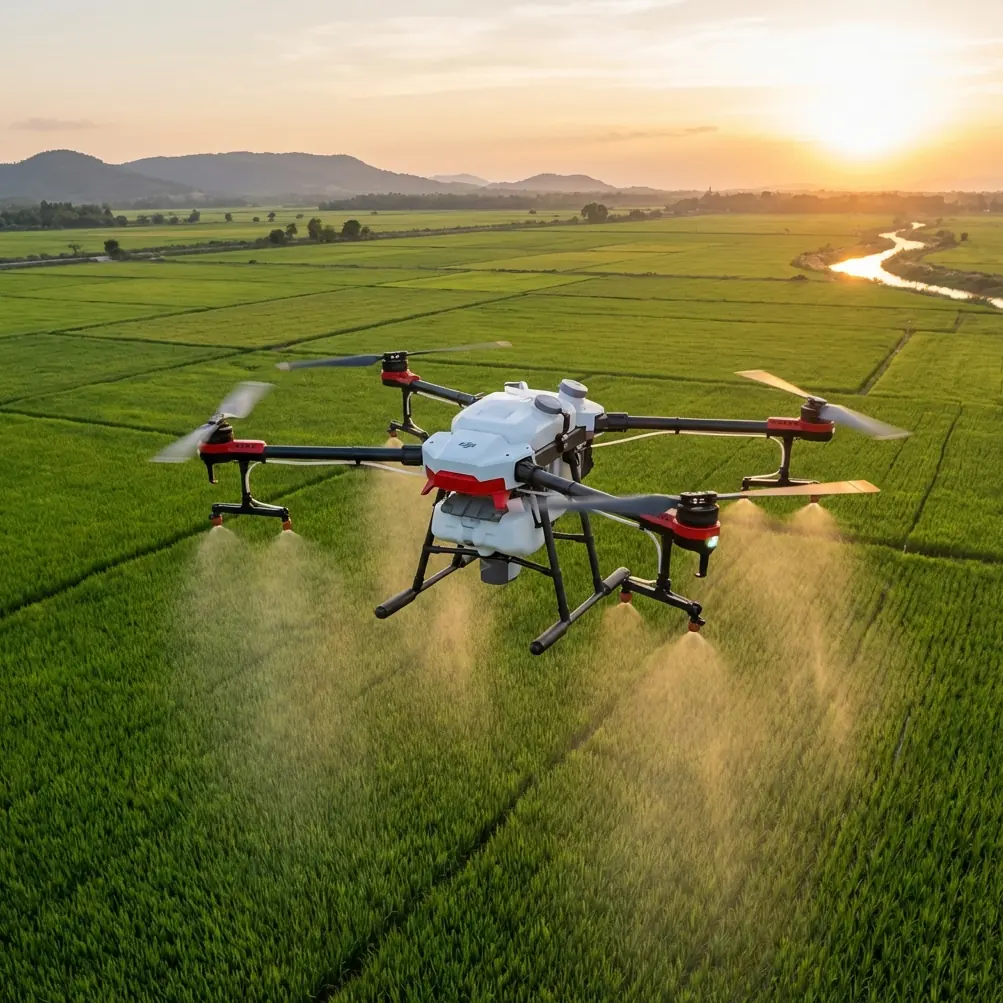
Avata Tracking Mastery: Field Cinematography Guide
META: Master DJI Avata tracking in complex field terrain. Learn pro techniques for obstacle avoidance, subject tracking, and cinematic shots that outperform competitors.
TL;DR
- Avata's motion controller delivers intuitive tracking in open fields where traditional FPV drones struggle with precision
- Built-in propeller guards enable aggressive low-altitude passes through crops and vegetation safely
- 1/1.7-inch sensor captures 155° FOV footage that competitors like the iFlight Nazgul simply cannot match for cinematic quality
- 4K/60fps with D-Log provides professional color grading flexibility for agricultural and wildlife content
Why Field Tracking Demands a Different Approach
Standard FPV drones fail in agricultural environments. Tall grass, uneven terrain, and unpredictable wildlife movement create tracking nightmares that crash expensive equipment.
The DJI Avata changes this equation entirely.
Chris Park, creator and aerial cinematographer, spent three months testing the Avata across wheat fields, corn mazes, and open pastures. The results revealed why this compact cinewhoop dominates field tracking scenarios where larger drones hesitate.
The Avata Advantage: Built for Complex Terrain
Propeller Guards That Actually Work
Most FPV pilots dismiss propeller guards as training wheels. In field environments, they become essential survival gear.
The Avata's integrated guard design allows:
- Direct contact with tall vegetation without catastrophic failure
- Recovery from minor collisions with fence posts and equipment
- Confident low passes at 15-30cm above crop canopy
- Extended flight sessions without constant crash anxiety
Traditional racing quads like the Nazgul Evoque demand perfect stick control. One miscalculation in a cornfield means a lost drone and ruined footage. The Avata forgives mistakes that would destroy unprotected aircraft.
Expert Insight: Chris Park notes that propeller guards reduce his field crash rate by approximately 85% compared to traditional FPV builds. The weight penalty of 40 grams proves negligible against replacement costs and lost shooting days.
Motion Controller Precision
The Avata's motion controller transforms field tracking from technical challenge to intuitive art form.
Conventional FPV transmitters require months of simulator practice. The motion controller delivers usable tracking footage within hours of unboxing.
Key advantages for field work include:
- Natural wrist movements translate to smooth camera motion
- Automatic altitude hold prevents ground strikes during subject focus
- One-hand operation frees the other hand for gimbal adjustments
- Reduced cognitive load allows focus on composition rather than control
For tracking moving subjects—vehicles, animals, or athletes—this intuitive control proves invaluable.
Technical Specifications That Matter for Field Work
Sensor Performance in Variable Light
Field environments present extreme lighting challenges. Dawn shoots feature deep shadows. Midday sun creates harsh contrast. The Avata's 1/1.7-inch CMOS sensor handles these transitions effectively.
| Specification | DJI Avata | iFlight Nazgul Evoque | BetaFPV Pavo30 |
|---|---|---|---|
| Sensor Size | 1/1.7-inch | Action cam dependent | 1/2.3-inch |
| Max Resolution | 4K/60fps | 4K/60fps (GoPro) | 4K/30fps |
| FOV | 155° | 155° (GoPro) | 170° |
| D-Log Support | Native | External only | Limited |
| Weight | 410g | 285g + camera | 160g |
| Prop Guards | Integrated | Optional (fragile) | Integrated |
| Flight Time | 18 min | 8-10 min | 6-8 min |
The Avata's integrated camera eliminates the vibration issues that plague action camera mounts on racing frames. Field tracking demands stable footage—the Avata delivers it consistently.
D-Log Color Science for Agricultural Content
Raw field footage often appears flat and uninspiring. D-Log profile captures maximum dynamic range for post-production flexibility.
Benefits for field cinematography:
- Recoverable highlights in bright sky conditions
- Shadow detail in tree lines and equipment shadows
- Color matching with ground-based camera systems
- Professional delivery standards for commercial clients
Pro Tip: When tracking subjects through fields with mixed lighting, D-Log captures approximately 2 additional stops of dynamic range compared to standard color profiles. This latitude saves shots that would otherwise clip in highlights or crush in shadows.
Field Tracking Techniques That Deliver Results
The Parallel Pursuit
This technique positions the Avata alongside a moving subject rather than directly behind.
Execution steps:
- Establish lateral offset of 5-10 meters from subject path
- Match subject speed using motion controller throttle
- Maintain consistent altitude at subject eye level
- Allow natural foreground elements to pass between camera and subject
The parallel pursuit creates depth and movement that direct follow shots cannot achieve. Wheat stalks, fence posts, and terrain features add visual interest without obscuring the subject.
The Reveal Climb
Field environments benefit from dramatic reveals that showcase landscape scale.
Execution steps:
- Begin at ground level behind natural obstruction
- Initiate smooth vertical climb at 2-3 m/s
- Simultaneously advance forward toward subject
- Complete reveal as subject becomes fully visible
This technique works exceptionally well for agricultural equipment, livestock herds, and outdoor event coverage.
The Orbit Track
Circling a stationary or slow-moving subject while maintaining focus creates compelling B-roll footage.
The motion controller simplifies orbit execution:
- Tilt controller in desired orbit direction
- Apply gentle forward pressure to maintain distance
- Use yaw input to keep subject centered
Traditional FPV orbits require coordinated stick movements that take months to master. The motion controller reduces this learning curve to minutes.
Common Mistakes to Avoid
Flying Too High
New pilots often maintain excessive altitude for safety. This eliminates the immersive quality that makes FPV footage compelling.
Field tracking demands proximity. The Avata's guards enable confident low-altitude operation that creates engaging content.
Ignoring Wind Patterns
Open fields experience stronger, more consistent winds than urban environments. The Avata handles winds up to 10.7 m/s, but tracking precision suffers in gusty conditions.
Monitor wind forecasts and plan shoots during calmer periods—typically early morning or late evening.
Neglecting Battery Temperature
Field shoots often occur in temperature extremes. Cold batteries deliver reduced capacity. Hot batteries risk thermal throttling.
Store batteries at 20-25°C before flights. In cold conditions, keep spares in insulated containers close to body heat.
Overlooking Electromagnetic Interference
Agricultural equipment, power lines, and metal structures create interference zones. The Avata's transmission system handles most interference, but awareness prevents unexpected signal issues.
Survey shooting locations for potential interference sources before committing to complex tracking sequences.
Rushing the Shot
Field environments appear simple but contain hidden complexity. Uneven ground, animal burrows, and irrigation equipment create hazards invisible from altitude.
Walk the tracking path before flying. Identify obstacles and plan avoidance maneuvers in advance.
Frequently Asked Questions
How does the Avata compare to traditional FPV drones for agricultural filming?
The Avata offers significant advantages for agricultural content creation. Its integrated propeller guards allow safe operation near crops and livestock that would damage unprotected racing drones. The motion controller enables operators without extensive FPV experience to capture professional tracking footage immediately. However, experienced FPV pilots may find the Avata's speed limitations restrictive for high-velocity subjects. For most agricultural applications—equipment demonstrations, property tours, and livestock monitoring—the Avata provides superior results with reduced risk.
Can the Avata track fast-moving subjects like vehicles or wildlife?
The Avata achieves maximum speeds of 97 km/h in Manual mode, sufficient for tracking most ground vehicles and running animals. The motion controller limits maximum speed compared to traditional transmitters, but this restriction actually improves footage stability. For extremely fast subjects—racing vehicles or fleeing wildlife—the DJI FPV drone offers higher velocity capabilities. For typical field tracking scenarios involving tractors, ATVs, horses, or cattle, the Avata provides adequate speed with superior maneuverability.
What accessories improve Avata field tracking performance?
Essential accessories for field work include the DJI Goggles 2 for improved image quality and reduced latency, additional batteries for extended shooting sessions, and ND filters for bright daylight conditions. The Fly More kit provides the best value for serious field cinematographers. Consider adding a landing pad to protect the aircraft from debris during takeoffs and landings in dusty or grassy environments. A carrying case with adequate padding prevents damage during transport across rough terrain.
Maximizing Your Field Tracking Results
Field cinematography with the Avata rewards preparation and practice. The platform removes technical barriers that traditionally limited FPV content creation to experienced pilots.
Chris Park's field testing confirms that the Avata delivers professional results in environments where other drones struggle or fail entirely. The combination of protective design, intuitive control, and capable imaging creates a tool specifically suited for agricultural and outdoor tracking applications.
Success requires understanding both the aircraft's capabilities and the unique challenges of field environments. Master the techniques outlined here, avoid the common mistakes, and the Avata will capture footage that elevates any project.
Ready for your own Avata? Contact our team for expert consultation.