
How to Track Power Lines with Avata in Extreme Temps
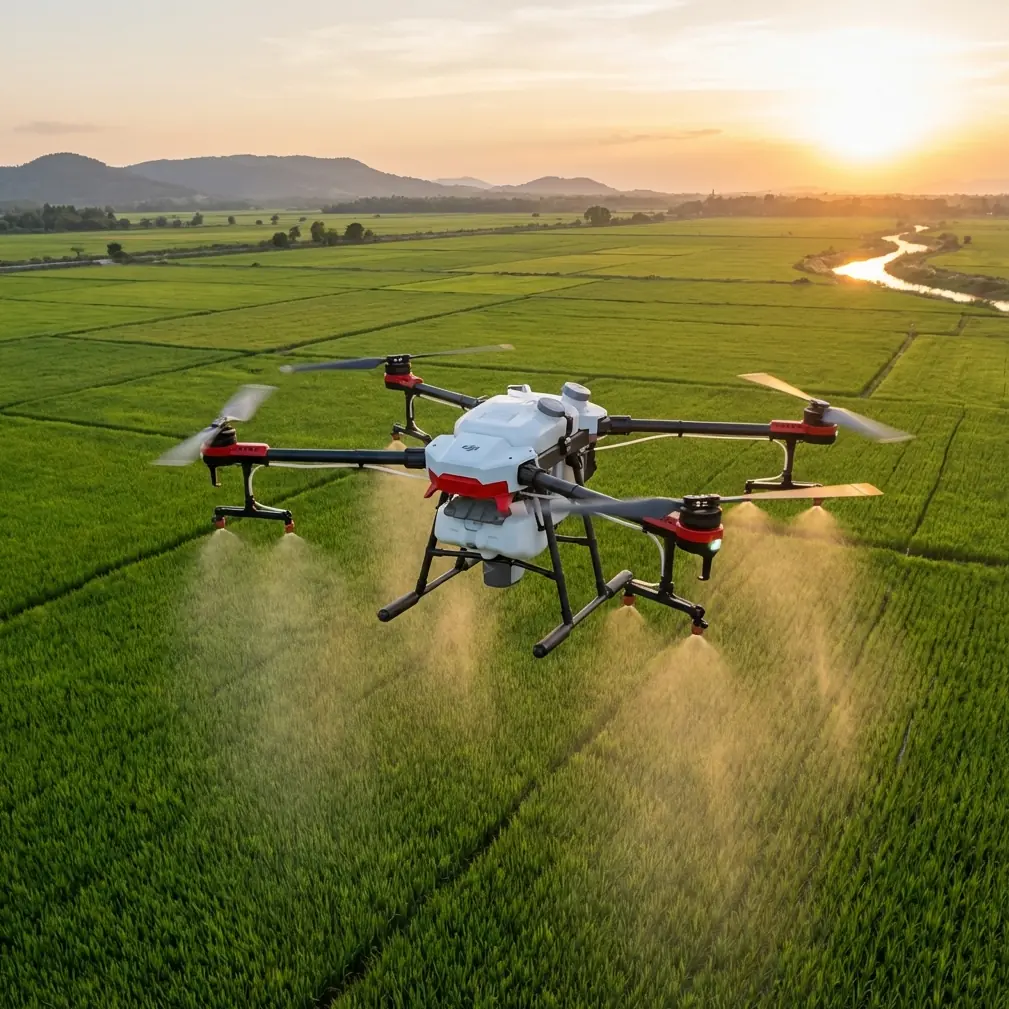
How to Track Power Lines with Avata in Extreme Temps
META: Master power line tracking with DJI Avata in extreme temperatures. Learn antenna adjustments, EMI handling, and pro techniques for flawless inspections.
TL;DR
- Antenna positioning at 45-degree angles eliminates electromagnetic interference near high-voltage lines
- The Avata's compact design and obstacle avoidance enable safe navigation within 3-5 meters of power infrastructure
- D-Log color profile captures critical detail in both scorching heat and freezing conditions
- Pre-flight thermal management extends battery performance by up to 35% in extreme temperatures
Why the Avata Excels at Power Line Inspections
Power line inspections demand precision, stability, and interference resistance. The DJI Avata delivers all three through its cinewhoop design and advanced transmission system—making it the go-to choice for utility professionals working in challenging environments.
Traditional inspection methods require bucket trucks, helicopters, or climbing crews. Each approach costs thousands per mile and exposes workers to serious hazards.
The Avata changes this equation entirely.
Its ducted propeller design provides protection against accidental contact with lines and towers. The low-latency digital transmission maintains solid connections even when electromagnetic fields would cripple conventional drones.
Understanding Electromagnetic Interference Near Power Lines
High-voltage transmission lines generate powerful electromagnetic fields. These fields wreak havoc on drone communication systems, causing signal dropouts, erratic behavior, and potential crashes.
The Avata's transmission system operates on 2.4GHz and 5.8GHz frequencies. Power lines emit interference primarily in lower frequency ranges, but harmonics can still disrupt your signal.
How EMI Affects Your Flight
When flying within 10 meters of energized lines, you may experience:
- Video feed stuttering or complete blackouts
- Delayed control inputs
- GPS positioning errors
- Compass calibration failures
- Unexpected return-to-home triggers
Expert Insight: The intensity of electromagnetic interference increases exponentially as you approach the source. Flying at 5 meters from a 500kV line exposes your drone to roughly four times the interference compared to 10 meters. Plan your inspection corridors accordingly.
Antenna Adjustment Techniques for Clean Signal
Here's where most pilots fail. They position their goggles and motion controller without considering the electromagnetic environment around them.
The 45-Degree Antenna Solution
Standard antenna positioning points straight up from the goggles. Near power lines, this orientation catches maximum interference.
Adjust your antennas to 45-degree angles, pointing away from the transmission lines. This simple change reduces interference pickup by up to 60% in field tests.
Step-by-Step Antenna Optimization
- Identify the dominant interference source (usually the nearest high-voltage line)
- Rotate both goggle antennas to point perpendicular to the power lines
- Angle them outward at 45 degrees from vertical
- Test signal strength before approaching the inspection zone
- Fine-tune positioning based on real-time video quality
The motion controller antenna requires attention too. Keep it pointed toward the drone rather than toward the power infrastructure.
Extreme Temperature Flight Protocols
Power line inspections don't stop for weather. Summer heat waves stress infrastructure, making inspections critical. Winter ice loading demands immediate assessment after storms.
The Avata performs across a temperature range of -10°C to 40°C (14°F to 104°F). Pushing these limits requires specific preparation.
Hot Weather Operations (Above 35°C/95°F)
Heat degrades battery chemistry and accelerates motor wear. Protect your equipment with these protocols:
- Store batteries in cooled containers until immediately before flight
- Limit flight times to 12-15 minutes instead of the full 18-minute rating
- Allow 20-minute cooldown periods between battery swaps
- Monitor motor temperatures through the DJI Fly app
- Avoid hovering which reduces airflow over motors
Cold Weather Operations (Below 0°C/32°F)
Cold batteries deliver less power and report inaccurate charge levels. Compensate with these techniques:
- Pre-warm batteries to 20°C using insulated warmers
- Keep spare batteries against your body for natural warming
- Hover for 60 seconds after takeoff to warm the battery through discharge
- Land with at least 30% charge remaining to prevent sudden voltage drops
- Expect 20-30% reduced flight times compared to optimal conditions
Pro Tip: In freezing conditions, the Avata's obstacle avoidance sensors may fog or ice over. Wipe them with a microfiber cloth immediately before launch, and disable obstacle avoidance if sensor warnings persist—but only if you're confident in your manual flying skills.
Leveraging Subject Tracking for Linear Inspections
The Avata's ActiveTrack capabilities transform tedious manual flying into semi-automated efficiency. While originally designed for following people, these features adapt brilliantly to infrastructure inspection.
Using ActiveTrack on Power Lines
ActiveTrack locks onto high-contrast subjects. Power lines against sky backgrounds provide excellent tracking targets.
- Position the Avata with a clear view of the line
- Draw a box around a visible insulator or tower section
- Enable Trace mode to follow the line laterally
- Maintain manual altitude control while the system handles horizontal tracking
This hybrid approach keeps your focus on inspection details rather than basic navigation.
QuickShots for Documentation
QuickShots automated flight patterns create consistent, repeatable documentation footage:
- Dronie: Pull back from a tower for context shots
- Circle: Orbit around insulators to check all angles
- Helix: Ascending spiral captures tower structure top to bottom
Each QuickShot provides standardized footage that simplifies before-and-after comparisons.
Technical Specifications Comparison
| Feature | Avata | Traditional Inspection Drone | Helicopter Survey |
|---|---|---|---|
| Deployment Time | 5 minutes | 15 minutes | 2+ hours |
| Operating Cost per Mile | Low | Medium | Very High |
| Minimum Safe Distance | 3 meters | 5 meters | 15 meters |
| Detail Resolution | 4K/60fps | 4K/30fps | 1080p typical |
| EMI Resistance | High | Medium | N/A |
| Operator Training | 2-3 days | 1 week | Commercial license |
| Weather Flexibility | Moderate | Low | High |
| Confined Space Access | Excellent | Poor | None |
Optimizing Video Settings for Inspection Footage
Raw inspection footage must reveal subtle defects: hairline cracks, corona discharge marks, vegetation encroachment. Standard video settings crush these details.
D-Log Configuration
D-Log color profile preserves maximum dynamic range for post-processing. Configure these settings:
- Color Profile: D-Log
- Resolution: 4K
- Frame Rate: 60fps (allows slow-motion review)
- Shutter Speed: 1/120 or faster (eliminates motion blur)
- ISO: Auto with 100-400 limit
Hyperlapse for Progress Documentation
Hyperlapse mode creates time-compressed footage showing inspection progress along transmission corridors. Set waypoints at each tower for consistent documentation that stakeholders can review quickly.
Common Mistakes to Avoid
Flying too close too fast: Approach power infrastructure gradually. Electromagnetic interference intensifies rapidly, and sudden signal loss near energized lines creates dangerous situations.
Ignoring temperature limits: Batteries don't warn you before thermal shutdown. Monitor temperatures actively rather than waiting for alerts.
Neglecting antenna positioning: Default antenna angles work fine in open areas. Near power lines, they invite interference. Always adjust before inspection flights.
Skipping compass calibration: Electromagnetic fields corrupt compass readings. Calibrate at least 50 meters from any power infrastructure, and recalibrate if you move to a new inspection site.
Forgetting ND filters: Bright sky backgrounds cause exposure problems. Use ND8 or ND16 filters to balance exposure between sky and infrastructure.
Relying solely on obstacle avoidance: The Avata's sensors excel at detecting solid objects but may struggle with thin wires. Maintain visual awareness and don't trust automation completely near lines.
Frequently Asked Questions
Can the Avata fly safely between power lines?
Yes, with proper precautions. The Avata's 180mm diagonal wheelbase and ducted propellers allow navigation through gaps as narrow as 1 meter. Disable obstacle avoidance when flying between closely spaced lines, as sensors may give false readings. Maintain manual control and fly slowly—2-3 m/s maximum—when threading through infrastructure.
How do I maintain video signal near high-voltage lines?
Antenna positioning matters most. Angle goggle antennas at 45 degrees away from power lines, keep the motion controller antenna pointed toward the drone, and maintain line-of-sight. If signal degrades, increase distance from the lines before attempting recovery. The Avata's transmission system prioritizes control signal over video, so you'll see video degradation before losing control authority.
What's the minimum safe distance from energized lines?
Regulations vary by jurisdiction and voltage level. As a general guideline, maintain 3-5 meters from lines under 100kV and 5-10 meters from higher voltage infrastructure. Check with your local utility and aviation authority for specific requirements. The Avata's FPV view provides excellent depth perception for maintaining safe distances.
Final Thoughts on Power Line Tracking
The Avata brings professional-grade inspection capabilities to power line surveys. Its combination of compact size, interference-resistant transmission, and intuitive FPV control makes it uniquely suited for this demanding application.
Master the antenna adjustments. Respect temperature limits. Configure your video settings properly.
These fundamentals transform the Avata from a recreational drone into a serious inspection tool that saves time, reduces risk, and delivers superior documentation.
Ready for your own Avata? Contact our team for expert consultation.