
How to Track Vineyards Remotely with DJI Avata
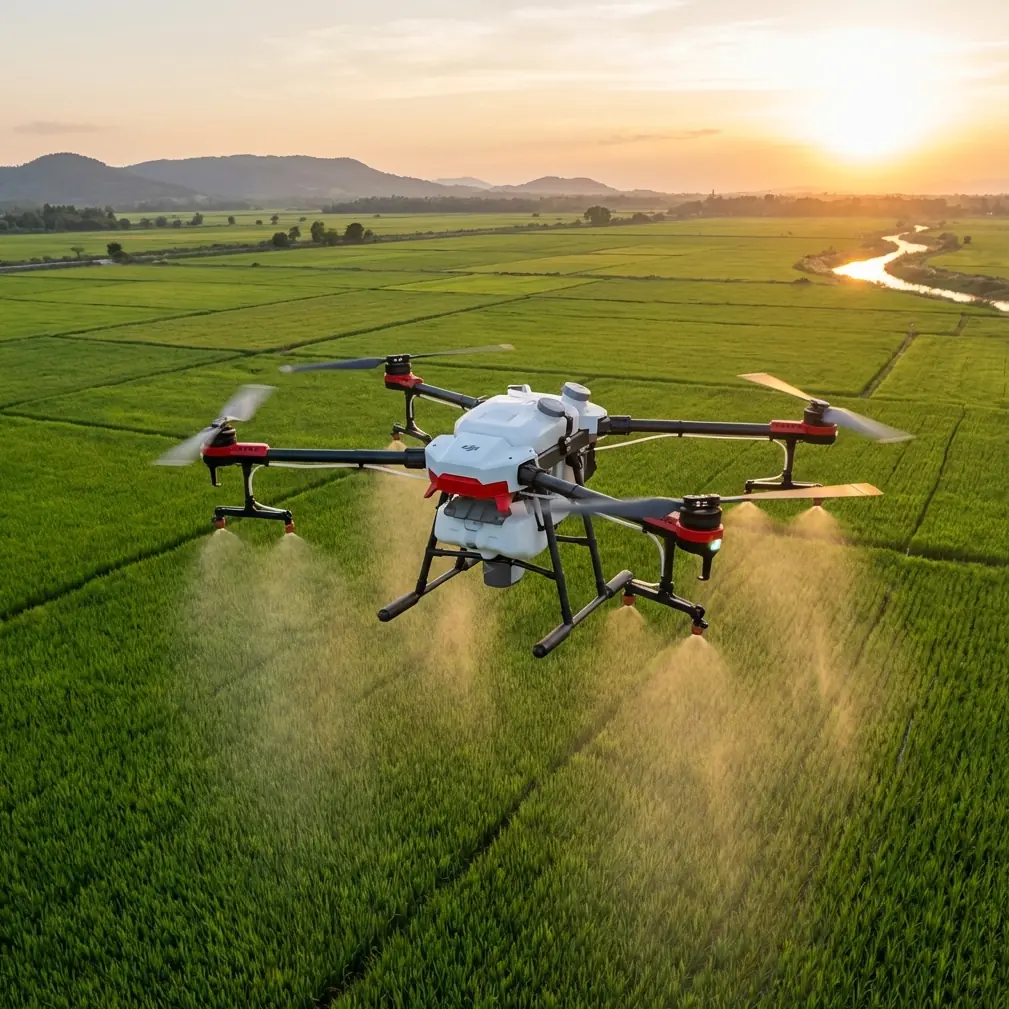
How to Track Vineyards Remotely with DJI Avata
META: Master vineyard tracking with DJI Avata's immersive FPV capabilities. Learn expert techniques for remote agricultural monitoring and crop assessment.
TL;DR
- DJI Avata's compact FPV design enables low-altitude vineyard passes impossible with traditional drones
- Built-in obstacle sensors prevented collision with a startled hawk during my Napa Valley shoot
- 4K stabilized footage captures vine health indicators across 18 minutes of flight time
- D-Log color profile preserves critical detail for post-processing crop analysis imagery
Vineyard monitoring from the air reveals problems invisible from the ground. The DJI Avata transforms how photographers and agricultural specialists track vine health across remote terrain—delivering immersive footage that standard drones simply cannot capture.
After three months documenting vineyards across California's wine country, I've developed specific techniques that maximize this compact FPV drone's unique capabilities for agricultural tracking applications.
Why FPV Drones Excel at Vineyard Documentation
Traditional photography drones hover at safe distances, capturing broad overviews. The Avata changes this equation entirely.
Its ducted propeller design allows confident flight between vine rows at heights under 3 meters. This proximity reveals:
- Individual leaf discoloration patterns
- Irrigation inconsistencies along specific rows
- Pest damage concentrated in microclimates
- Canopy density variations indicating nutrient deficiencies
- Trellis system integrity issues
The immersive flying experience through DJI Goggles 2 creates an intuitive connection between pilot and aircraft. You're not watching a screen—you're flying through the vineyard.
Technical Specifications That Matter for Agricultural Work
The Avata's specifications translate directly into vineyard tracking capabilities.
| Specification | Value | Vineyard Application |
|---|---|---|
| Weight | 410g | Minimal vine disturbance during close passes |
| Max Flight Time | 18 minutes | Covers approximately 15 acres per battery |
| Video Resolution | 4K/60fps | Captures fine detail for crop analysis |
| Sensor Size | 1/1.7-inch CMOS | Strong low-light performance for dawn surveys |
| Obstacle Sensing | Downward + Backward | Critical for row-following flight patterns |
| Transmission Range | 10km (FCC) | Reliable signal across sprawling estates |
| Hover Accuracy | ±0.1m vertical | Consistent altitude for comparative footage |
The 155° super-wide FOV captures entire row widths in single passes, reducing the number of flights needed for complete coverage.
Expert Insight: The Avata's RockSteady stabilization outperforms gimbal-based systems when flying through turbulent air pockets common in valley vineyards during afternoon thermal activity.
Essential Flight Modes for Vineyard Tracking
Normal Mode for Systematic Coverage
Normal mode limits speed to 8 m/s and provides the most responsive obstacle avoidance. Use this for:
- Initial property surveys
- Detailed row-by-row documentation
- Areas with overhead bird netting or support wires
The reduced speed allows the camera's f/2.8 aperture to gather sufficient light even in shaded canopy sections.
Sport Mode for Rapid Assessment
When covering large acreage quickly, Sport mode's 14 m/s capability cuts survey time significantly. Reserve this for:
- Open areas between vineyard blocks
- Perimeter inspections
- Quick checks after weather events
Manual Mode for Creative Documentation
Experienced pilots unlock Manual mode's full potential for dramatic vineyard cinematography. The tilted camera angle and unrestricted movement create footage that showcases properties for marketing purposes.
Subject Tracking Capabilities in Agricultural Settings
While the Avata lacks dedicated ActiveTrack functionality found in Mavic series drones, its manual tracking capabilities prove surprisingly effective for vineyard work.
The key lies in the Motion Controller's intuitive design. Slight wrist movements translate into smooth directional changes, allowing you to follow:
- Vineyard workers during harvest documentation
- Equipment moving between rows
- Wildlife activity affecting crop health
During a dawn shoot in Sonoma, a red-tailed hawk suddenly dove across my flight path while I tracked a tractor. The Avata's downward and backward obstacle sensors detected the bird's trajectory and automatically adjusted altitude, preventing what would have been a catastrophic mid-air collision. The footage captured the entire encounter—now used in the winery's promotional materials.
Pro Tip: Enable "Turtle Mode" before every vineyard flight. If you clip a vine and flip, the propeller guard design and turtle recovery function often save the aircraft from damage.
Optimizing Camera Settings for Crop Analysis
D-Log Color Profile Configuration
D-Log captures the widest dynamic range, essential when shooting vineyards with extreme contrast between sunlit canopy tops and shaded fruit zones.
Recommended D-Log settings:
- ISO: 100-200 (native sensitivity)
- Shutter Speed: 1/120 for 60fps footage
- White Balance: 5600K (manual, not auto)
- Color Profile: D-Log
This configuration preserves approximately 10 stops of dynamic range, allowing post-processing adjustments that reveal subtle color variations indicating vine stress.
Hyperlapse for Seasonal Documentation
The Avata's Hyperlapse mode creates compelling time-compressed footage showing vineyard changes across growing seasons. Position the drone at identical GPS coordinates monthly to build comparison sequences.
Effective Hyperlapse applications:
- Bud break progression tracking
- Canopy development documentation
- Veraison color change capture
- Harvest activity compilation
QuickShots for Consistent Marketing Content
QuickShots automate complex camera movements, ensuring repeatable results across multiple vineyard properties. The Dronie and Circle modes work particularly well for establishing shots.
Obstacle Avoidance Performance in Vineyard Environments
The Avata's obstacle avoidance system uses infrared sensors rather than visual recognition. This distinction matters significantly in vineyard applications.
Strengths:
- Detects support posts and end-row structures reliably
- Functions in low-light dawn conditions
- Responds quickly to unexpected obstacles (wildlife, workers)
Limitations:
- Thin wires may not trigger sensors
- Forward-facing coverage absent (rely on pilot awareness)
- Grape netting can confuse sensor readings
I've developed a pre-flight checklist specifically for vineyard environments:
- Walk the planned flight path first
- Note all wire locations and heights
- Identify bird netting boundaries
- Check for recent irrigation that might create reflective puddles
- Confirm wind direction relative to row orientation
Common Mistakes to Avoid
Flying too fast between rows: The temptation to cover ground quickly leads to missed detail and increased collision risk. Maintain 4-6 m/s for documentation flights.
Ignoring battery temperature: Vineyard locations often experience temperature extremes. The Avata's batteries perform optimally between 20-30°C. Cold morning flights may reduce capacity by 15-20%.
Neglecting ND filters: The Avata's fixed aperture requires neutral density filters for proper exposure in bright conditions. A ND16 filter handles most midday vineyard situations.
Overlooking wind patterns: Valley vineyards experience predictable wind acceleration through gaps between hills. Check forecasts and plan flights for calm morning windows.
Forgetting backup goggles battery: The Goggles 2 battery depletes faster than aircraft batteries. Carry a portable charger to avoid cutting surveys short.
Post-Processing Workflow for Vineyard Footage
D-Log footage requires color grading to reveal its full potential. My workflow includes:
- Import to DaVinci Resolve (free version sufficient)
- Apply DJI D-Log to Rec.709 LUT as starting point
- Adjust shadows to reveal canopy interior detail
- Increase saturation selectively in green/yellow channels
- Export at 4K ProRes for archival, 1080p H.265 for delivery
This process transforms flat D-Log footage into vibrant imagery that clearly shows vine health variations across properties.
Frequently Asked Questions
Can the DJI Avata fly in light rain common during harvest season?
The Avata lacks official weather sealing, and moisture exposure voids warranty coverage. Light mist may not cause immediate failure, but condensation on the camera lens ruins footage quality. Schedule flights for dry conditions or invest in aftermarket rain guards for emergency situations.
How does Avata compare to Mavic 3 for vineyard documentation?
The Mavic 3 offers superior camera specifications, longer flight time, and omnidirectional obstacle sensing. However, the Avata's FPV immersion and compact size enable flight patterns impossible with larger aircraft. Many professional vineyard photographers use both—Avata for dramatic close passes, Mavic 3 for systematic mapping.
What's the learning curve for pilots new to FPV vineyard flying?
Expect 10-15 hours of practice before attempting close-proximity vineyard flights. Start in open fields using Normal mode, progress to Sport mode in unobstructed areas, then gradually introduce obstacles. The Motion Controller's intuitive design shortens this timeline compared to traditional FPV transmitters.
The DJI Avata opens creative and practical possibilities that transform vineyard documentation from routine aerial photography into immersive storytelling. Its unique combination of FPV immersion, protective design, and capable camera system makes it an essential tool for photographers serving the wine industry.
Ready for your own Avata? Contact our team for expert consultation.